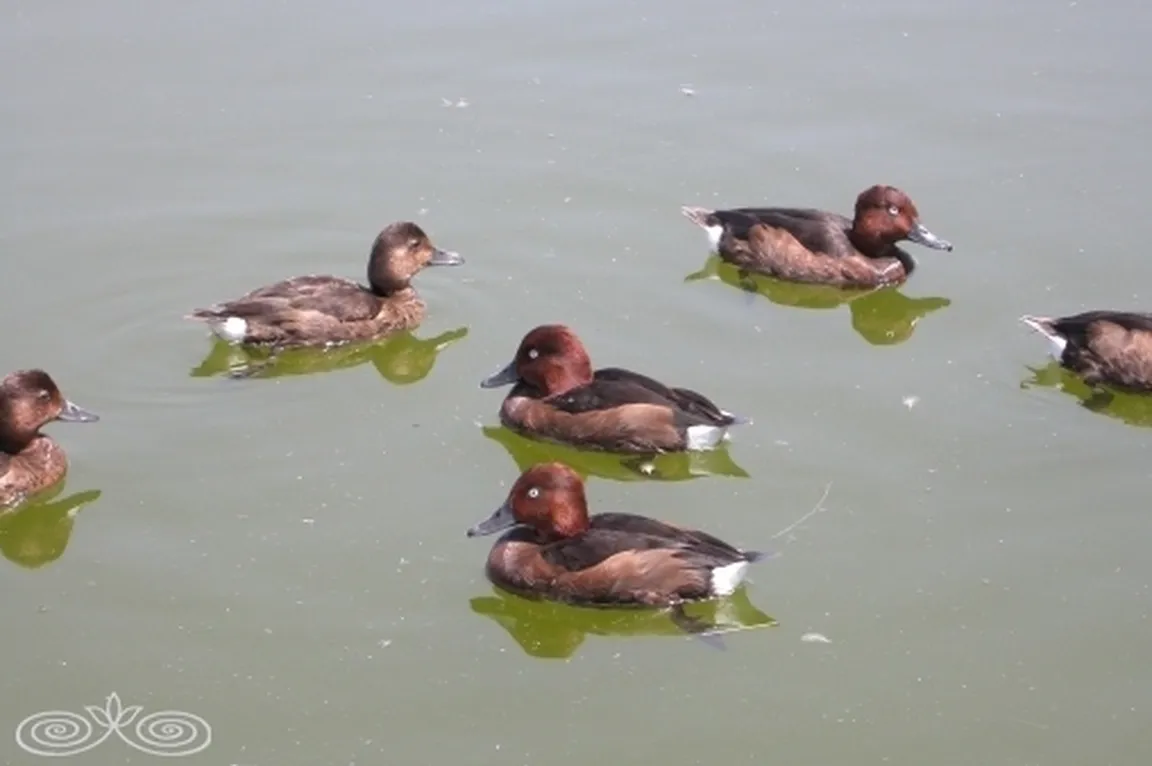
The Ferruginous duck (Aythya nyroca) is a chestnut-brown duck that is somewhat darker along the back, and snow-white underneath the tail. The belly is also white, but this is usually visible only in flight. Then it can also be recognized by the broad white stripe that runs along the middle of the wing all the way to the front edge of the wing. Sex can be clearly distinguished by eye color; the male has a distinctly white iris, while the iris of the female is brown. It belongs to the smaller ducks that can be seen in our country. From the tip of the bill to the end of the tail it measures 38 to 42 cm, and its wingspan is between 63 and 67 cm.
Kostanjevka is an omnivorous duck, but its diet is dominated by plant-based foods. It eats seeds and underground and young above-ground shoots. Occasionally it diversifies its diet with larvae of aquatic beetles, water scorpions, water bugs, and the immature and adult stages of these insects, slugs and tadpoles, and also with small crayfish – amphipods – and water isopods.
It is considered a partial migrant, but its migratory routes are poorly known. It nests in Central and Eastern Europe and North Africa, with the bulk in southwestern Asia. During the breeding season, from April or May to July, the pair usually stays apart; nests less commonly in small groups. The nest, which it builds from reeds and other accessible vegetation, is usually hidden in dense shoreline vegetation right by the water. Autumn migration to overwintering typically peaks in October. Cerknica Lake, with its lush shoreline vegetation, is one of the few areas in Slovenia where the kostanjevka regularly nests, and thus in our country it is treated as a critically endangered species.
In recent decades, the size of its population has declined sharply; it is threatened by degradation and destruction of shallow lakes with dense shoreline vegetation and other wetland habitats. Its habitats disappear due to drying up, regulation and damming of waterways, and the construction of infrastructure on floodplains. Its living environment is strongly negatively affected by changes in traditional farming practices, such as abandoning mowing of floodplain meadows and mowing or burning of willow stands during the breeding season, and overgrazing. Also the abandonment of extensive fish ponds or the intensification of farming warm-water fish species and the introduction of the distinctly herbivorous white amur for fishing purposes do not spare it.