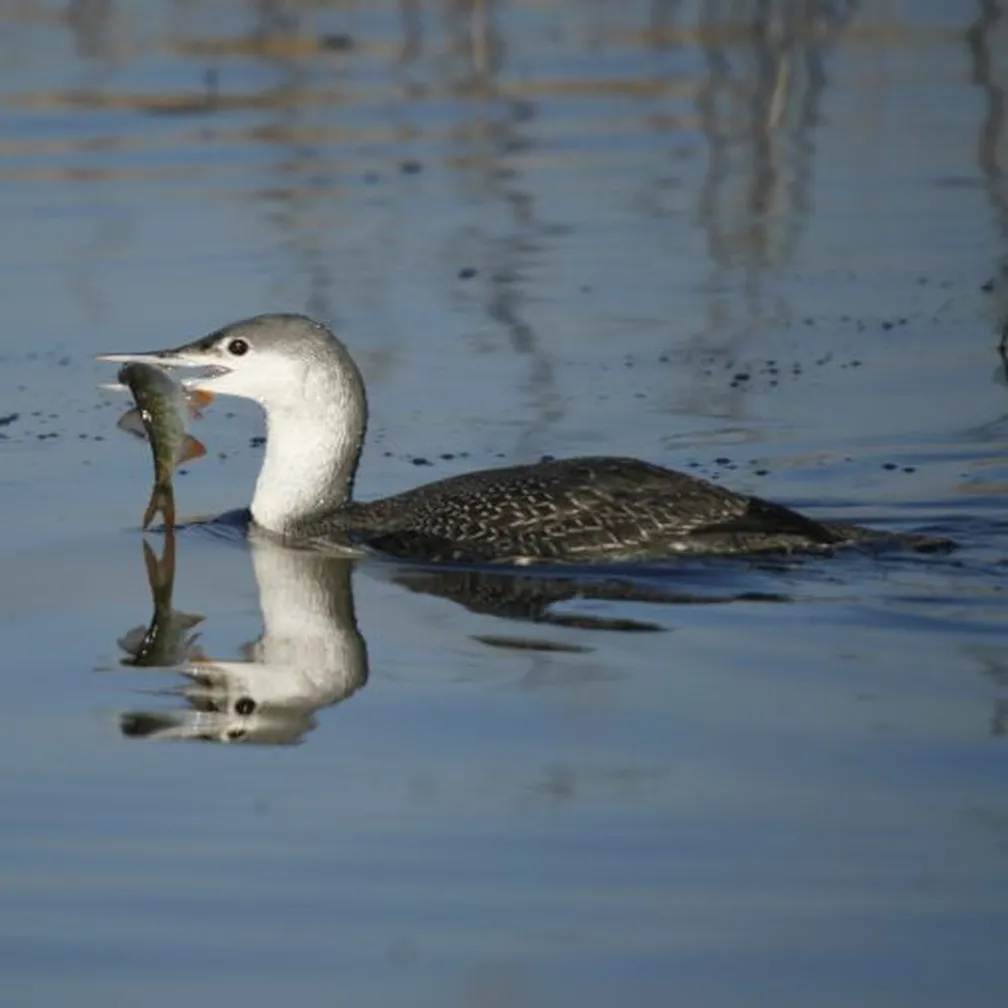

We know four species that are included in the scaup family. These are fairly large birds adapted to catching fish and other animals underwater. When they search for food, they swim more submerged, and only a smaller part of their back is visible above the water; higher on the water they float during rest or while preening and arranging their feathers. For scaups, a long body and neck are characteristic, and their legs are placed quite far back on the body, making them very awkward on land.
Prey – mainly fish – they hunt underwater. Before they dive in an elegant arc, they mostly observe what happens beneath the surface from the surface, with their heads submerged. During a dive underwater they often stay for more than a minute.
They breed mainly on smaller and larger lakes in the tundra or taiga. They build a shallow, sunken nest right at the water's edge, so for successful nesting they require a constant water level. Scaups spend the cold season mainly in bays along the coast of the sea, sometimes also on lakes. At wintering grounds they may gather into larger, dispersed flocks, but mostly they winter singly or in small groups. In spring migration (April to June) and autumn migration (September to November) they fly across the sea singly or in small flocks. Individual birds in a flock fly far apart and never form the dense formations typical of ducks, geese, or cormorants.