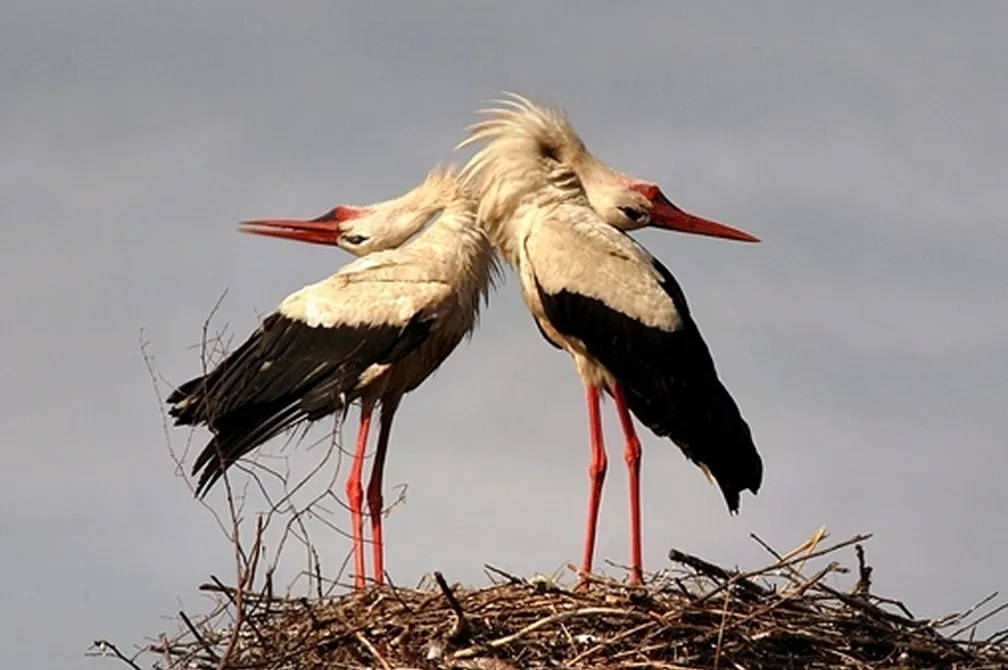

In Europe the stork family (Ciconiidae) is represented by the genus of storks (Ciconia). Both species of this genus that we find in Europe – the enigmatic black stork (Ciconia nigra) and not in the least shy white stork (Ciconia ciconia) – also live and breed around Lake Cerknica. They are more commonly observed during the spring and autumn migrations, when these charismatic birds in the area of the drying lake gather energy for the continuation of their journey. A characteristic feature of all members of this family is flight with an outstretched neck. By this feature, storks in the air can be reliably distinguished from related herons, which fly with a bent neck. We must be careful only when observing the crane, which, like storks, is a gigantic bird and flies with an outstretched neck.
Like all marsh-dwellers, to which, besides herons and storks, we also count ibises, storks do not have swimming skin between their toes. Storks are predators, which with their long conical beak hunt smaller ground-dwelling animals, primarily amphibians, reptiles, small mammals, and large insects, for example grasshoppers.