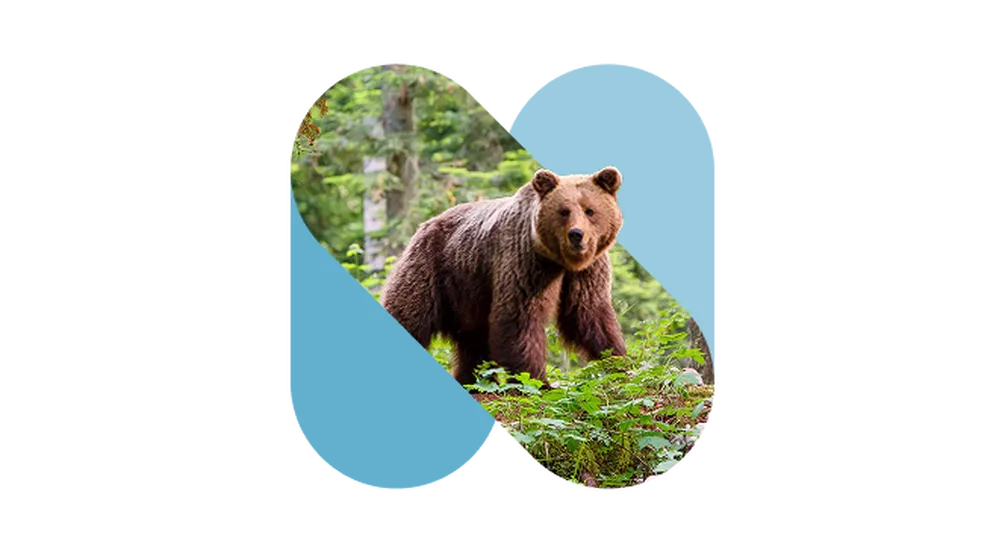
Brown bear (Ursus arctos) is the only representative of the bear family (Ursidae) here and our largest predator. The sturdy body of an adult animal is 150 to 250 cm long. Males are much larger than females and can weigh more than 200 kg. Despite its ungainly appearance, the bear runs, swims, and climbs well. Because it walks on the entire sole, we say it is plantigrade. This giant, which lives around 30 years, is the most omnivorous among our predators. He likes mushrooms as well as fruits, tubers, roots and the green parts of plants. He is especially fond of feasting on ants and wasps and other invertebrates, preys on rodents and larger animals, and also does not shy away from carrion.
In autumn the shaggy one retreats into a den, which it arranges under a blown-down tree or in a rocky cave, and winters there. Bear's winter torpor is not a proper winter sleep, as we know it in hedgehogs or weasels. In fact it is a special form of fasting, during which the bear neutralizes toxic products of metabolism. Because during torpor it does not drink, toxic substances begin to accumulate in its body, mainly urea. A peculiarity of its metabolism is the re-incorporation of nitrogen from urea into body proteins. Females also whelp in winter. Cubs stay with the mother for one and a half to two years, after which they become independent.
The bear was originally distributed across the temperate zone of the northern hemisphere, but today it is already eradicated in many places. Even in our country it was heavily persecuted in the past, but it managed to persist in the Kočevsko-Snežniško forests. Careful management of the Slovenian population has led to the fact that today, in Slovenian forests, according to the latest census, about 560 of these large predators live here, which are legally protected in our country.
As a threatened species, the brown bear is included in the Red List of endangered mammals of Slovenia, which means that continuation of threat factors could lead to its extinction. Only public support for the protection of this magnificent mammal will enable the bear to survive in Slovenia in the long term.
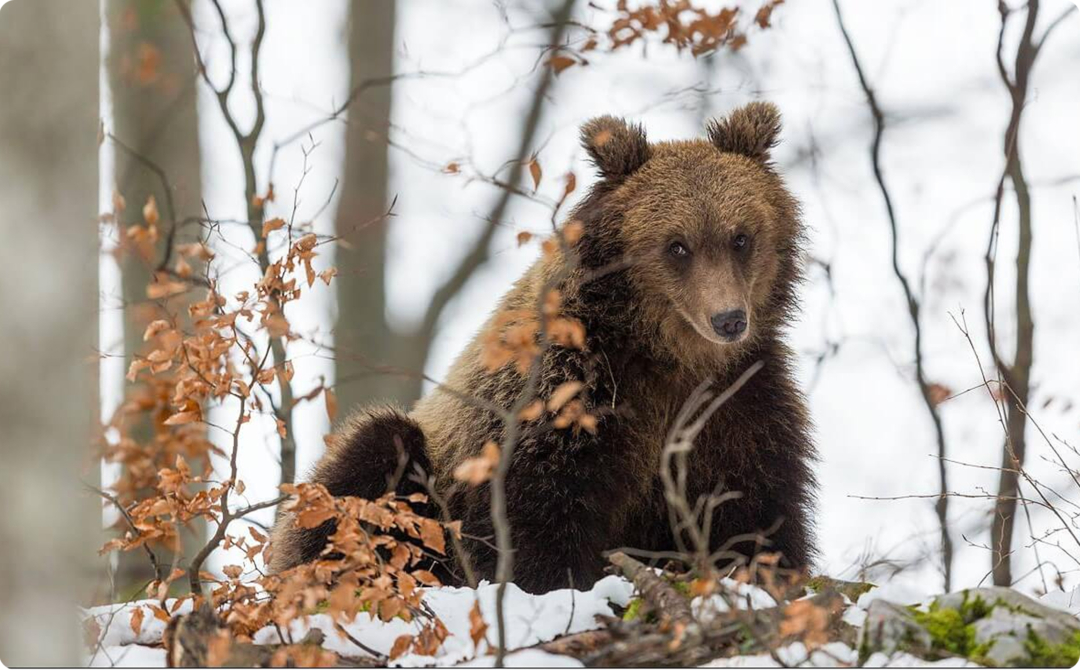
Because of its size and power and sharp claws, a bear encounter can be dangerous, but the bear usually avoids the encounter. In case you walk quietly through the forest and the wind blows toward you, you can approach it and surprise it. In this case, probably the best solution is to keep a cool head. Do not run, move slowly and avert your gaze, as in animal communication eye contact signals aggression.