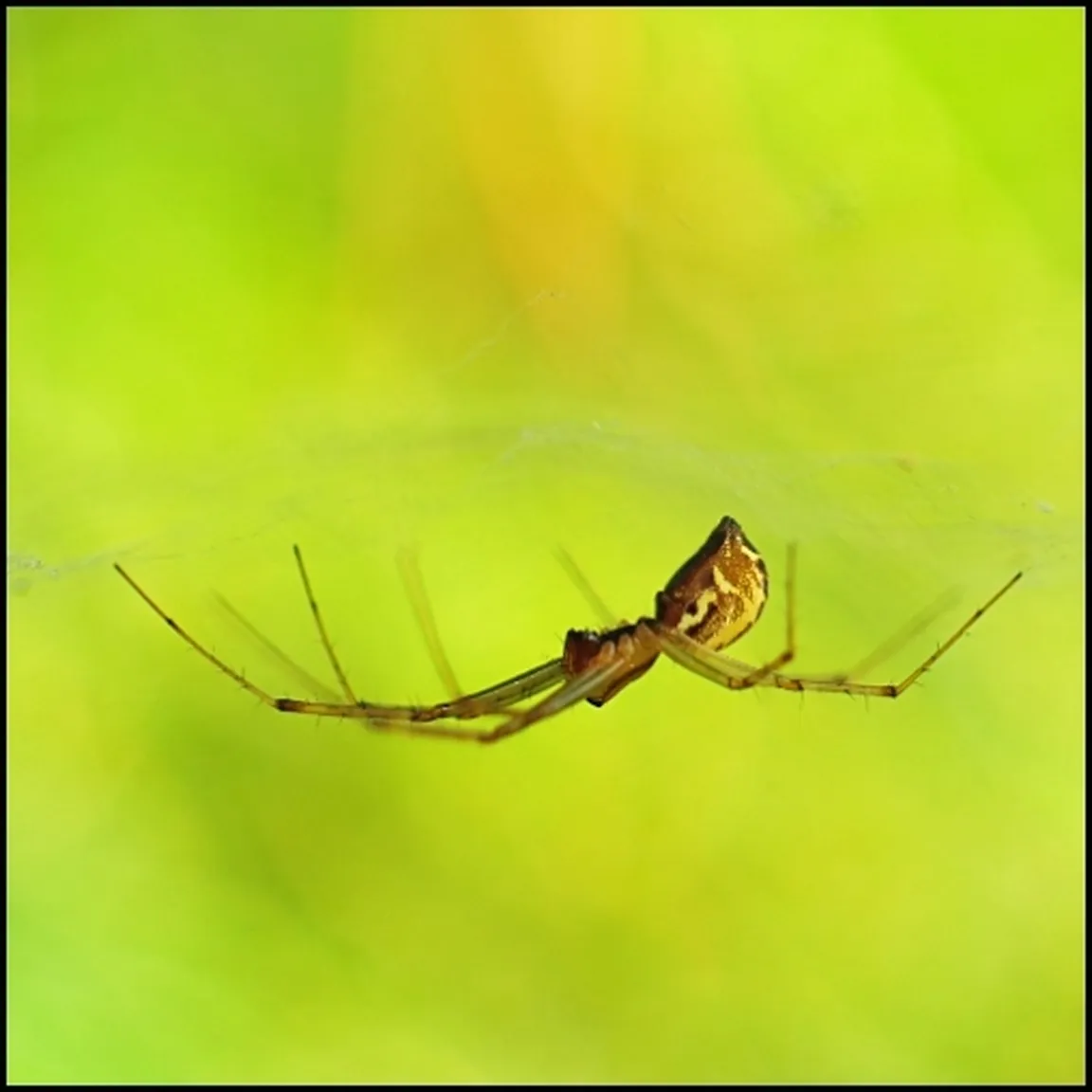
The angular or forked canopy spider (Linyphia triangularis) is certainly the most common among all canopy spiders that live here. It occurs wherever it finds a shrub or tree, where it can stretch its canopy-like web between leaves and twigs.
As with other members of the family, the angular canopy spider is also a small spider that hunts tiny flying insects. Its prey are gnats, mosquitoes, and other tiny insects. The spider waits for prey on the underside of the web, into which the insect falls if it crashes into the tangle of threads above the web that hold it stretched between plant parts.
The female angular canopy spider is somewhat larger and, as is typical for spiders, much bulkier than the male. The body of an adult female is 5 to 6.5 mm long, and the male reaches 4.5 to 6 mm. They reach sexual maturity from mid-summer through late autumn.