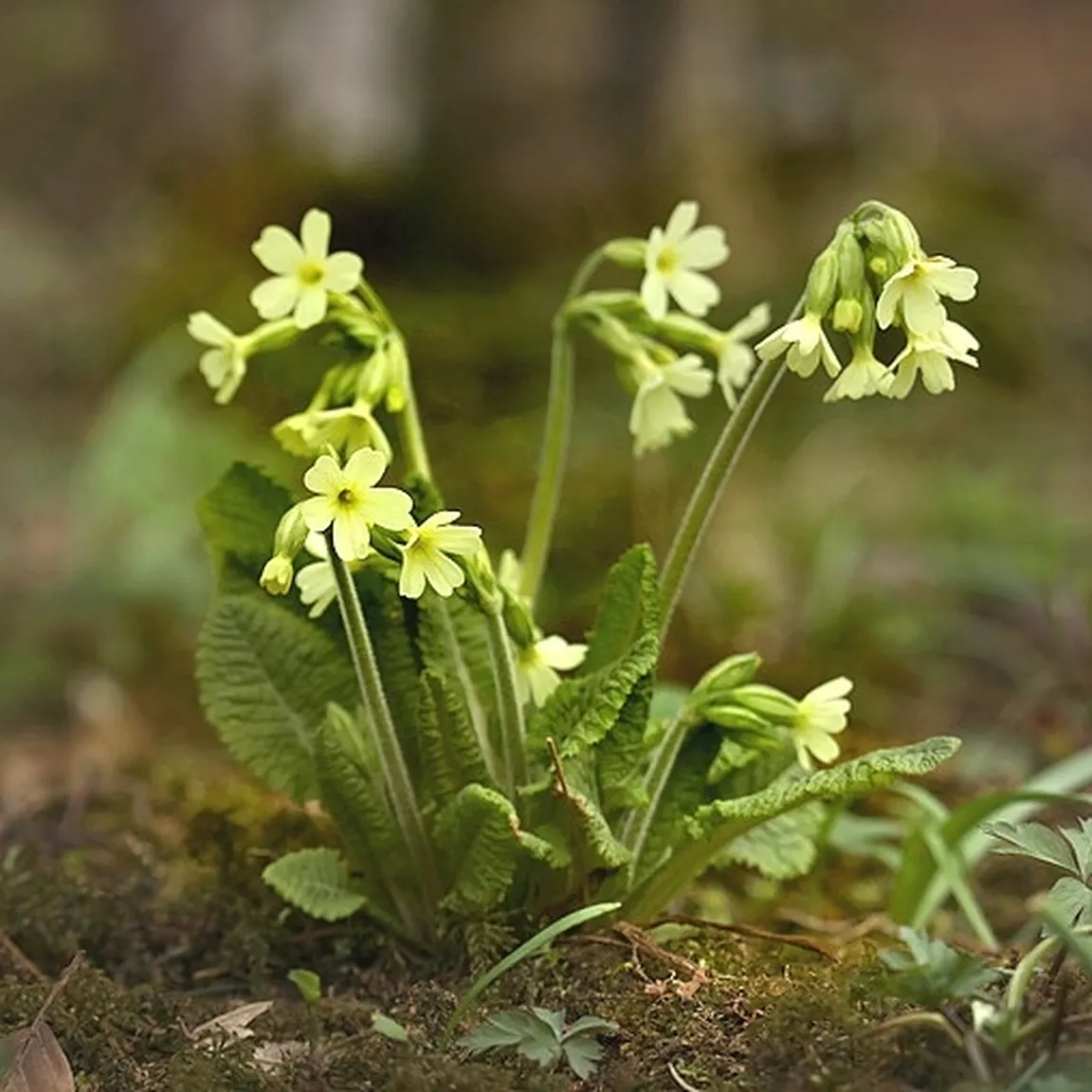
Family: primroses (Primulaceae)
Bloom time: March–May
Size: 10–30 cm
Habitat: wet meadows and forests, damp scree and stands of tall stalks
Crinkled leaves of the tall primrose (Primula elatior) form a basal rosette lying close to the ground. Leaves up to 25 cm long are hairy on both sides, their edge is irregular and finely toothed. At the top of the stout flowering stem develops a head-like inflorescence with several pedunculated flowers. The corolla is pale yellow, the throat is dark yellow. The corolla lobes are plate-like spread (as in the primrose). The pale green calyx is narrow, its teeth at the top embrace the corolla tube. The fruit, cylindrical in shape, is usually longer than the calyx.
The tall primrose prefers moist sandy soils in cooler regions, for example in the mountain belt. It is more common in the northwest and north of Slovenia, while in the northeast and the south of the country it is rare.
The plant contains medicinal constituents, and people used it to alleviate pain and inflammation and to heal wounds.