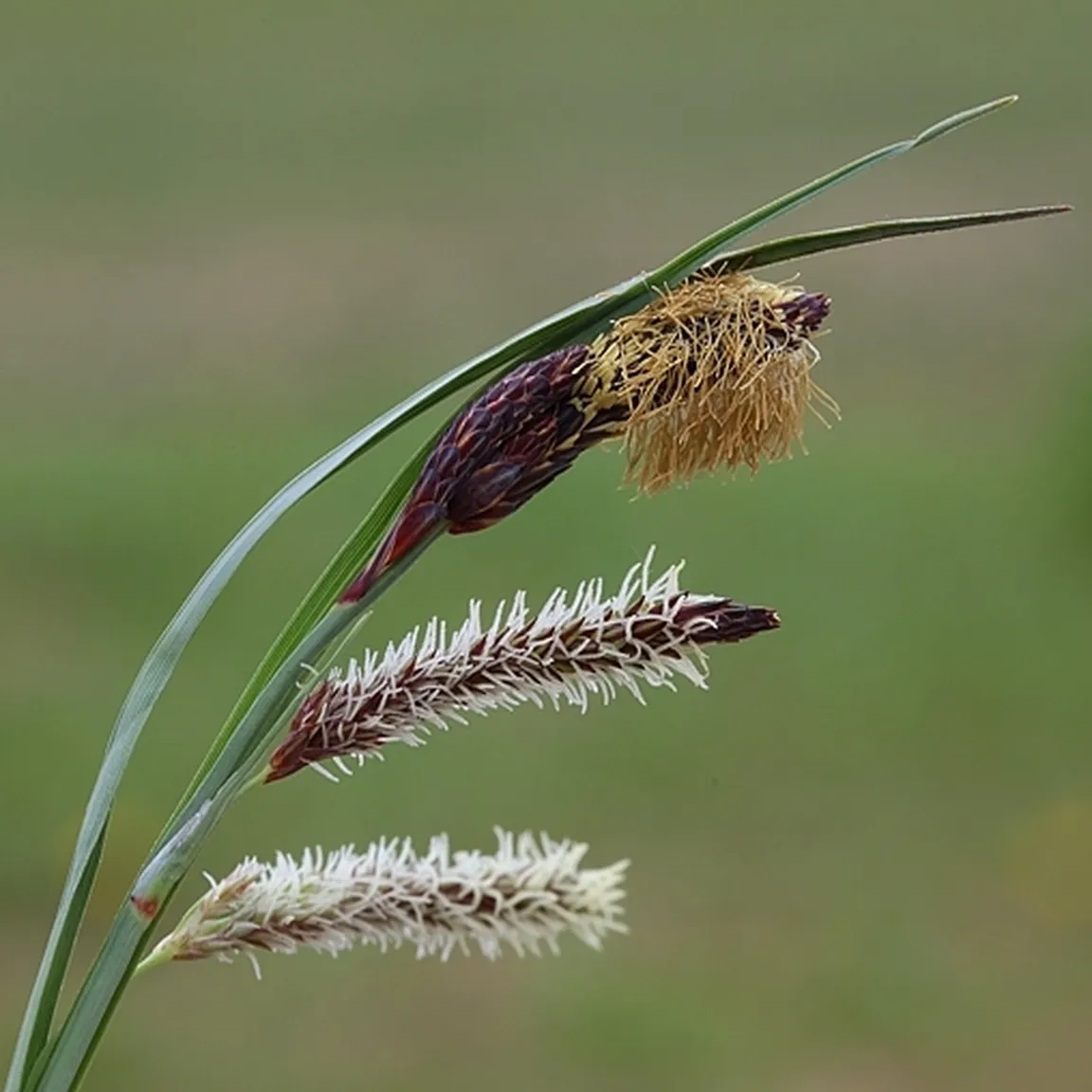
Family: sedges (Cyperaceae)
Flowering time: May–June
Size: 15–50 cm
Habitat: forests, edges of forests and roads, meadows, banks of water and near springs
Glaucous sedge (Carex flacca) is a pioneer plant that is among the first to occupy bare space. It is characterized by 2 to 5 mm wide, stiff leaves gray to blue-green in color. The stem is of the same color, at the base it sends out long lateral underground shoots (rhizomes). At the top of the stem develop 1 to 2 male and 2 to 4 female inflorescences. The latter are usually long-pedunculated, therefore as the fruits (nutlets) mature they often tilt downward. Mature nutlets can be completely black. The pistil has three grooves.
Glaucous sedge grows on barren soils with little humus on a base-rich substrate, preferring bright places. It is adapted to the lack of oxygen in the soil, therefore it can also grow on permanently waterlogged soils. Glaucous sedge is a common and widespread species in Slovenia.