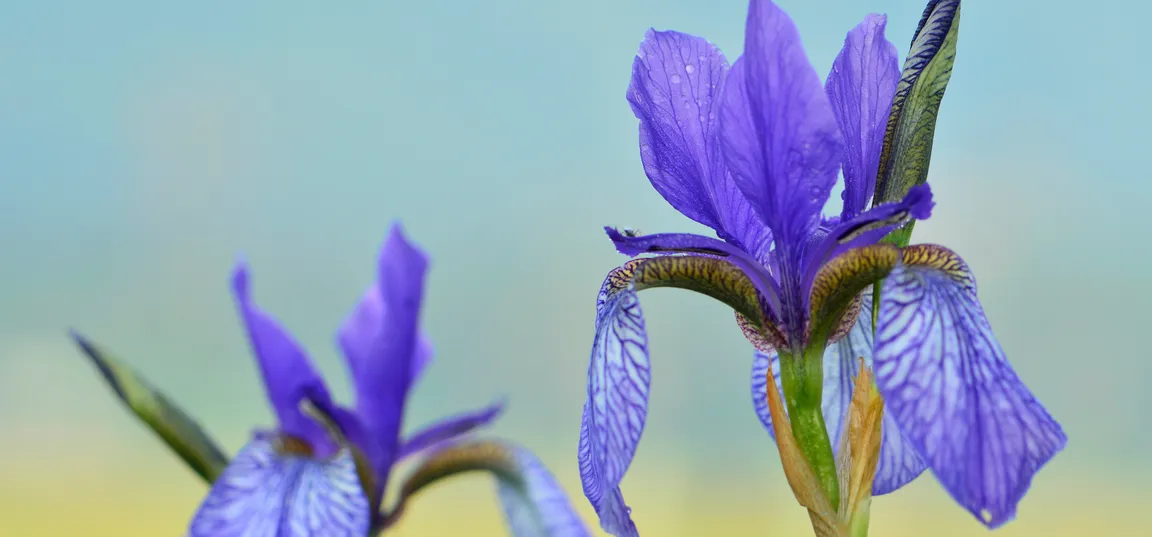
The Siberian iris is generally threatened by:
- the abandonment of mowing, which leads to the gradual transformation of its habitat into forest,
- the degradation and disappearance of suitable habitat due to drainage, urbanization, etc.,
- soil fertilization and the associated intensive mowing (several times a year), which favor the growth of other plant species and often impoverish the biodiversity of fertilized land,
- removal from nature for horticultural or ornamental purposes,
- regular mowing at inappropriate times, which eventually exhausts the plants to the point of extinction.
The light-loving Siberian iris blooms in late spring or early summer, but its seeds ripen only in late summer or early autumn, so mowing has a direct impact on its growth, which can be either positive or negative.
By learning about the ecological requirements and habitat of the Siberian iris in the area of the intermittent Lake Cerknica, we have deepened our knowledge of the factors threatening it and, based on the results of research into the impact of management on it (together with the results of research into Fragrant onion), we will be able to determine a management method that will enable the sustainable maintenance of its habitat and populations.
We hope and trust that our proposal for a KOPOP measure will see the light of day and be well received by landowners, as this will ensure that Siberian irises and other endangered species continue to adorn the lake meadows and that our descendants will also be able to experience the wonderful diversity of our very special piece of the world.