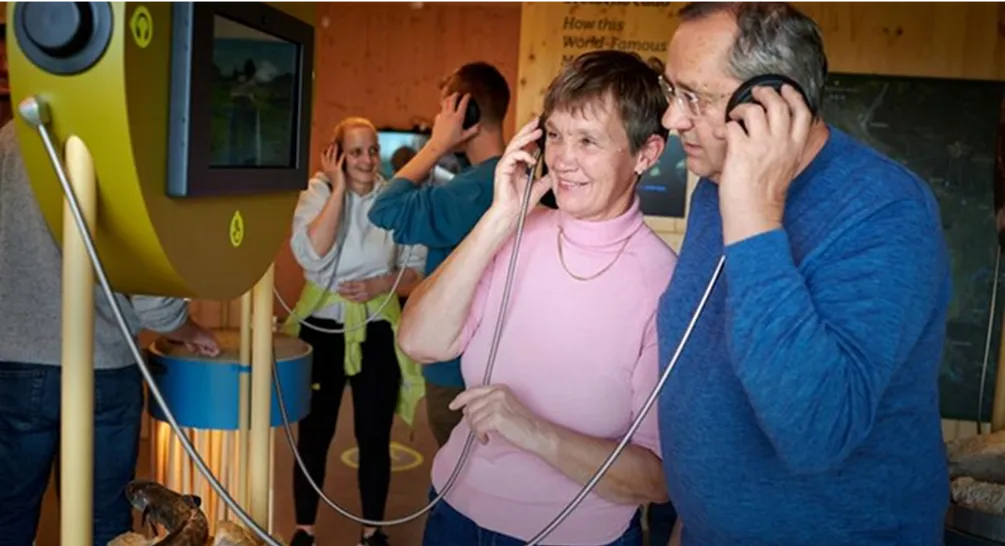
On 8 October 2026, the fifth meeting of the Land Use Expert Group, established under the LIFE TRŠCA project, took place at the Visitor Center Lake Cerknica. The meeting marked an important step forward in identifying practical solutions for the management of Lake Cerknica that reconcile nature conservation objectives with the needs of local agriculture.
Following a brief review of the previous meeting, participants first heard a report on the study visit to Neusiedler See–Seewinkel National Park in Austria. The visit provided insight into the management of an area where nature conservation and agricultural land use coexist. The experience highlighted the importance of cooperation with farmers, appropriate incentives for nature-friendly farming practices, and finding a balance between habitat conservation and traditional land use.
The next presentation focused on a map of wetland vegetation types and proposed optimal management approaches. Drawing on various expert sources, the map identifies characteristic wetland vegetation types and helps determine their specific management requirements. While open water patches, their shoreline vegetation and vigorous reedbeds are essential for the nesting and feeding of waterbirds and should largely remain unmown, regular or rotational mowing is important in other areas to maintain open landscapes. Extensive grazing may also be a suitable option in certain parts of the lake. The key message was that management practices must be tailored to the characteristics of individual areas, as a uniform approach cannot deliver the best outcomes for all habitats.
Building on this work, draft proposals for new or revised agri-environmental measures were presented. The discussion covered possible revisions to the VTR and MOBA measures, the introduction of a measure involving the exclusion of agricultural use in the most sensitive areas, and extensive grazing in suitable wetland areas. Practical challenges faced by farmers were also discussed, including the provision of fodder and bedding, as well as adapting the timing and extent of mowing. The aim is to develop more flexible measures that allow for a greater diversity of management approaches while taking farmers' needs into account. The proposals are still being coordinated and will be further refined in light of the discussion.
The final thematic session addressed the issue of OOTT areas on the Cerknica Polje. Based on research, habitat-type mapping and other expert data, Notranjska Park has prepared a proposal to update their boundaries. The proposal envisages removing certain areas located outside the intermittent lake area and including areas within the lake that were previously omitted. During the discussion, participants also identified parcels requiring further verification. Following further consideration, the proposal will be presented to residents of the surrounding villages of Lake Cerknica and submitted to the Ministry of Agriculture, Forestry and Food.
The meeting marked an important shift from identifying challenges towards developing concrete proposals for the future management of Lake Cerknica. Scientific and technical evidence, combined with the exchange of experience, provides a sounder basis for planning. Further work will focus on refining the proposals and reaching agreement among the relevant stakeholders. Cooperation between nature conservation experts, the competent institutions and local farmers will be essential to achieving long-term solutions, as only by combining knowledge and practical experience can we develop approaches that benefit both nature and people.