While monitoring birds at Lake Cerknica, a voluntary external collaborator of the Slovenian Museum of Natural History – Slovenian Centre for Bird Ringing – came across an unexpected and very rare discovery.
Equipped with color rings and geolocators to track the migration of common rosefinches (Carpodacus erythrinus), he stumbled upon the nest of a Eurasian teal (Anas crecca). We’ll share more about bird ringing in one of our upcoming posts, but for now, let’s focus on the teal.
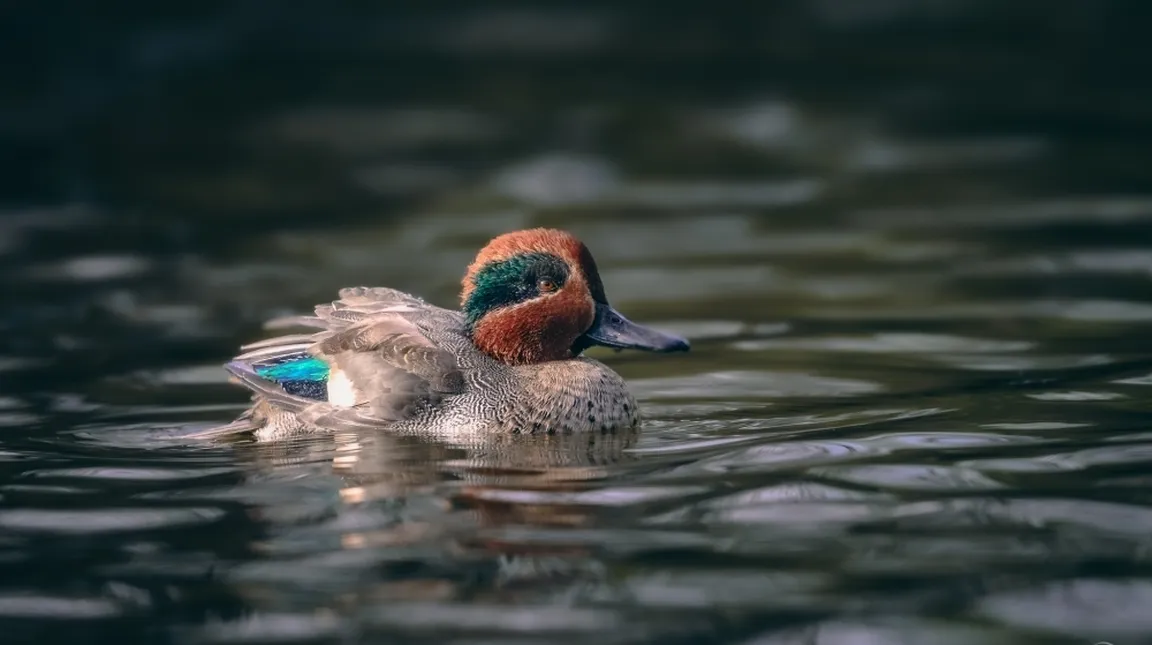
The Eurasian teal is the smallest duck species that can be observed at Lake Cerknica. It is a regular visitor that can be seen almost year-round, most commonly during the winter months. It prefers to stay near still waters rich in shoreline vegetation, where it can hide from predators.
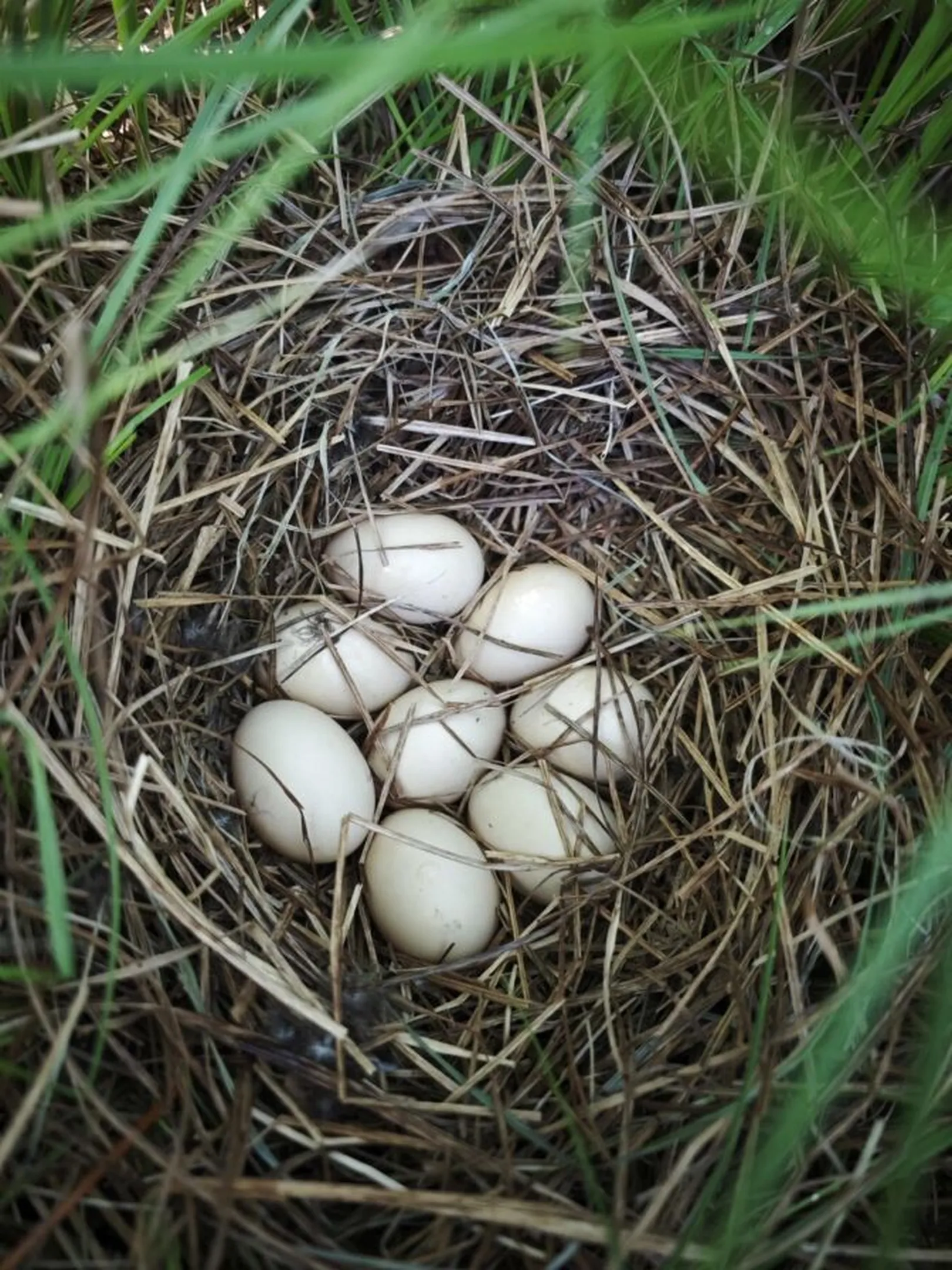
So why is the discovery of the nest so special? Because in Slovenia, the teal is a very rare breeder, and its nest is extremely difficult to find. Between 1995 and 2019, breeding was confirmed at only five locations in the country, most recently in 2014 near Velenje. The Slovenian population is estimated at no more than 10 pairs. Breeding is usually confirmed by observing chicks or adult birds during the nesting season – making this year’s discovery likely the only known direct finding of a teal nest in Slovenia.
Foto: Žan Pečar
Although ducks usually nest near water, this nest was hidden among sedges and shrubs at the lake’s edge.
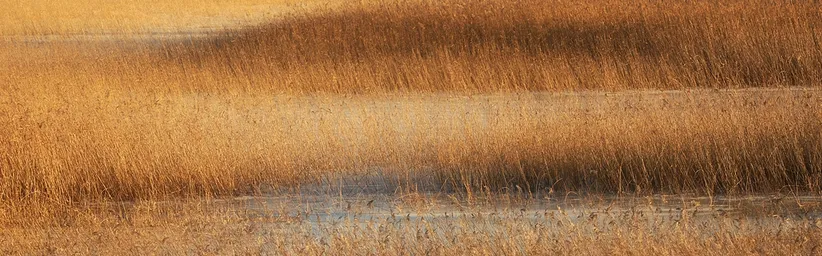
Within the LIFE TRSCA project, we monitor the breeding of waterbirds in reedbeds using various methods, focusing primarily on floating nests built by coots (Fulica atra) and great crested grebes (Podiceps cristatus). With targeted mowing, we aim to provide suitable habitats for cover and create quiet zones, so that birds can continue to safely overwinter and nest at Lake Cerknica in the future.
LIFE TRŠCA
With LIFE TRŠCA we will improve the conservation status of the intermittent Lake Cerknica.
The implementation of extensive nature conservation projects exceeds the financial capacity of the local community, therefore Notranjska Park regularly applies for projects with the possibility of co-financing by the European Union.
The implementation of large-scale conservation projects exceeds the financial capabilities of the local community, therefore Notranjska Park regularly applies for projects with the possibility of co-financing from the European Union.