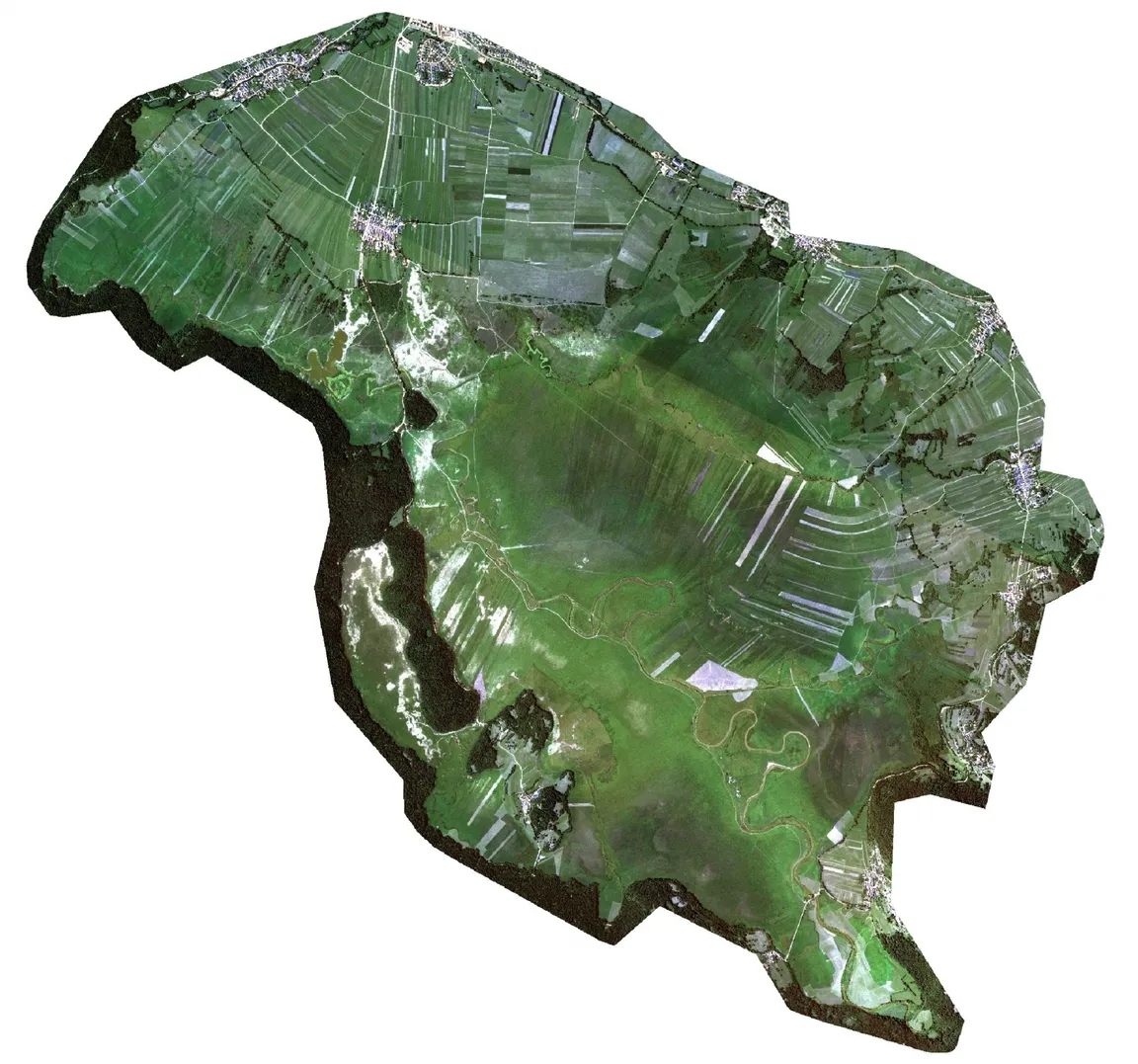
The photograph clearly shows vivid green bands along the Stržen stream channel – this is the yellow water-lily (Nuphar lutea). The yellow water-lily is an aquatic plant that thrives in waters with muddy bottoms, where its rhizome is anchored. Only the flowers and leaf blades reach the water’s surface. Its habitat is sensitive to change, which is why the yellow water-lily is considered a threatened plant species.
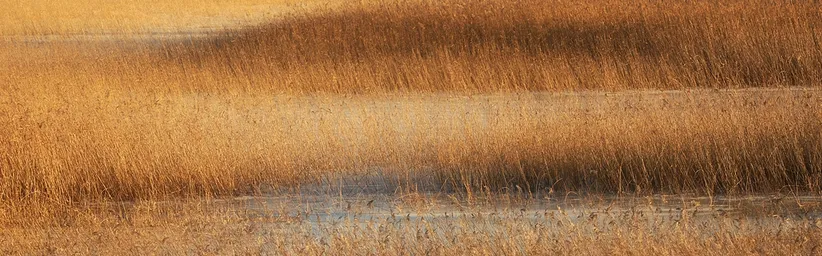
Also visible are lighter-colored areas, indicating zones where mowing has already been carried out. Regular and well-timed mowing is one of the key conservation measures for preserving meadow habitats, preventing overgrowth, and promoting biodiversity. Mowing supports the survival of many meadow and aquatic species and contributes to the sustainable use of the landscape. On the other hand, uncut areas – such as refuge islands, uncut strips, and riparian zones – are also important, as they increase habitat structural diversity and provide shelter. Vital reed beds, in particular, are negatively affected by mowing and should be left untouched.
Such satellite images not only reveal the current state of the lake but also serve as valuable tools for long-term monitoring of conservation measures and natural processes that shape this extraordinary landscape.