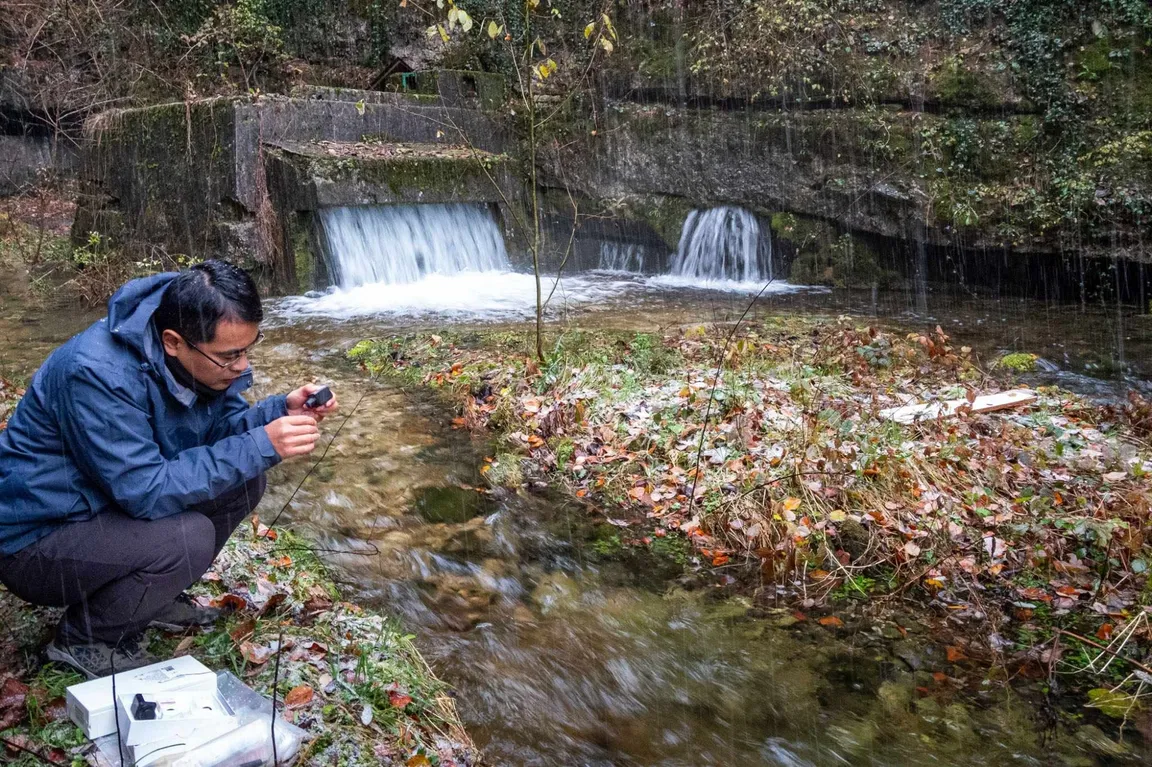
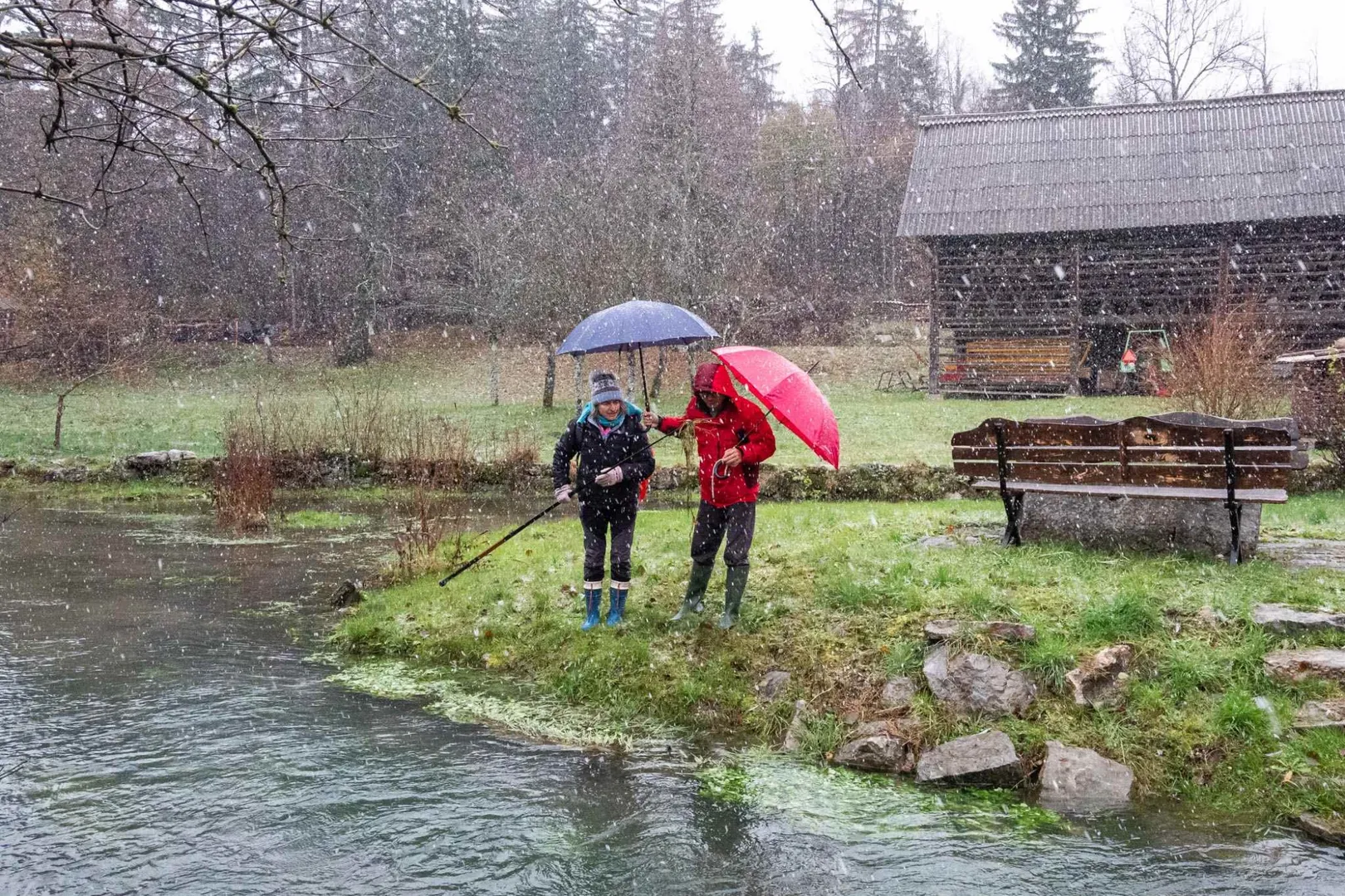
Figure 1: Field analysis of water samples at the Martinjščice spring (Photo: M. Blatnik).
A large part of the research in the LIFE Tršca project is devoted to aquatic ecosystems, which include both studies of water properties and surveys of aquatic vegetation. This is also the main area of research for Chinese researchers from Guilin (Institute of Karst Geology, CAGS) and Wuhan (Institute of Hydrobiology, CAS), who between 16 and 24 November visited the Karst Research Institute at ZRC SAZU and the Department of Biology of the Biotechnical Faculty of the University of Ljubljana. In addition to several meetings where we presented to one another our main research, we conducted several field visits and sampling, among which we happily devoted an entire day to Cerknica plain.
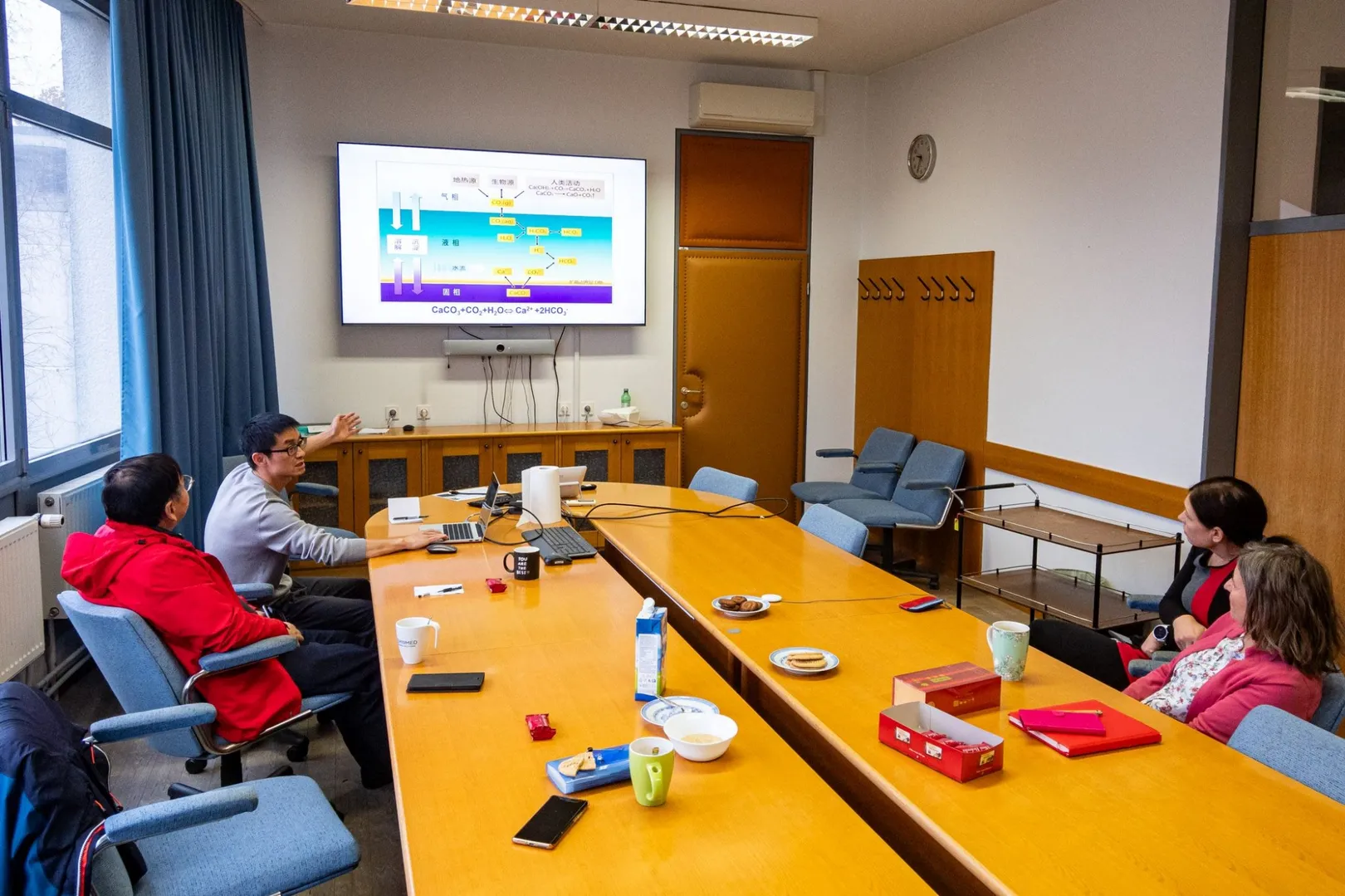
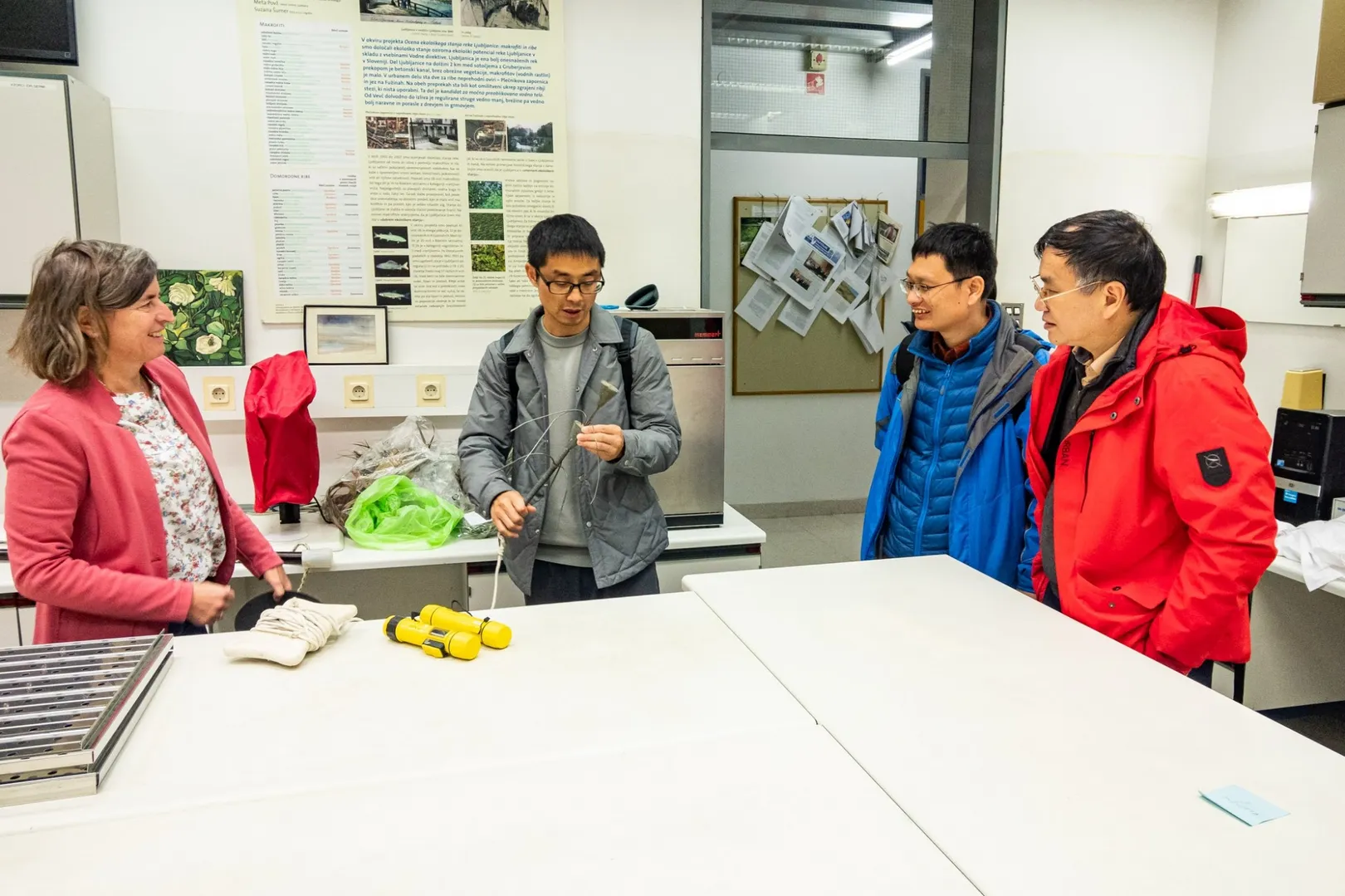
We have been actively collaborating with the Institute of Karst Geology, Chinese Academy of Geological Sciences (Institute of Karst Geology) from Guilin for over 40 years. Initially the collaboration was informal through mutual visits; later it also developed into project collaboration (bilateral, UNESCO / IUGS IGCP, MOST projects). Among the research topics, those that relate to studying karst landscapes (geomorphology and geology), characteristics of hydrological dynamics (quantity and quality of water), cave climate and soils are leading. We also pay particular attention to comparisons between karst areas with different climatic conditions—Guilin, for example, is located in a subtropical climate. With the Institute of Hydrobiology CAS (Institute for Hydrobiology of the Chinese Academy of Sciences) we have not yet had active collaboration, but ideas have emerged for joint study of karst ecosystems, more precisely biodiversity in karst waters and the dynamics of nutrients in water. On 20 November we exchanged information at the Department of Biology of the Biotechnical Faculty of UL about our past experiences regarding research on karst ecosystems. We also looked at field and laboratory equipment for biological sampling and further analyses.
Photo: M. Blatnik
Figure 2: Meeting at the Department of Biology, Biotechnical Faculty, University of Ljubljana.
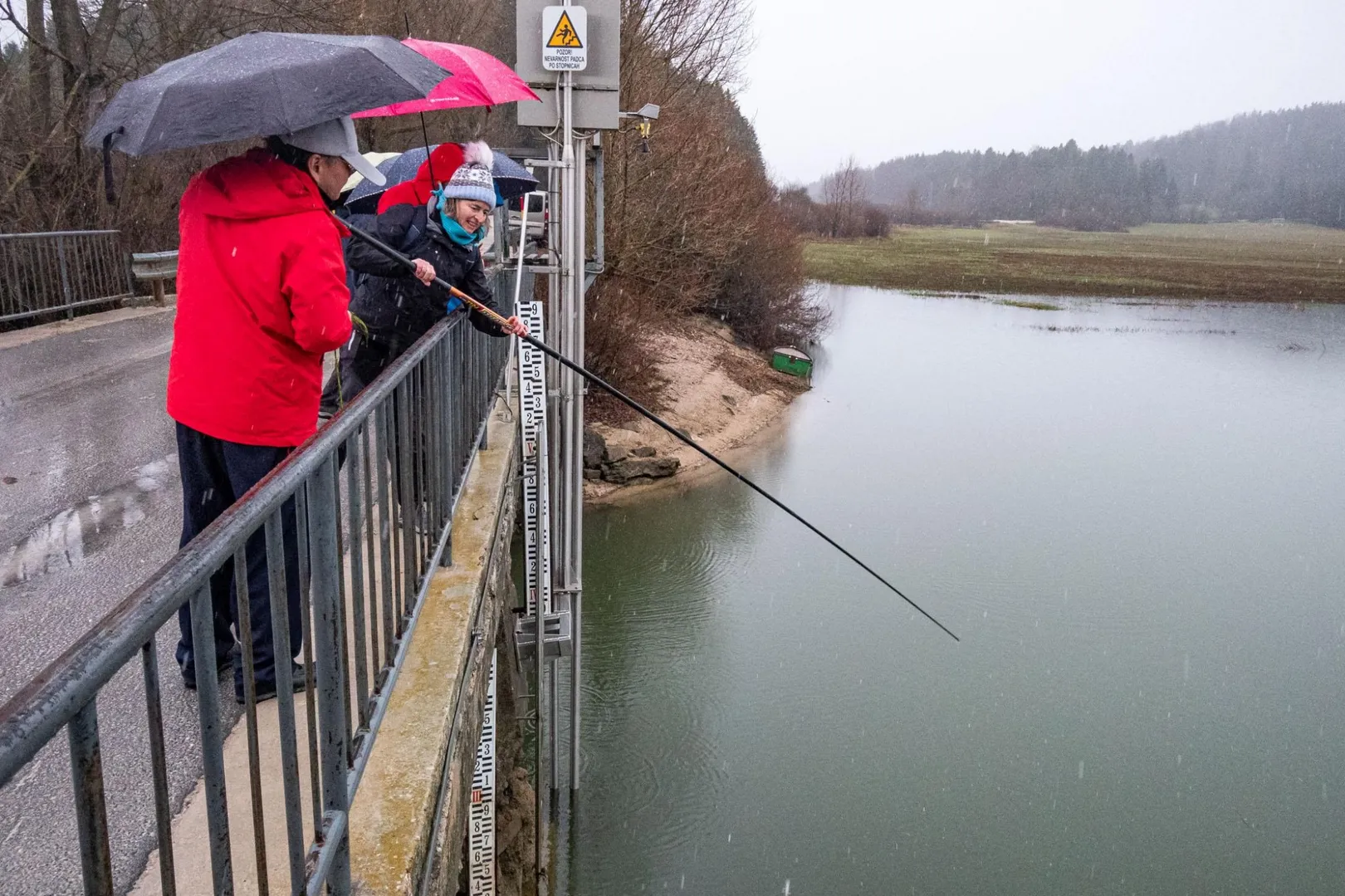
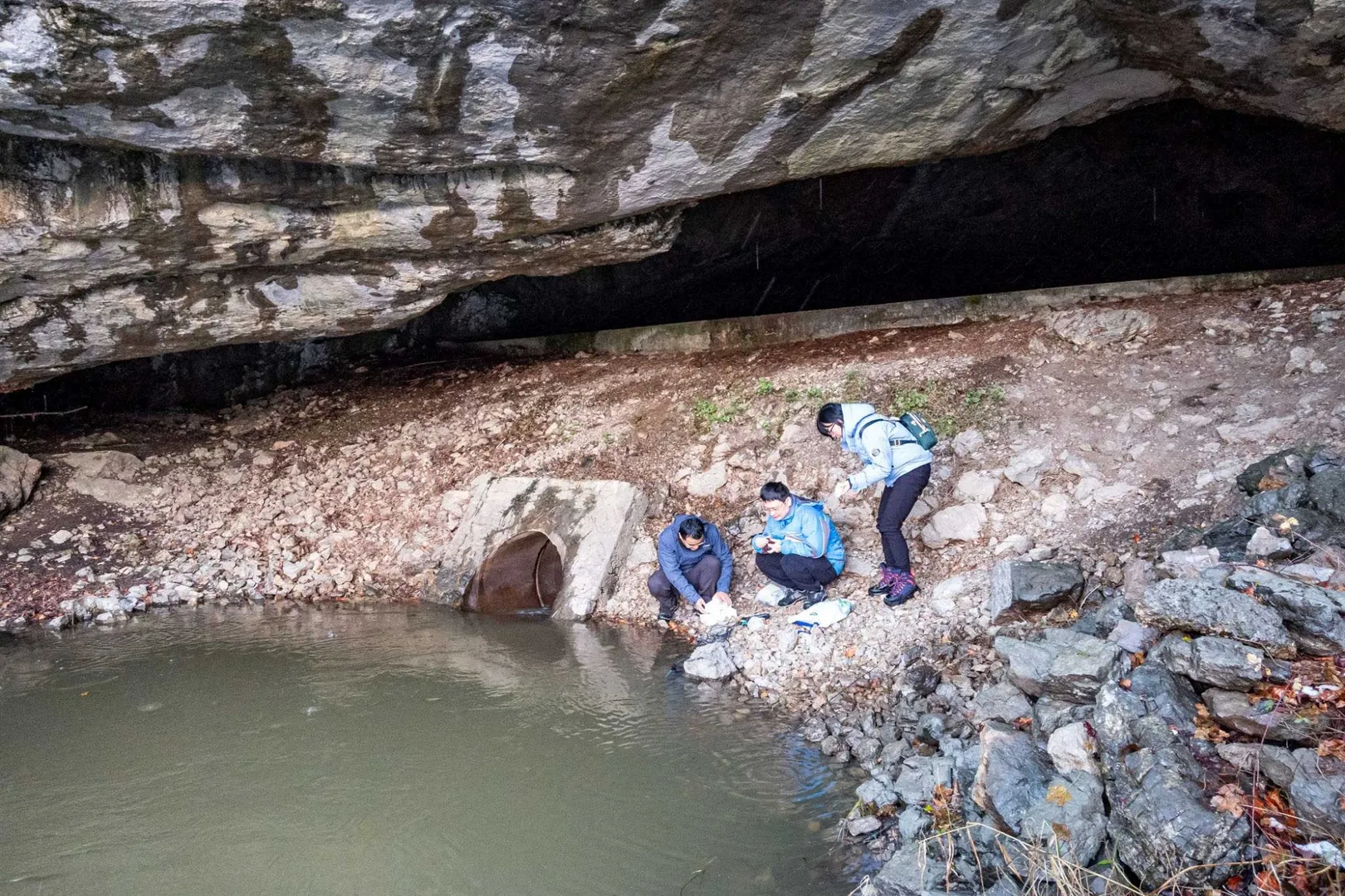
We carried out field work between 16 and 24 November in different parts of Slovenia, thus covering the Alpine and Dinaric karst. We spent most of our time in the Ljubljanica catchment, i.e., in the Pivka basin, at the Cerknica plain, as well as downstream at Rakov Škocjan, Planinsko plain, and the springs of Ljubljanica. We gave preference to karst springs, which were of interest to both groups from China. The Guilin group (Institute of Karst Geology) performed at each spring manual measurements with a multiparameter probe (temperature, specific electrical conductivity, pH, oxygen saturation), carried out quick field measurements of alkalinity and carbonate content, and collected samples for further laboratory analyses. Such sampling has been performed several times and will continue; the basic idea is to analyze changes in water properties in different climatic regions and in different hydrogeological situations. The Wuhan group (Hydrobiological Institute) checked whether macrophytes occur at the springs and which species are the most characteristic. It turned out that some are the same, others completely different species, but with similar physiological characteristics to those in China.
Photo: M. Blatnik
Figure 3: Visit to the laboratory at the Department of Biology, Biotechnical Faculty, University of Ljubljana.
The first impression of the Slovenian karst for the Wuhan hydrobiological group was very positive, and the winter conditions during fieldwork made things even more challenging. We therefore hope for another joint project that would nicely complement the existing research at Cerknica Plain, possibly even during the LIFE Tršca project period.
Photo: M. Blatnik
Figure 4: Macrophyte sampling at the Dolenje Jezero water monitoring station.
Photo: M. Blatnik
Figure 5: Macrophyte sampling at the Žerovniščica spring.
Photo: M. Blatnik
Figure 6: Field analysis of water samples at the ponor in Veliko Karlovice.
The article was prepared by the Karst Research Institute and the Faculty of Biotechnology, University of Ljubljana.
LIFE TRŠCA
With LIFE TRŠCA we will improve the conservation status of the intermittent Lake Cerknica.
The implementation of extensive nature conservation projects exceeds the financial capacity of the local community, therefore Notranjska Park regularly applies for projects with the possibility of co-financing by the European Union.
The implementation of large-scale conservation projects exceeds the financial capabilities of the local community, therefore Notranjska Park regularly applies for projects with the possibility of co-financing from the European Union.