LIFE TRŠCA: We are continuing with bird censuses

Published: 20. 02. 2026 Author: NRP Categories: Projects

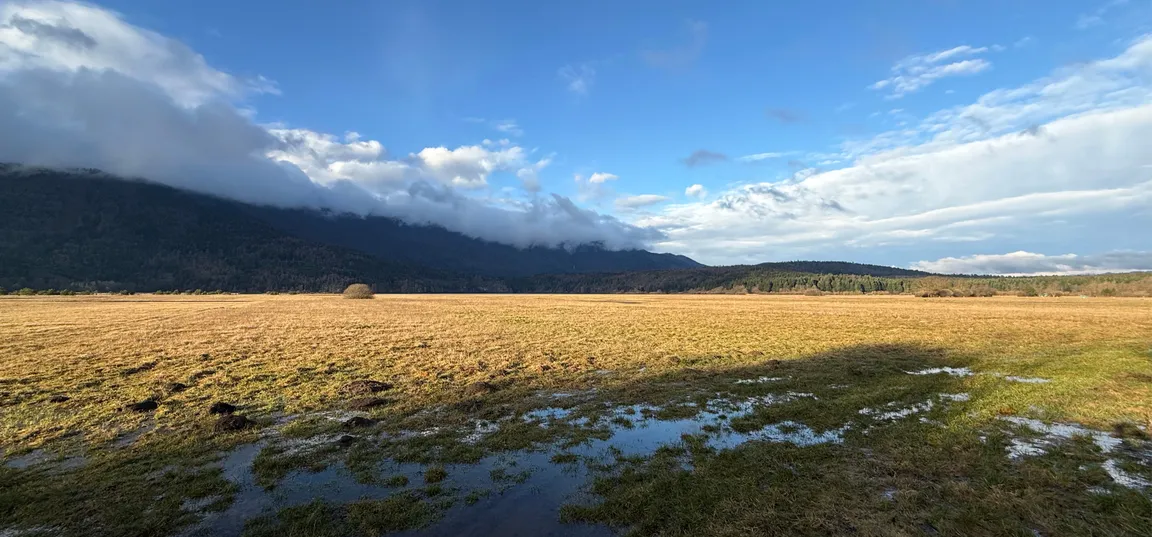
A wide marshy meadow with shallow puddle in the foreground, under a blue sky with a transition between sunny and cloudy weather; in the background, forest-covered hills rise, partially shrouded in low clouds.
The warm spring sun is already attracting the first migratory birds to Lake Cerknica. (Photo: Dejan Bordjan)

This year, we are delighted to continue the successful season of waterbirds, raptors, and crows censuses, which we successfully conducted last year within the LIFE TRŠCA project. This time, we started with a harsh winter, which is now gradually turning into a spring atmosphere. Last season was very interesting both because of rare species and the large number of birds observed.

The importance of Lake Cerknica for water birds is already evident. As winter draws to a close, we are still delighted to see the wintering of the greater white-fronted goose (Anser albifrons), as this is one of only two known wintering grounds in Slovenia. This time, we counted more than 300 of them. This winter, we also counted larger numbers of gadwalls (Mareca strepera), northern pintails (Anas acuta), and tufted ducks (Aythya fuligula) at the Lake Cerknica. Among the species that are rare here in winter, we encountered red-crested pochards (Netta rufina) and northern lapwings (Vanellus vanellus). We observed more than 100 of the latter in February during their migration stopover. Other spring visitors have also appeared, such as the western marsh harrier (Circus aeruginosus). In addition to the northern lapwings that nest on the lake, we observed another special nesting bird, the eurasian curlew (Numenius arquata). At the beginning of February, we were surprised by a flock of 15 individuals.

V okviru LIFE TRŠCA se še posebej osredotočamo na dve redki gnezdilki, rjavovratega ponirka (Podiceps grisegena) in kostanjevko (Aythya nyroca). Tako smo bili zelo veseli kostanjevke, ki smo jo opazovali že konec januarja! Kostanjevke se čez zimo sicer odselijo proti jugu vse do Sahela v Afriki. Zaradi bolj toplih zim jih vse več ostaja tudi v Sloveniji. Zato nismo bili pretirano presenečeni nad njihovo prisotnostjo v januarju, čeprav v tem času tukaj še vedno velja za redko. Ob prvem veselem spomladanskem ptičjem petju pa že nestrpno čakamo kaj nam bo prinesla selitev in predvsem nas zanima, kako uspešna bo letos gnezditev.


Within the framework of LIFE TRŠCA, we are focusing particularly on two rare nesting birds, the red-necked grebe (Podiceps grisegena) and the ferruginous duck (Aythya nyroca). We were therefore delighted to spot a ferruginous duck at the end of January! Ferruginous ducks usually migrate south for the winter, all the way to the Sahel in Africa. Due to warmer winters, more and more of them are staying in Slovenia. Therefore, we were not overly surprised by their presence in January, although it is still considered rare at this time of year. 

With the first joyful birdsong of spring, we are eagerly awaiting what the migration will bring us and are particularly interested in how successful nesting will be this year.

The contribution was prepared by the Slovenian Society for the Observation and Study of Birds (DOPPS).

LIFE TRŠCA

With LIFE TRŠCA we will improve the conservation status of the intermittent Lake Cerknica.

Nalaganje...
Projects in the Notranjska Park
Logotip notranjskega parka z rastlino in metuljem.

Projects in the Notranjska Park

The implementation of extensive nature conservation projects exceeds the financial capacity of the local community, therefore Notranjska Park regularly applies for projects with the possibility of co-financing by the European Union.

The implementation of large-scale conservation projects exceeds the financial capabilities of the local community, therefore Notranjska Park regularly applies for projects with the possibility of co-financing from the European Union.

Read more
Read more