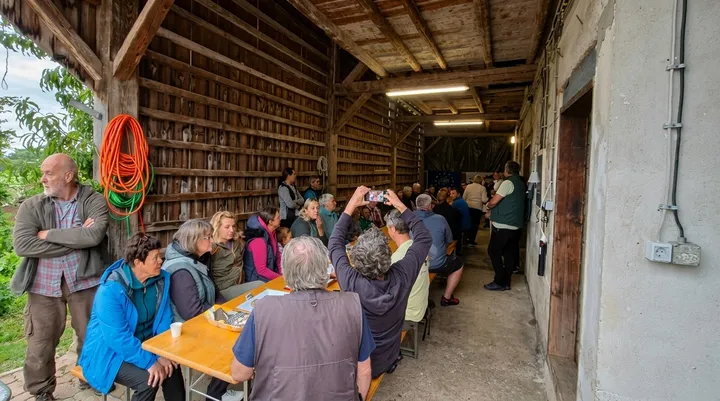
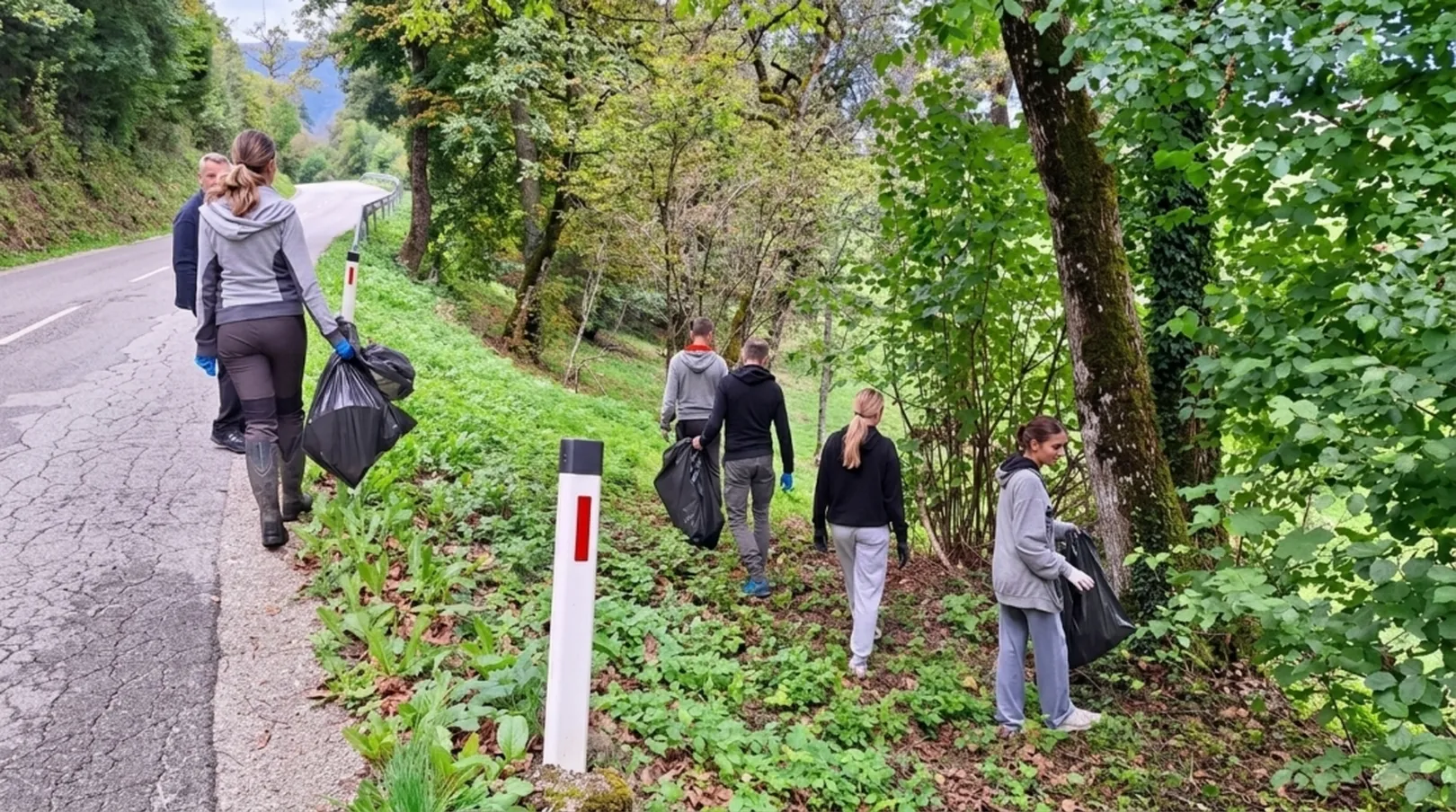
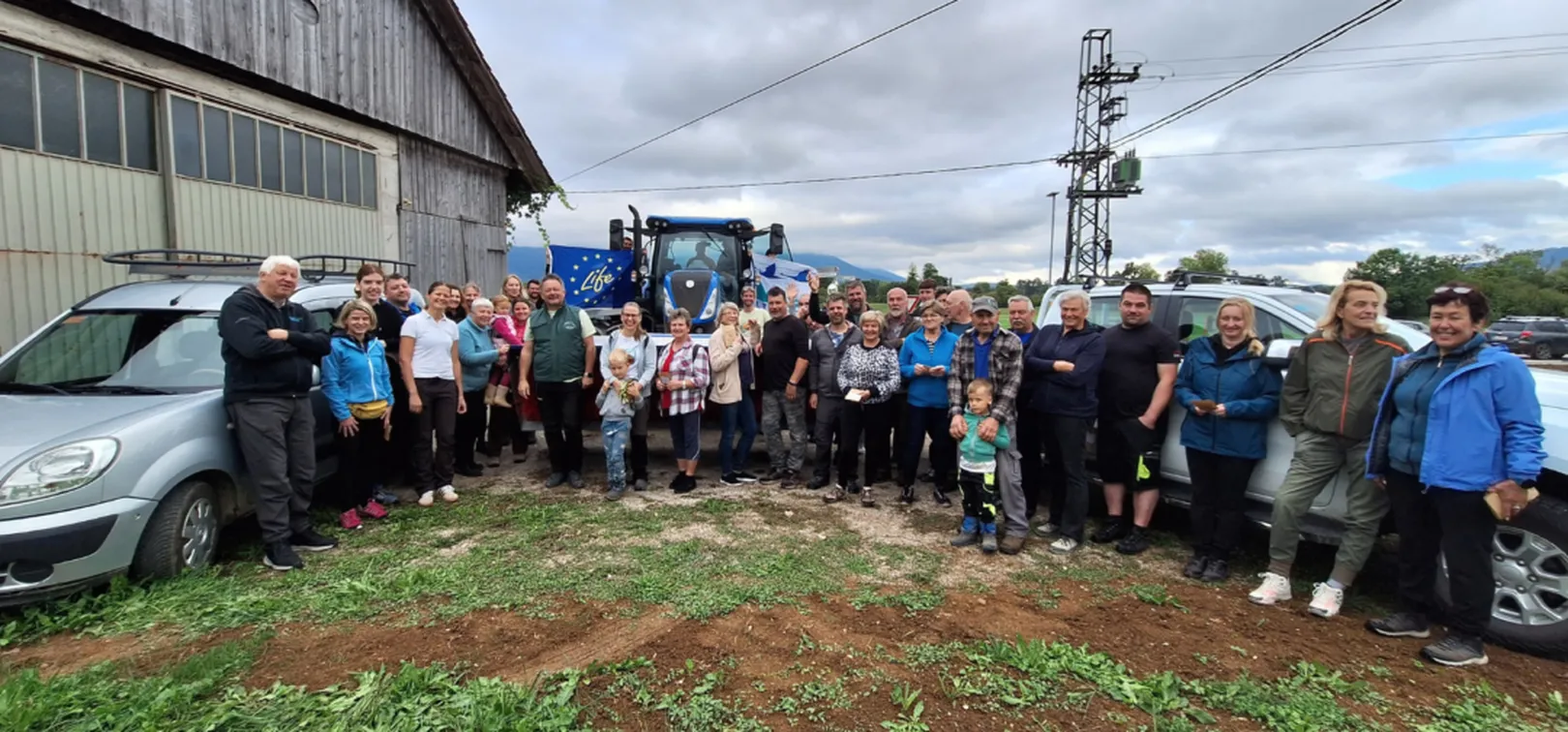
On Saturday, 19 September, employees of Notranjska Park met with the residents of Lipsenj for a day dedicated to the presentation of the brush harvester, nature conservation activities, an exchange of views and a joint volunteer work action. The meeting also provided an opportunity to discuss current issues related to life and work around Lake Cerknica.
Following an introductory address by Leon Kebe, Director of Notranjska Regional Park, three nature conservation projects currently being implemented by the Park were presented. Each project addresses a different aspect of nature conservation, and together they contribute to the protection of the area's natural values.
First, Ina Anzeljc, coordinator of the LIFE OrnamentalIAS project, presented the issue of invasive alien plant species. She introduced some of the most common species found in the area around Lake Cerknica and highlighted the importance of their early detection and removal.
This was followed by a presentation of the LIFE TRŠCA project, which aims to improve the condition of wetland habitats and conserve waterbirds at Lake Cerknica. Project manager Ana Gabrejna Fajdiga presented the activities carried out so far and the planned measures, including activities related to land use and the traffic regime around Lake Cerknica.
The presentations concluded with Tina Klemenčič, coordinator of the LIFE FOR SEEDS project, who presented the project's key achievements as it comes to an end this year, as well as the importance of collecting seed material for the restoration of grassland habitats.
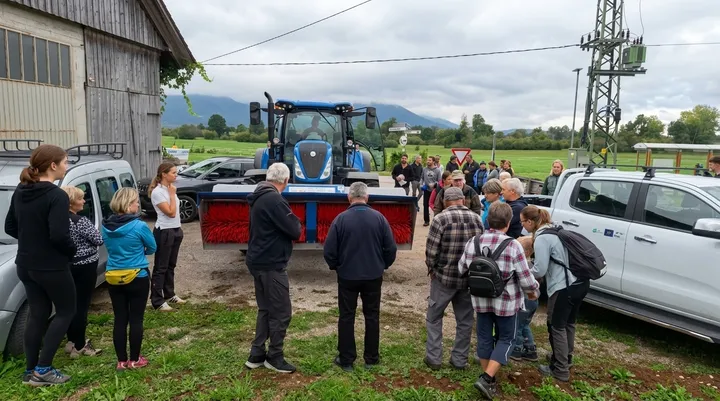
A special brush harvester was also presented. The machine is used to harvest seeds of locally occurring plant species from meadows. The seed mixtures obtained in this way can be used to restore grasslands that have been degraded due to overgrowth, intensive use or other inappropriate interventions. In addition to seed harvesting and grassland restoration, the project also includes the establishment of a seed bank and the development of agri-environment-climate measures (KOPOP), which will facilitate the production of seed mixtures by farmers and the use of green mulch. In this way, LIFE FOR SEEDS makes an important contribution to the long-term conservation of grassland habitats.