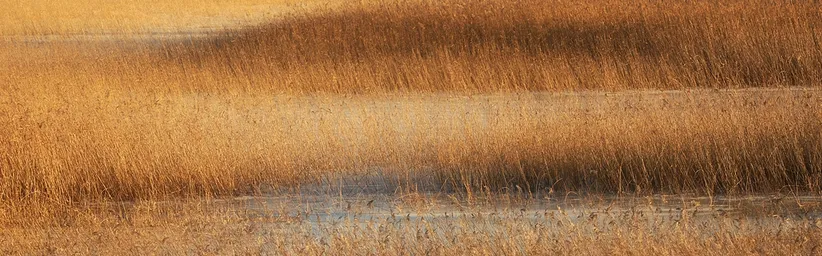
We will develop alternative ways of using the excess biomass removed from the lake area and at the same time present farmers with a solution for potential surpluses of hay. The biomass can be used as raw material to produce pellets for pet litter, for composting, or for the micro biogas plant. In the scope of this task, we will conduct pilot experiments using biomass for all three potential solutions.
Status: Task is in progress
Results:
1. COMPOST FROM LAKE CERKNICA
What is Compost from Lake Cerknica?
Compost from Lake Cerknica is a natural fertiliser produced through the controlled biological decomposition of plant material originating from one of the most dynamic wetland ecosystems in Slovenia. It is made from residual grassland biomass from wet meadows, reeds and other coarse plant material.
The particular feature of this compost is its origin – the biomass comes from an area characterised by alternating periods of flooding and drought, which affects the composition of the vegetation and consequently the properties of the final product. Compost from Lake Cerknica is completely natural, without additional chemicals or artificial additives, and is suitable for use in gardens, agricultural areas and green spaces.
The composting process
Collection of raw material: The source biomass comes from the intermittent Lake Cerknica, where plant material that would otherwise remain uncollected is removed every year. Only clean plant biomass is used, without soil, plastic, metals or other unsuitable contaminants.
Delivery and preparation of the material: Approximately 50 tonnes of biomass from Lake Cerknica were delivered to the ROSA composting facility in Vrhnika. The plant material was delivered in the form of large bales, which were arranged into long rows under a covered area at the composting facility. This ensured suitable conditions for further processing and the beginning of the decomposition process.
Addition of microorganisms and mixing: To accelerate and stabilise the decomposition process, natural microorganisms and bacteria that promote composting were added to the biomass. During the initial stage, the material was regularly mixed mechanically, ensuring uniform decomposition, sufficient aeration and preventing unsuitable conditions from developing within the compost mass.
Controlled composting process: Controlled composting takes place in enclosed composting basins, where optimal temperature, appropriate moisture and continuous aeration are essential. Only with proper monitoring can the process take place safely and efficiently.
Benefits of using Compost from Lake Cerknica
The use of compost produced from biomass from Lake Cerknica provides a number of benefits for both nature and people:
Improving soil quality: Compost enriches the soil with organic matter, improves its structure and aeration, and stimulates the activity of soil microorganisms and other beneficial organisms. This makes the soil more fertile, better able to retain water and nutrients, and more resistant to erosion.
Natural fertilisation of plants: Compost enables the gradual release of nutrients such as nitrogen, phosphorus and potassium, which can be efficiently used by plants. At the same time, it reduces the need for artificial fertilisers, helping to protect the environment and prevent pollution of soil, water and air.
Preservation of wet meadows and biodiversity: Regular removal of dead biomass helps maintain the characteristic ecosystems of Lake Cerknica. When left uncollected, accumulations of plant biomass suppress vegetation growth by acting as a layer of mulch.
First results and future prospects
Pilot composting of biomass from Lake Cerknica has shown that the resulting compost is of good quality and suitable for various uses. The controlled decomposition process was carried out in accordance with professional standards, ensuring that the final product contains a high proportion of organic matter suitable for improving soil and supporting healthy plant growth. In accordance with the Regulation on the processing of biodegradable waste and the use of compost or digestate, our compost falls into Quality Class 1. Due to its high nutrient content and alkaline pH, it is recommended as an addition to garden soil (in a ratio of 1:3 or 1:4).
As part of the LIFE TRŠCA project, the compost was made available free of charge to local residents and visitors to NRP, who could test it in their gardens, agricultural areas or green spaces. The compost was distributed at the special event “From the Lake to the Garden”, co-organised with the LIFE FOR SEEDS and LIFE OrnamentalIAS projects.
2. BEDDING PELLETS FROM GRASSLAND BIOMASS OF LAKE CERKNICA
As part of the LIFE TRŠCA project, in cooperation with the Austrian pelletising centre in Halbenrain, we developed an innovative, completely natural product – bedding pellets for small animals, made from dried grassland biomass from Lake Cerknica. This represents an example of good practice showing how unused biomass can be transformed into an environmentally friendly and useful product through a sustainable approach.
What are bedding pellets?
Bedding pellets are mechanically compressed plant material in the form of cylindrical granules with a diameter of approximately 8 mm, intended for use as bedding for small animals.
Our pellets are:
- completely natural and safe to use,
- free from additives, chemicals or other admixtures,
- made exclusively from local grassland biomass that has been appropriately dried, ground and compressed into a standardised form.
Due to their origin and processing method, they are suitable for domestic animals (e.g. rabbits, rodents and cats) as well as small farm animals.
Production process
Pellet production takes place in several stages, with the key objective of preserving the natural composition of the material and achieving properties suitable for use as bedding:
Collection of raw material
The grassland biomass comes from the wet meadows of Lake Cerknica. Suitable raw material must not contain soil, mould or decomposed material, and its moisture content must be below 15%.
Grinding and preparation
The bales are mechanically broken apart, followed by preliminary and final grinding to a particle size of less than 6 mm. If necessary, the material is further dried to achieve the optimal moisture content for pelletising (approximately 10–12%).
Pelletising
In the pellet mill, the ground material is compressed through a die at a temperature of between 90 and 130 °C. The process not only shapes the pellets but also sterilises and disinfects the material.
Cooling and cleaning
The resulting pellets are cooled and dedusted, removing any remaining particles and dust. They are then packaged in different types of packaging prepared for distribution.
Benefits of using bedding pellets
Grassland pellets offer a number of environmental, economic and practical advantages compared with conventional bedding materials made from straw or sawdust:
- High absorbency – the pellets can absorb up to 400% of their own weight, meaning that bedding needs to be changed less frequently and providing better hygiene for animals.
- 100% natural product – they contain no chemicals or additives and can be composted after use, further reducing their environmental impact.
- Low dust content – due to their compressed form and the cleaning process during production, they contain very little dust, which can also benefit the respiratory health of animals.
- A sustainable solution for the local environment – by using surplus biomass from Lake Cerknica:
- ✓ we reduce the amount of waste and improve the circular use of natural resources,
- ✓ we create economic potential for the local community,
- ✓ we contribute to the conservation of wet meadows and their biodiversity.
First results and future prospects
In October 2024, we delivered a test quantity of dried grassland biomass to the pelletising centre in Halbenrain, Austria, for the first time. The results showed excellent structure, high absorbency and consistent pellet quality.
During the first phase of distribution, the pellets are being distributed free of charge to local residents in smaller 5 kg packages so that they can test and evaluate their practical usability. The feedback will be important for further development and for the potential establishment of local pellet production in the Notranjska region.
Through this work, the LIFE TRŠCA project promotes sustainable management of wet meadows, reduces the amount of surplus biomass and creates an example of good practice that could also be transferred to other similar areas in Slovenia and beyond. Pellets made from grassland biomass from Lake Cerknica are more than just a practical product – they are a symbol of the circular economy and coexistence between people and nature. By using them, we help reduce the amount of surplus biomass, protect the environment and explore new pathways for the sustainable development of NRP.