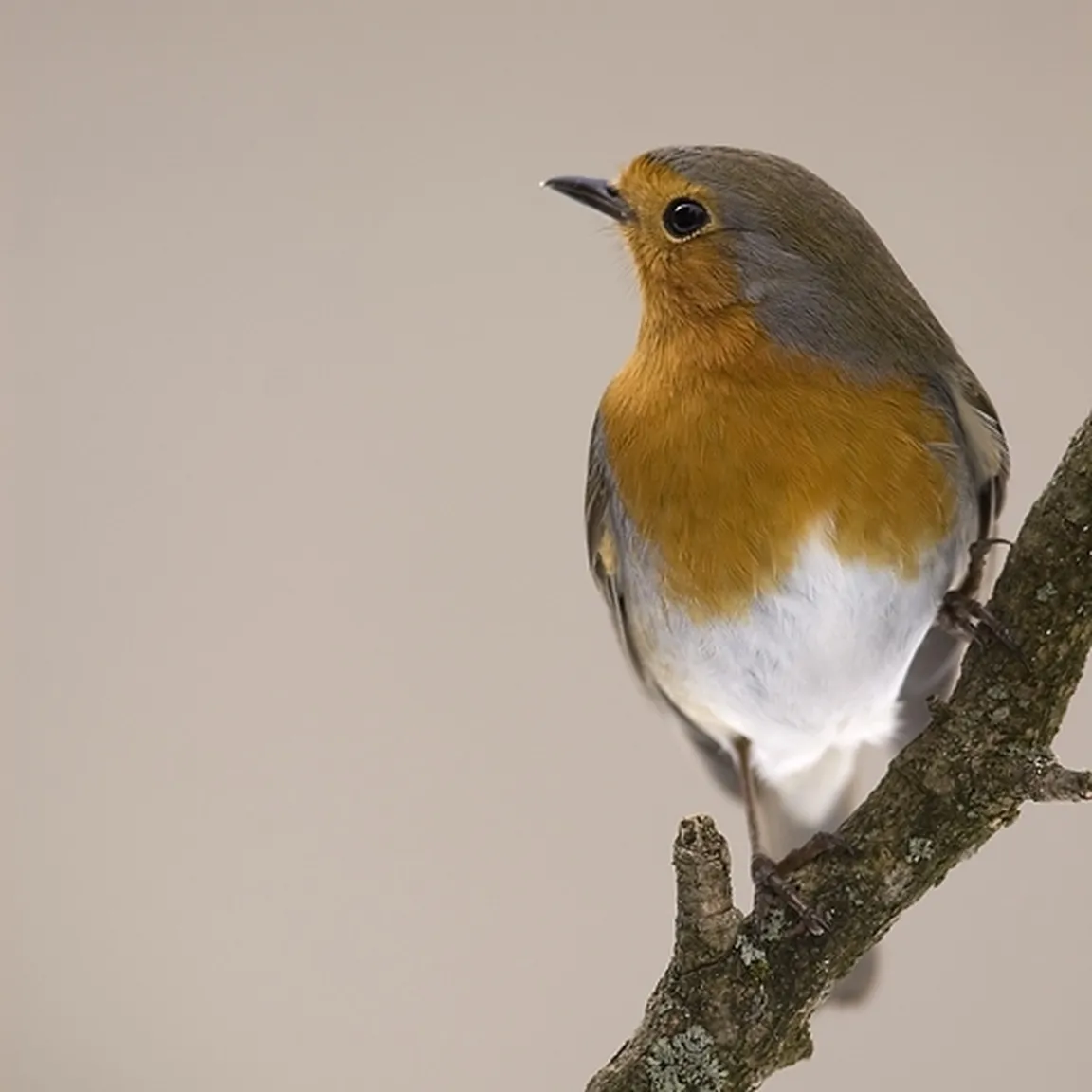
The robin (Erithacus rubecula) is a well-known and common bird, somewhat smaller and considerably leaner than the house sparrow. The long-legged robin is about 12 to 15 cm long. The male and female are of the same color and pattern. The most noticeable feature is its brick-orange chest, throat and face. Its belly is dirty white, the bluish-brown flanks blend into a blue-gray border around its orange breast. The wings and back are dull brown. It has a slender, short bill and long, thin legs. The redness on the chest of the young is replaced by a pattern of brown speckles that also adorn the shoulders and head.
The robin is cautious, but by no means a shy bird, which we will have many opportunities to observe up close. In searching for insects and other invertebrates, such as earthworms or small snails, it likes to drop its wings, make a few rapid sallies, shake its tail and then stand still; afterwards it again moves quickly and stands still... Because the food, which in addition to invertebrates, especially in winter also includes soft fruits and seeds, it generally searches on the ground, a prolonged and thick snow cover can be fatal for a large number of robins.
The robin is a partial migrant, which means that in winter it moves only short distances, for example from high mountains to lower elevations. Thus it is present in our region year-round, but the robin that we will observe in the park, in the garden or on the edge of a nearby forest in summer will almost certainly not be the same robin we encountered at the same places last winter. It prefers areas where dense vegetation meets open, grassy surfaces. Here it nests from March to June. A cup-shaped nest on the ground, in a bank, in a tree hollow or among ivy, and often also in more unusual places, such as the pocket of a robe or an old container, the female weaves from dead leaves and grasses and moss and lines it with fur and feathers. The robin is a distinctly territorial species. The male in the warm part of the year tirelessly proclaims his territory with song, and persistently drives away unwelcome guests; only females are welcome.