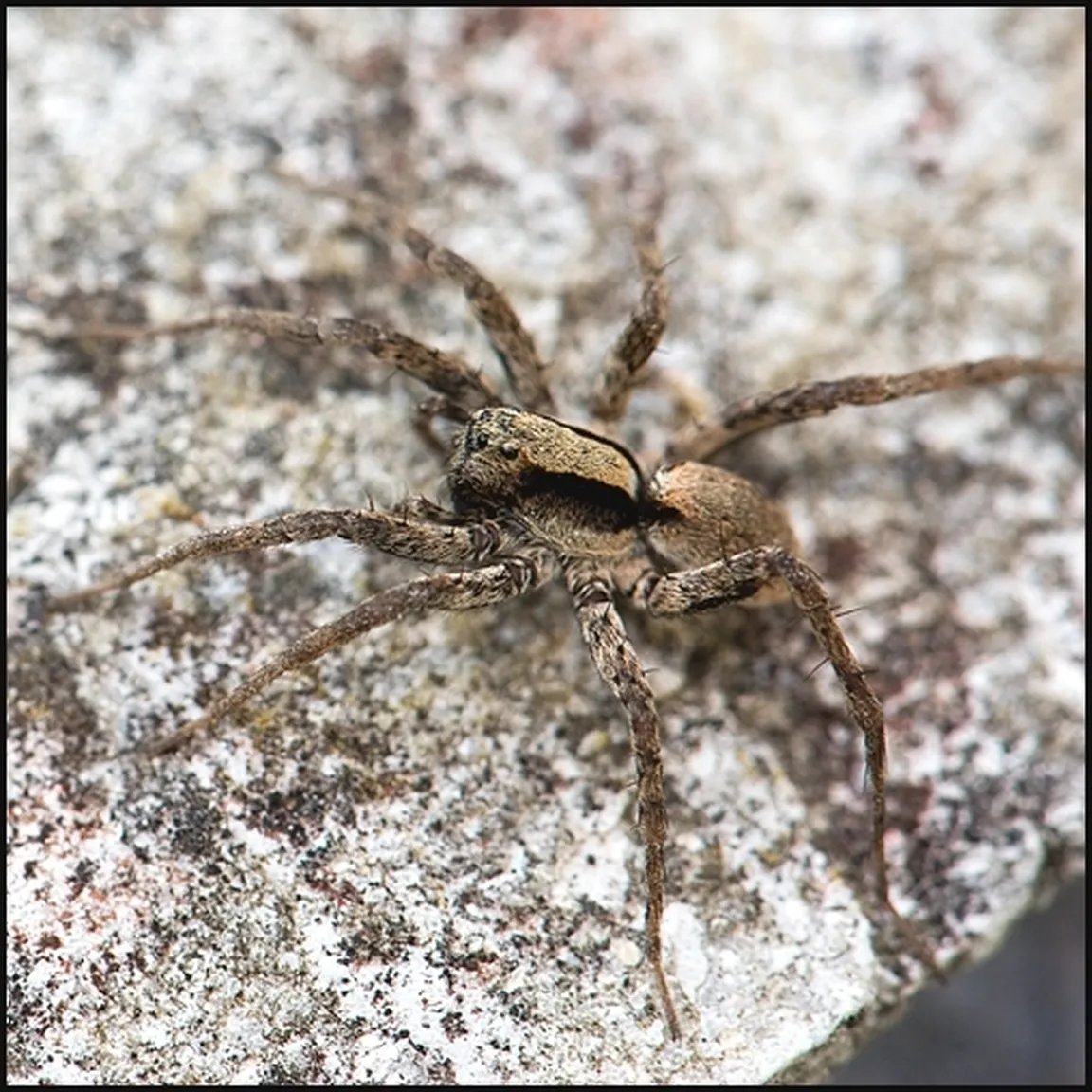
In the wolf spider family (Lycosidae) we count 8 genera with 81 species living in Europe. Wolf spiders are active hunters that search for prey on the ground or in low vegetation. Some of them dig a burrow, which they surround with a silky thread, and in it they hide part of their life. Wolf spiders are usually brown in color, but many among them are adorned with attractive patterns.
From early spring onward, on warm days we can observe numerous spiders scurrying about on the ground here and there, and many wolf spiders are active also at night. It is precisely their running abilities and the brown tones of the shaggy body that contributed to the name of this family. But wolf spiders not only run well, but also leap during running, hunting or fleeing, for example from leaf to leaf or from stone to stone.
The excellent vision of wolf spiders serves not only for finding prey, but also for reproduction. The male finds the female by scent, as he is attracted by the pheromones that the female spider secretes. When he gets close enough, he begins to court her with a dance. In front of her he waves his forelegs and pedipalps, and she watches him. If her courtship dance convinces her, mating follows. Females of most species lay fertilized eggs in an egg sac, which they then carry on the posterior end of the abdomen, attached to the spinnerets; females of some genera (Arctosa, Trochosa and Alopecosa) dig a small burrow in which they hide and guard the sac until the young spiders hatch. Wolf spider females are caring mothers, who rotate the egg sac with eggs, moisten it, and expose it to warm sun rays to give all the eggs the most favorable conditions for development. When the spiderlings begin to hatch from the eggs, the mother opens the sac; the young climb onto her abdomen, where they are allowed to ride for another week or two before each sets out into the wide world.