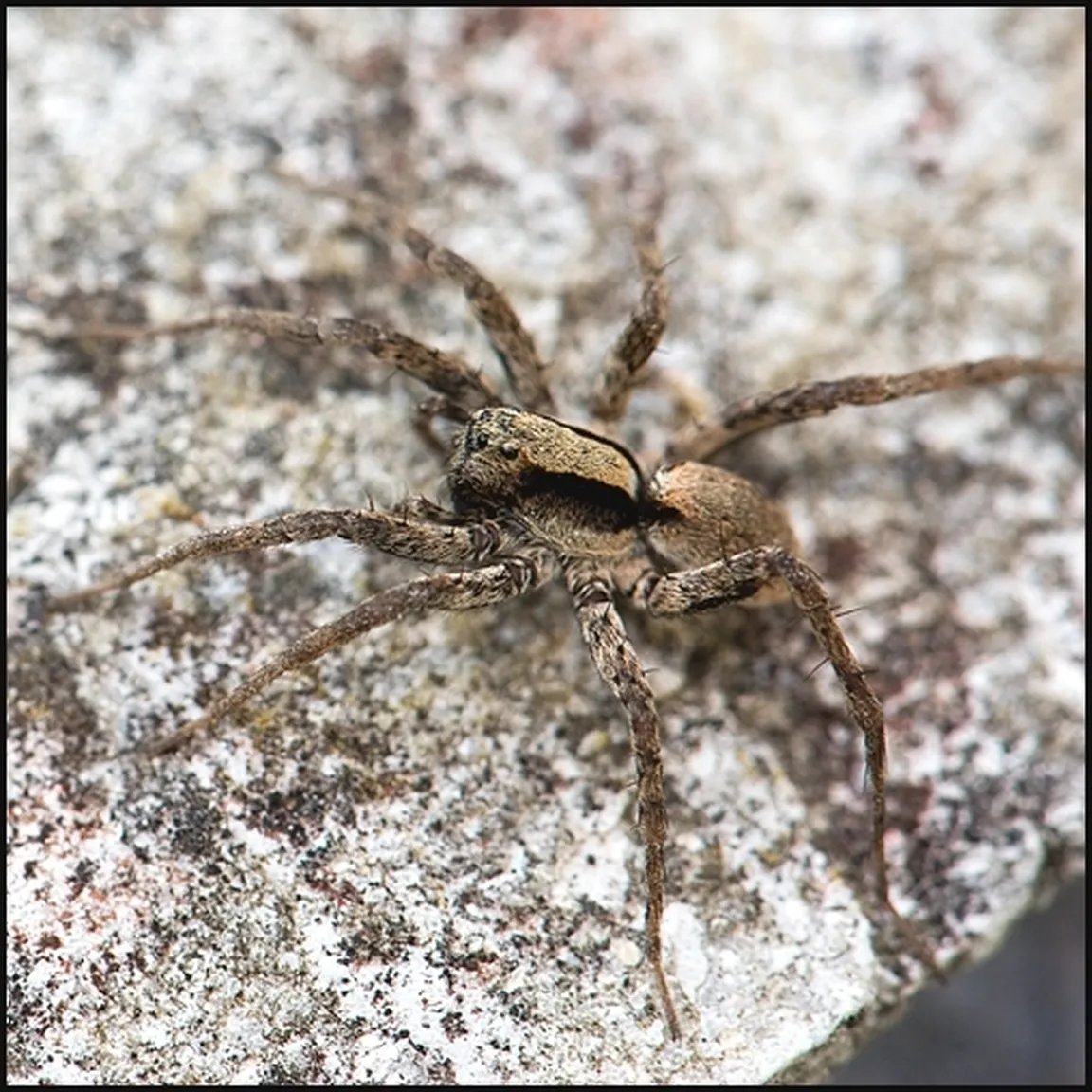
The genus of wolf spiders (Pardosa) is, in terms of species, the richest genus of the wolf spider family (Lycosidae), and at the same time the species of this genus are also the most common and widely distributed. In Europe, 39 species of this genus live. We will find the majority of species of this genus on warm days running on the ground, while on cloudy days they prefer to hide among fallen leaves and other dead plant material. Females become very noticeable towards the end of May or at the beginning of June, as during this time they weave a light-colored sac into which they deposit fertilized eggs. The sac is then carried for two to three weeks, then they open it, and the young climb onto the mother's back. The female carries the brood on her abdomen for another week or so, then the spiders become independent. It is not uncommon for females to make one or two more sacs with the brood by autumn.
Distinguishing species in the genus Pardosa is difficult, as individuals of the same species can look quite different from each other. For reliable identification, it is therefore necessary to observe the structure of the sclerotized parts (epigynes) around the female's genital opening or to observe the male pedipalps with a high-magnification lens…