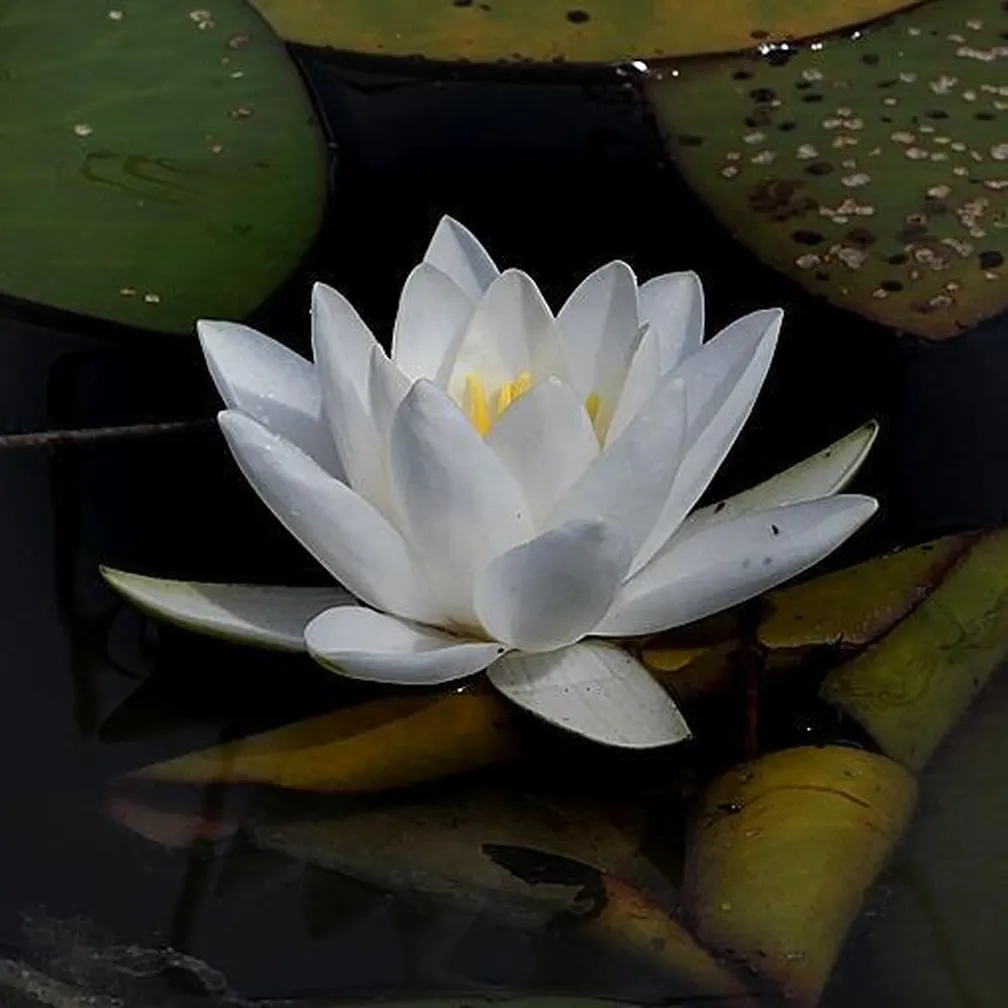

Water lilies (Nymphaeaceae) are aquatic plants with thick rhizomes. Their large floating leaves are circular. The largest leaves among water lilies are produced by the species Victoria amazonica, which lives in the Amazon region, and its leaves reach a diameter of 2 m! All water lilies have 4–5 sepals and numerous stamens and petals, which merge smoothly into one another. For their flowers there is also a single multilocular ovary with a star-shaped groove. After pollination and fertilization, the ovary develops into a fruit, which we call a berry.
This is a simple fleshy fruit. Simple, because it develops from a single pistil; fleshy, because the seed-bearing tissue (the part of the fruit formed from the wall of the ovary) is fleshy throughout – in the berry completely. An example of a fruit that we call a berry is the fruit of a pumpkin.