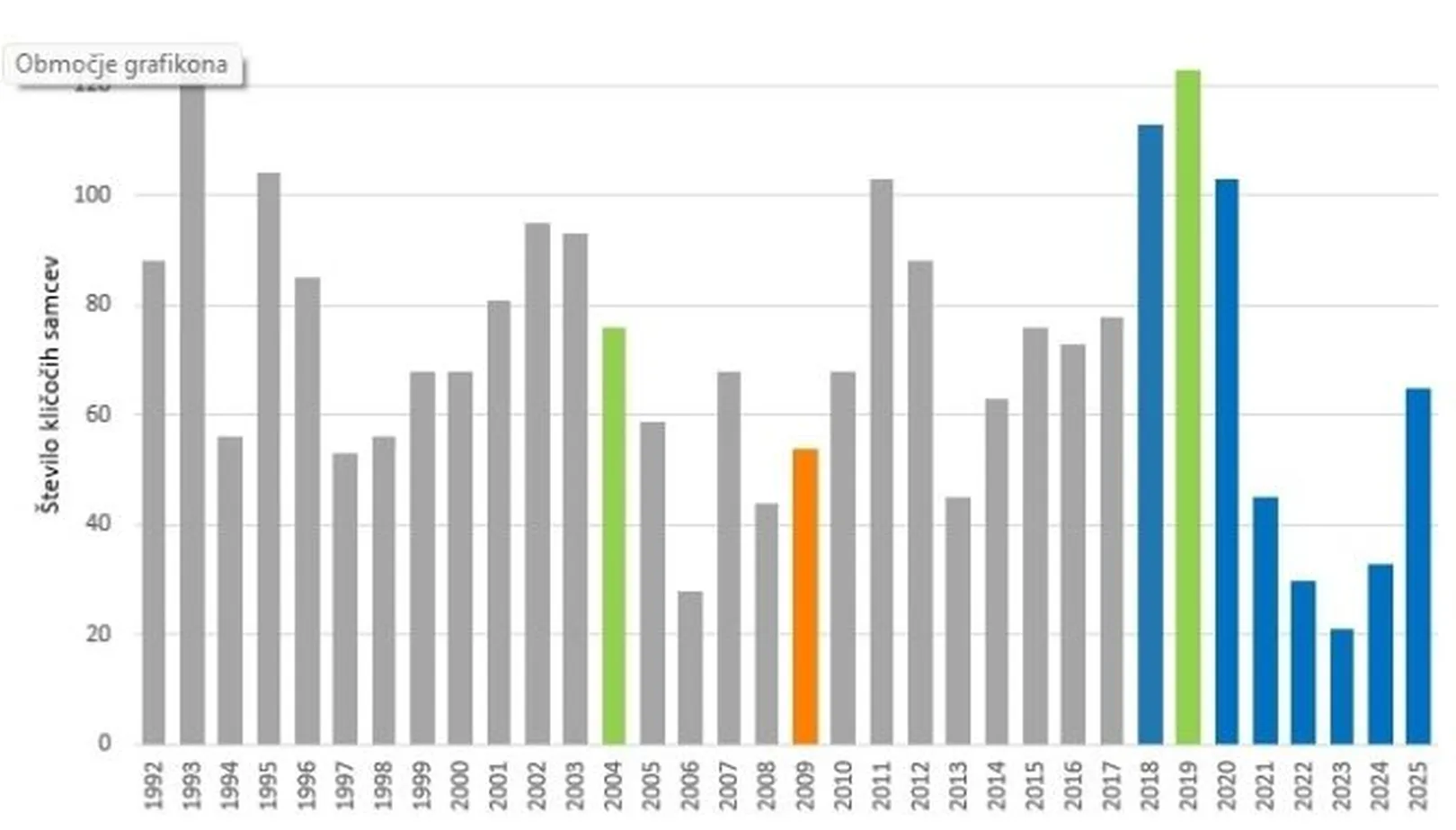
At Lake Cerknica, we have completed the first two corncrake (Crex crex) surveys – of this endangered grassland bird, considered one of the most important indicators of the preservation of wet meadows. This year, we recorded 66 singing males, which is a moderate result – three times more than in 2023, yet still almost half as many as in 2019. Corncrake monitoring at Lake Cerknica has been organized by DOPPS since 1992, and in recent years in cooperation with the Notranjska Park.
Who is the corncrake?
The corncrake (Crex crex) is a bird of wet meadows and, due to its secretive nature, is rarely seen – it is much more often heard than observed. The characteristic call of the males (“krex-krex”) echoes across the wet grasslands at night and resembles the sound of a scythe being sharpened, which is also how the bird got its Slovenian name kosec.
It is a remarkable migratory bird – it winters in Africa and returns each spring to breed in Central and Eastern Europe. Due to intensive agriculture, early mowing, and the disappearance of natural meadows, its population in Europe is in decline, which is why it is classified as endangered.
How is the Survey carried out?
The corncrake survey is special because it takes place at night – between 11 p.m. and 3 a.m., when males are most vocal. Surveyors walk across pre-defined plots and carefully record the locations of all observed individuals.
Results and next steps
The attached graph shows the long-term fluctuations of the corncrake population at Lake Cerknica since 1992.
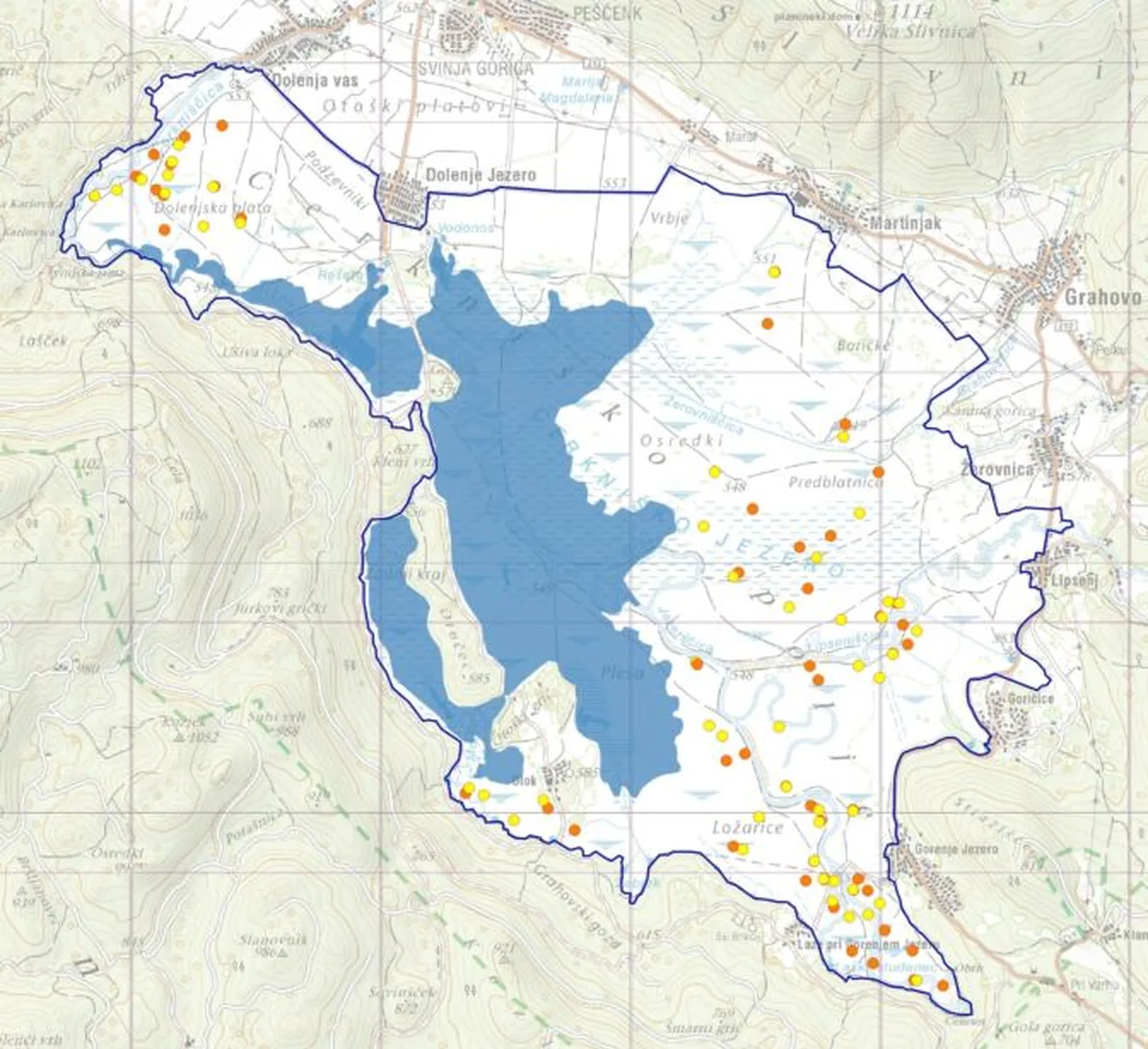
The maps indicate the locations where corncrakes were recorded this year:
- Orange – 1st survey,
- Yellow – 2nd survey.
The blue area shows the extent of the lake at the water level of 276 cm, measured between the two surveys.
The surveys will continue in early July – the 3rd and 4th rounds will follow, providing additional insights into the status of this endangered species in the 2025 breeding season.
A heartfelt thank you to all participants for your dedication, night-time persistence, and contribution to protecting nature.