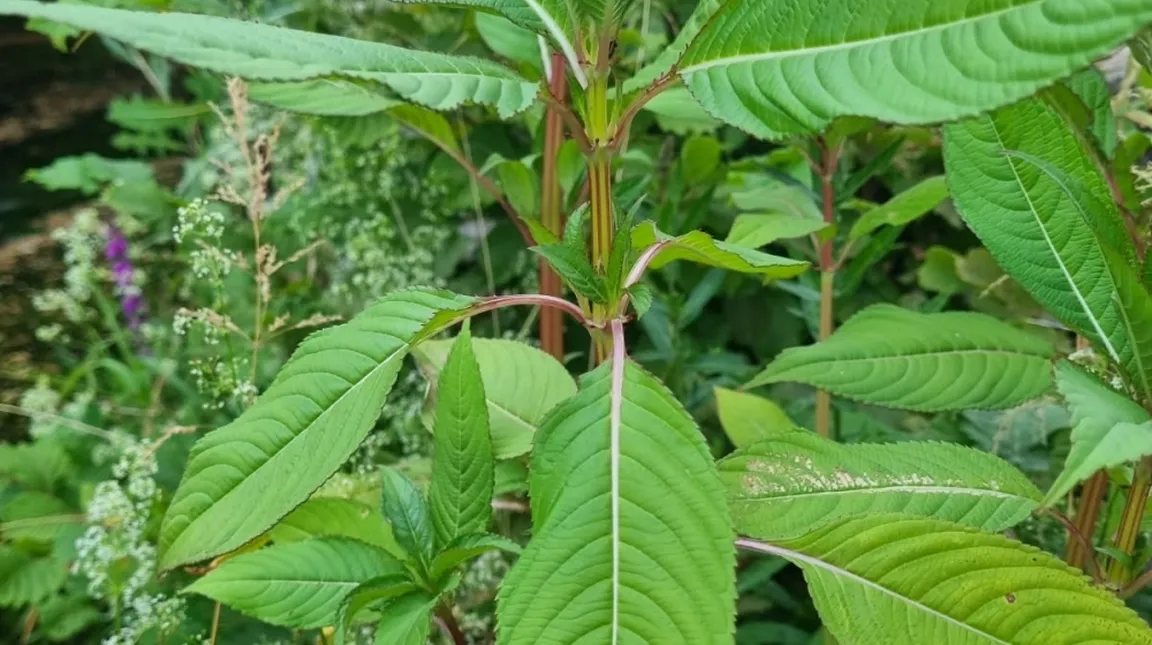
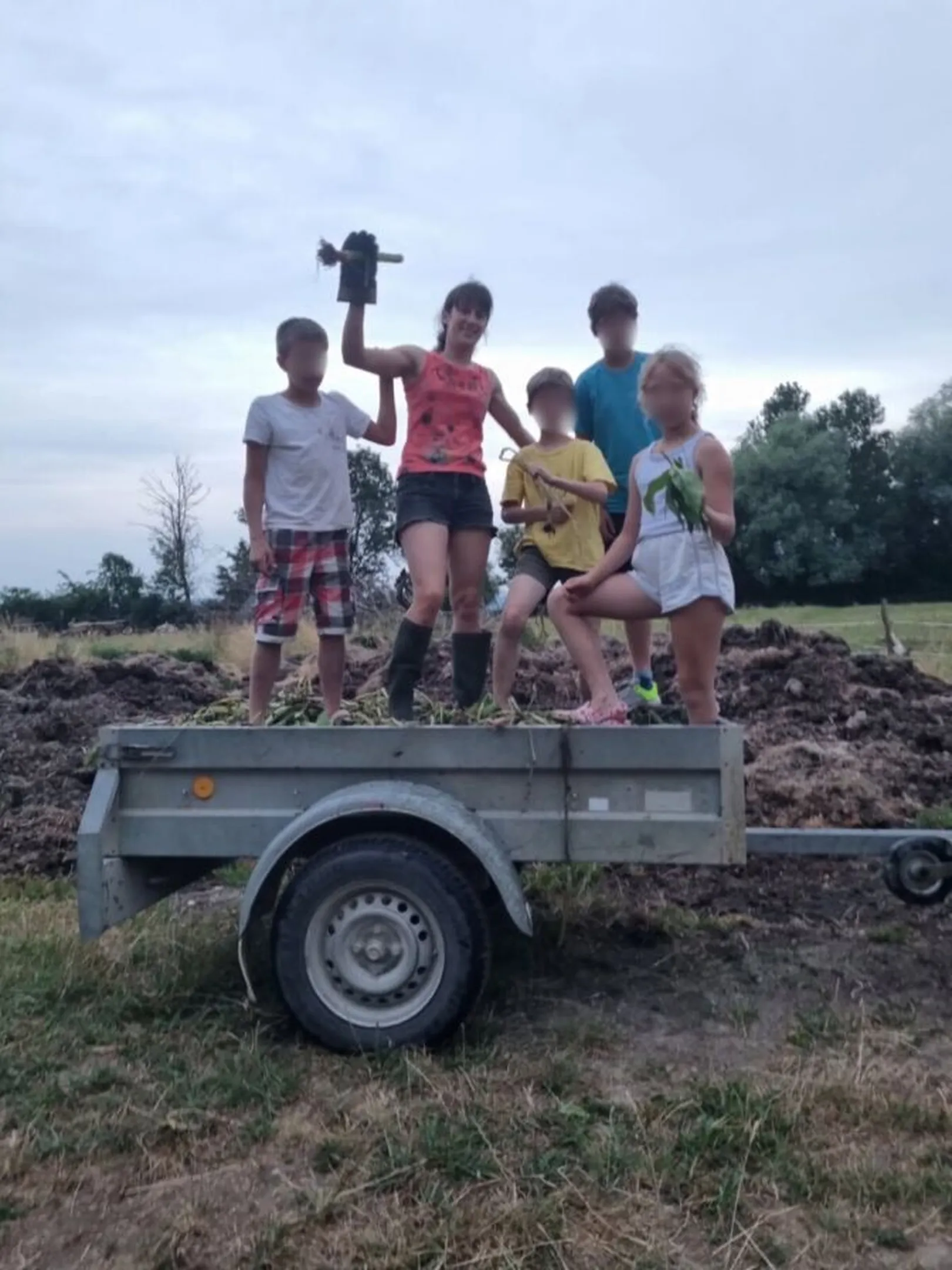
In recent days, an environmentally themed action took place along the Cerkniščica stream near the fire station in Dolenja vas, where the invasive plant – Himalayan balsam (Impatiens glandulifera) – was removed. What made this event so special? The main role was played by the village children, who, with their dedication, showed that the future of nature is in safe hands.
The event was carried out as part of a mentoring project within the Pedagogical-andragogical Training for Mentors program, which encourages knowledge transfer and the active involvement of young people in socially beneficial activities.
Although Himalayan balsam originates from the Himalayas, it spread across Europe as early as the 19th century due to its ornamental value. Today, however, it is considered one of the most problematic invasive species. With its rapid growth, it displaces native species and threatens the stability of riparian ecosystems. It is most commonly found along rivers and streams, where it forms dense stands. Its seeds can “explode” up to seven meters away when touched, making its spread extremely fast.
Under the guidance of LIFE OrnamentalIAS project coordinator Ina Anzeljc, the children removed the plants by hand – and even with the help of a raft – as this remains the most effective method of controlling the species, especially if carried out before flowering and seed dispersal.
Otroci skupaj z Ino Anzeljc, vodjo projekta LIFE OrnamentalIAS.
But this action was more than just a physical task – it was also an excellent learning opportunity. While working, the children learned about the importance of biodiversity, the impact of invasive species, and the need to protect natural resources. Nature became their classroom, and work the best teacher.
And since ideas never run out, a new action is already in preparation.
LIFE OrnamentalIAS
LIFE OrnamentalIAS addresses ornamental invasive alien plants at three levels: preventive action, early detection and rapid response, and their management and removal.
The implementation of extensive nature conservation projects exceeds the financial capacity of the local community, therefore Notranjska Park regularly applies for projects with the possibility of co-financing by the European Union.
The implementation of large-scale conservation projects exceeds the financial capabilities of the local community, therefore Notranjska Park regularly applies for projects with the possibility of co-financing from the European Union.