LIFE FOR SEEDS: The broad-leaved marsh orchid and early marsh-orchid as indicator species of the wet meadows of Lake Cerknica

Published: 29. 01. 2026 Author: NRP Categories: Projects

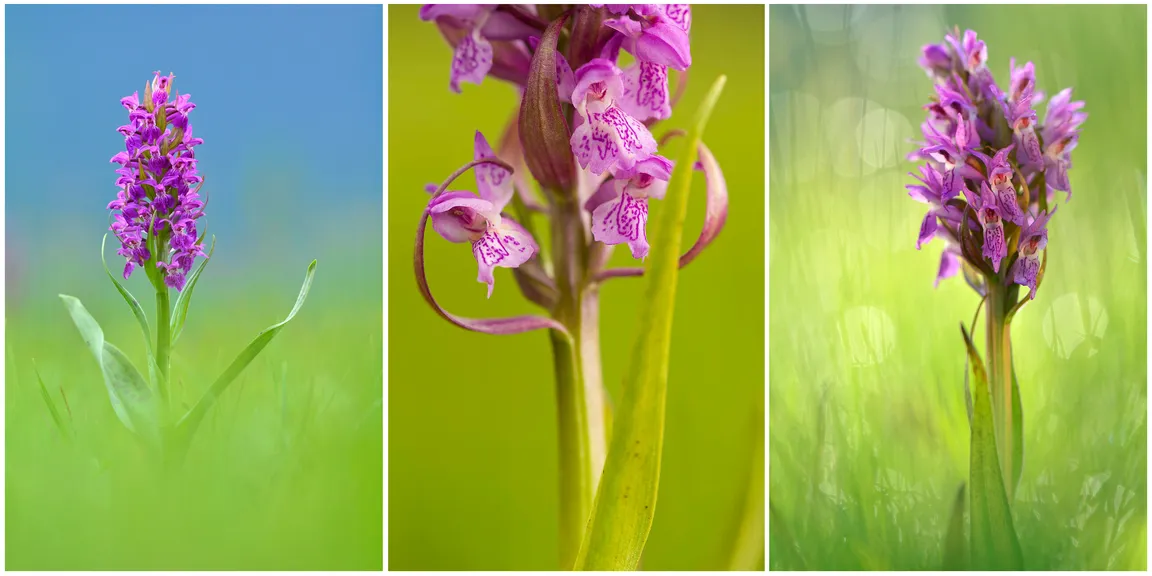
A triptych of macro photographs of wild cuckoos. The left photograph shows a vibrant pink cuckoo standing upright in the middle of a softly blurred green-blue grassy landscape. The middle photograph is a close-up of delicate pink hybrid flowers, showing the tiny patterns on the petals and curled flower buds, with a uniform green and pastel background. The photo on the right shows a slimmer, slightly darker pink cuckoo flower surrounded by delicate reflections of light and warm green bokeh, creating a feeling of morning freshness.
Left: May orchid (Dactylorhiza majalis), right: early marsh-orchid (D. incarnata), center: their hybrid (D. majalis x incarnata). Photo: Jošt Stergaršek

Lake Cerknica, one of the most important and recognizable wetlands in Slovenia, is home to a rich flora and fauna. Among the many species, the broad-leaved marsh orchid (Dactylorhiza majalis) and the early marsh-orchid (Dactylorhiza incarnata), two protected species of orchids, stand out. Both species are important bioindicators – their presence and abundance indicate the good condition of wet grasslands and low marshes and the appropriate management of meadows.

Distribution of orchids and the impact of mowing

Within the LIFE FOR SEEDS project, we monitored the distribution of both orchid species at Lake Cerknica and the impact of meadow mowing. We found that the broad-leaved marsh orchid (Dactylorhiza majalis) thrives best in occasionally to moderately managed wet meadows with Molinia caerulea, where mowing is not too early. The early marsh-orchid (Dactylorhiza incarnata) is found in both regularly and occasionally mowed meadows, primarily in wet meadows with  Molinia caerulea, lowland fen, and tall sedge fen.

Most populations of both species are located in the so-called “mudflats” along the edge of the lake, where wet meadows with Molinia caerulea and basic lowland fen dominate. The soil there is waterlogged and occasionally flooded, but water does not remain for long, creating very favorable conditions for both orchids. We also observe spatial differences between the species: the early marsh-orchid generally grows more toward the inner edge of Lake Cerknica, while the broad-leaved marsh orchid is more often found closer to the outer edge, although this is not always the case. Both species flower from May to July, with the broad-leaved marsh orchid usually blooming slightly earlier and the early marsh-orchid later, and hybrids of the two species also occur.

Threats to population conservation

As both species are protected, it is forbidden to pick them, which can be one of the threats to weakening their populations. In addition, they can be threatened by meadow fertilization, mowing that is too early or too frequent, intensive grazing, and abandonment of land use, which leads to overgrowth of meadows.

The orchids grow in the company of many late-flowering and late-fruiting species. The greatest threat to them is management that does not allow flowering and seed production. In the long term, repeated inappropriate management leads to population decline and a loss of meadow biodiversity.

Sustainable management and recommendations

Research from the LIFE FOR SEEDS project has shown that the broad-leaved marsh orchid  and the early marsh-orchid can tolerate mowing even every other year. This approach allows for the conservation of the orchids and improves conditions for other late-flowering meadow species, while maintaining ecosystem balance.

Through such research, we contribute to a better understanding of natural processes and provide knowledge that is essential for finding solutions beneficial both for nature and for the long-term management of meadows in our very special piece of the world.

LIFE FOR SEEDS

LIFE FOR SEEDS focuses on establishing a seed bank of 300 representative species of three priority habitat types at the European Union level.

Nalaganje...
Projects in the Notranjska Park
Logotip notranjskega parka z rastlino in metuljem.

Projects in the Notranjska Park

The implementation of extensive nature conservation projects exceeds the financial capacity of the local community, therefore Notranjska Park regularly applies for projects with the possibility of co-financing by the European Union.

The implementation of large-scale conservation projects exceeds the financial capabilities of the local community, therefore Notranjska Park regularly applies for projects with the possibility of co-financing from the European Union.

Read more
Read more