LIFE OrnamentalIAS: Invasive alien plants along the Cerkniščica River and Lake Cerknica

Published: 26. 02. 2026 Author: NRP Categories: Projects

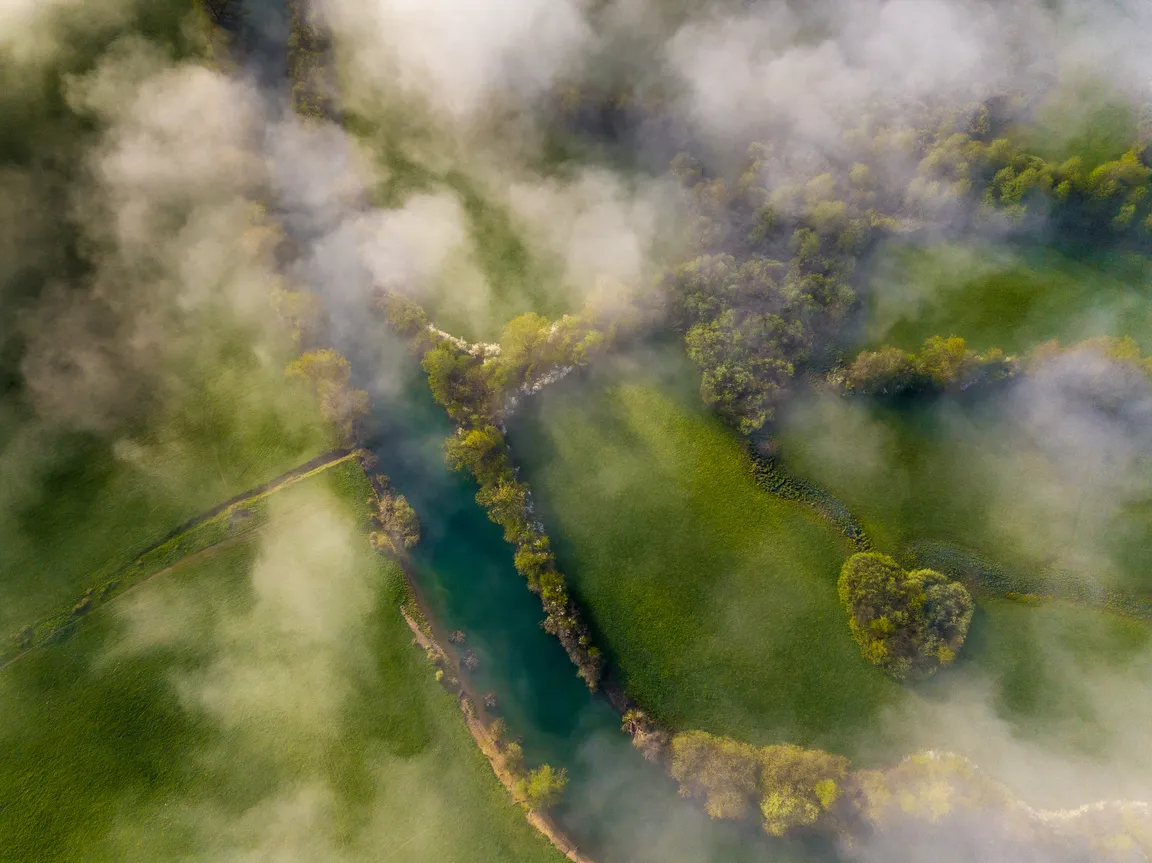
Lake Cerknica photographed from the air, where water meanders through a partially dried-up karst field.
Photo: Bojan Senjur

The Cerkniščica river basin and the intermittent Lake Cerknica represent one of the most recognizable karst wetland systems in Slovenia. Due to its hydrological dynamics, landscape diversity, and rich habitats, this area is an important refuge for many native plant and animal species. These natural characteristics, together with human interventions, create conditions that enable the successful spread of invasive alien plants (IAP).

As part of the LIFE OrnamentalIAS project, we surveyed the wider area of Cerknica, Cerkniščica, and Lake Cerknica and analysed the spread of IAS and their impact on natural habitats. The survey was conducted during the growing seasons of 2024 and 2025, from May to October, when most invasive species are in bloom, allowing for easier and more reliable identification and more accurate recording. Based on the collected data, we determined which species are most widespread and have the greatest negative impact on the local ecosystem, paying particular attention to the early identification of species in the initial stages of spread. Most importantly, we also removed such species immediately. We also recorded the locations of illegal dumpsites for garden waste, which often contain invasive plants and represent an important vector for their spread into natural ecosystems. We will also be removing these areas of green waste containing invasive species this year.


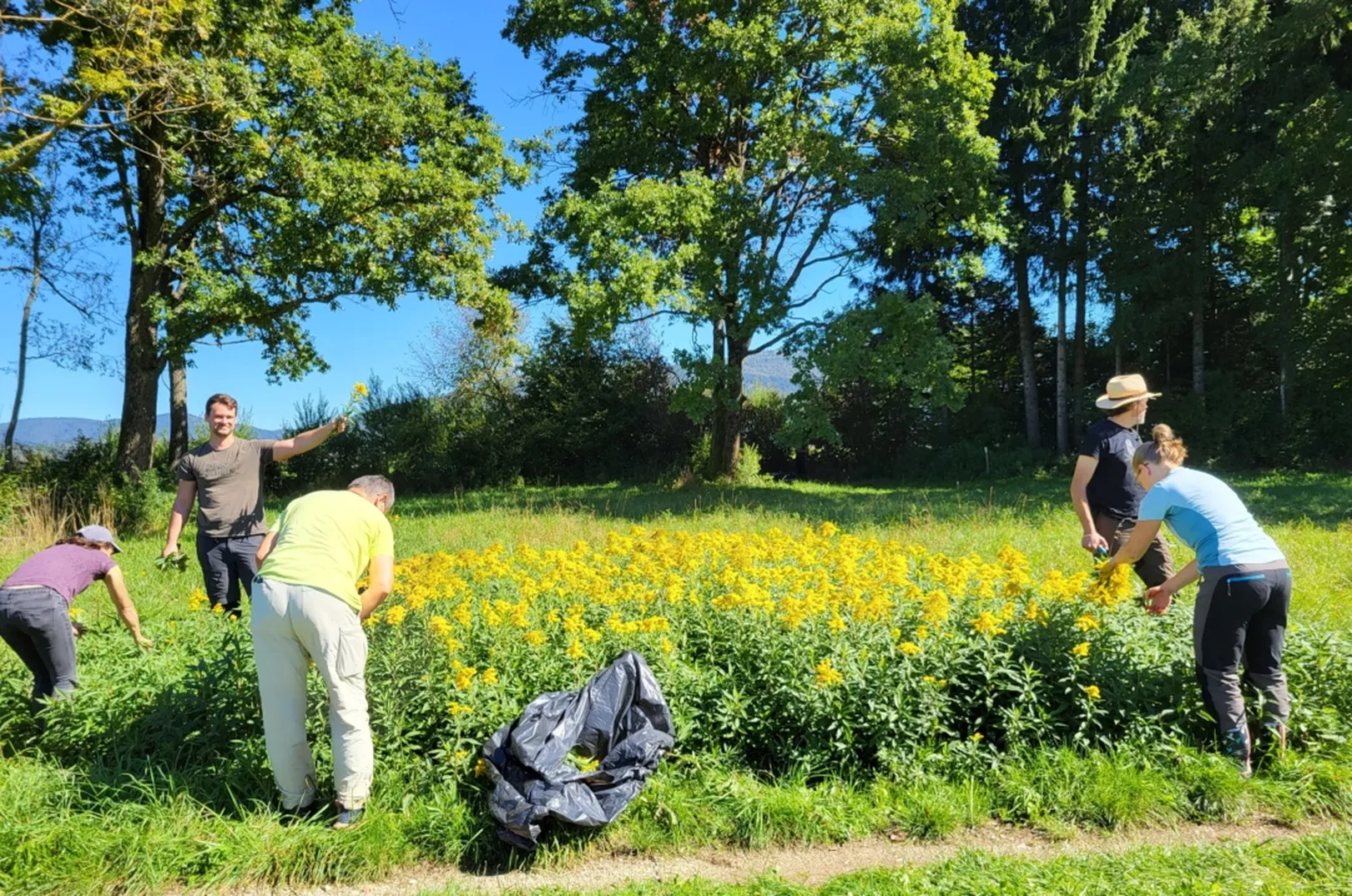
A group of people are manually removing invasive plants, an invasive alien plant, from a meadow. An open black bag lies in the middle, surrounded by a dense cluster of yellow flowers. In the background are tall trees and a blue sky.
Removal of invasive species (Photo: NRP archive)


Invasive alien plants are not naturally present in the environment but have mostly been introduced through human activity. Due to their rapid growth, effective reproduction, and exceptional adaptability, they displace native species, reduce biodiversity, and alter the structure of habitats. Some species can also affect human health; common ragweed (Ambrosia artemisiifolia) pollen is a strong allergen. Narrow-leaved ragwort (Senecio inaequidens) contains toxins that can enter the food chain. The fruits of cherry laurel (Prunus laurocerasus) are also poisonous if eaten.

In the area of Cerkniščica and Lake Cerknica, the largest areas are covered with alien goldenrod (Solidago canadensis, Solidago gigantea), annual fleabane (Erigeron annuus), Canadian poplar (Populus × canadensis), cherry laurel (Prunus laurocerasus), black locust (Robinia pseudacacia), Himalayan balsam (Impatiens glandulifera), knotweed (Reynoutria spp.), common ragweed (Ambrosia artemisiifolia), and rudbeckia and aster (Rudbeckia spp., Aster spp.).

Most invasive plants occur along riverbanks, where flooding and erosion create open soil ideal for the colonization of species such as Japanese knotweed (Fallopia japonica), Himalayan balsam, and devil's beggarticks (Bidens frondosa). Disturbed soil along roads, embankments, and construction sites allows for the rapid colonization of species such as giant and Canadian goldenrod, annual fleabane, and common ragweed. In agricultural areas, invasive plants most often occur in fields and meadows. The most common are small-flowered galinsoga (Galinsoga parviflora) and Shaggy soldier (G. ciliata), annual fleabane, ragweed, rudbeckia, and goldenrod. In settlements, we most often encounter cherry laurel, asters, rudbeckia, holly-leaved barberry (Berberis aquifolium) and bamboo (Phyllostachys spp.), common milkweed (Asclepias syriaca), which can spread from the "controlled environments" of gardens into the natural environment, where they spread rapidly. However, these plants spread most rapidly through improperly disposed green waste.

Invasive plants do not yet play a dominant role in natural wetlands; with goldenrod and annual fleabane most commonly found on the edges of wetlands. In forests, these plants mostly stay on the edges or in clearings, where species such as black locust, goldenrod, annual fleabane, and red-osier dogwood (Cornus sericea) grow.

The spread of invasive plants is linked to natural disturbances such as floods, watercourses as corridors, warmer climates, and nutrient-rich soils. Invasive species thrive mainly in open, sunny habitats, where they can reduce the diversity of plant communities, affect animal species, alter the structure of wetlands, hinder natural succession, and restrict traditional land uses. Tall perennials and tree species have the most negative impact.

Effective management includes regular monitoring of the spread and removal of invasive species in the early stages of growth, raising awareness among the local population, volunteer actions, and restoration of affected habitats. Lake Cerknica and its surroundings are a sensitive ecosystem where invasive alien plants pose a serious but manageable threat. Early action, local community involvement, and long-term monitoring are key to preserving the natural diversity of our very special piece of the world.

LIFE OrnamentalIAS

LIFE OrnamentalIAS addresses ornamental invasive alien plants at three levels: preventive action, early detection and rapid response, and their management and removal.

Nalaganje...
Projects in the Notranjska Park
Logotip notranjskega parka z rastlino in metuljem.

Projects in the Notranjska Park

The implementation of extensive nature conservation projects exceeds the financial capacity of the local community, therefore Notranjska Park regularly applies for projects with the possibility of co-financing by the European Union.

The implementation of large-scale conservation projects exceeds the financial capabilities of the local community, therefore Notranjska Park regularly applies for projects with the possibility of co-financing from the European Union.

Read more
Read more