LIFE TRŠCA: Bedding pellets from the plant biomass of Lake Cerknica

Published: 17. 10. 2025 Author: NRP Categories: Projects

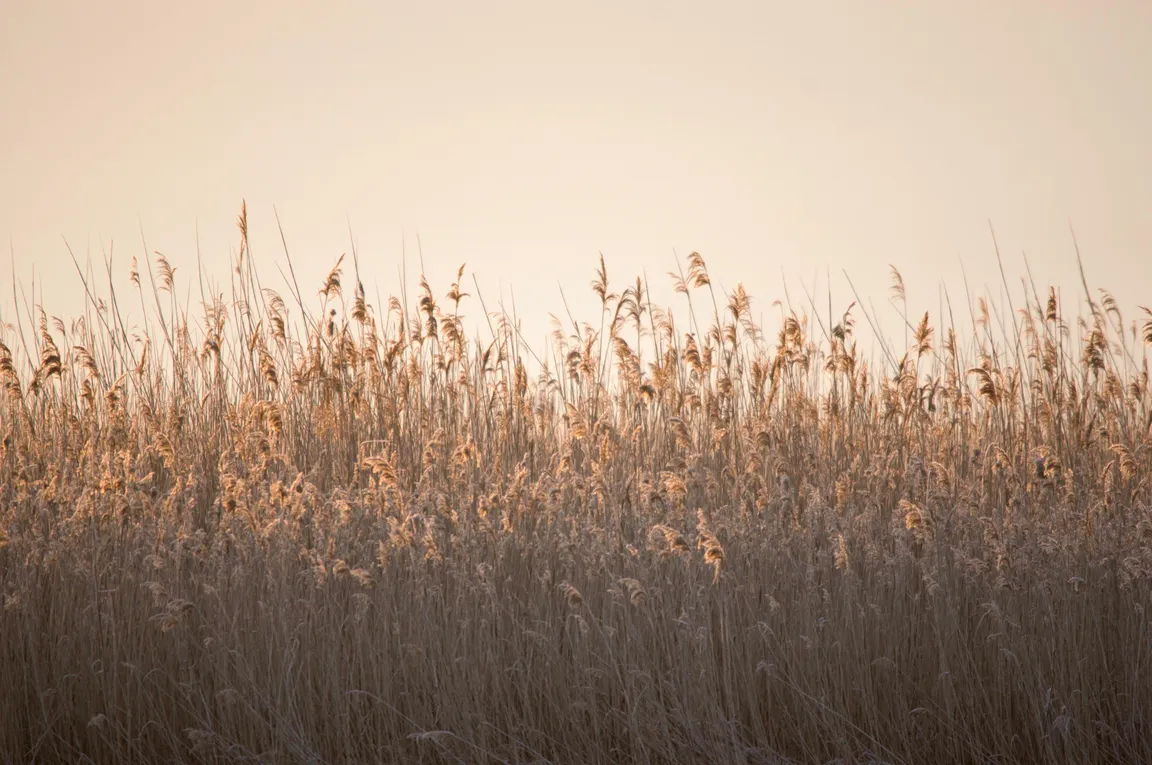
A field of tall reeds illuminated by warm light at sunrise or sunset, with a soft, almost white sky in the background.
Photo: Rudi Kraševec

As part of the LIFE TRŠCA project, the first bedding pellets made from plant biomass of Lake Cerknica were successfully produced. In the area of the Notranjska Park, efforts have been ongoing for several years to sustainably use dead biomass, which is left behind each year by the intermittent Lake Cerknica.

In early October 2024, we visited the international pelletizing center in Halbenrain, Austria, where we delivered a few kilograms of dried grass for testing pellet production. We found that the grass must be properly prepared for pelletization: individual plants must not exceed 20 cm in height, and the moisture content must not exceed 15%.

In accordance with these conditions, we subsequently delivered 960 kg of dried grass in three bales, from which 940 kg of final pellets were produced.

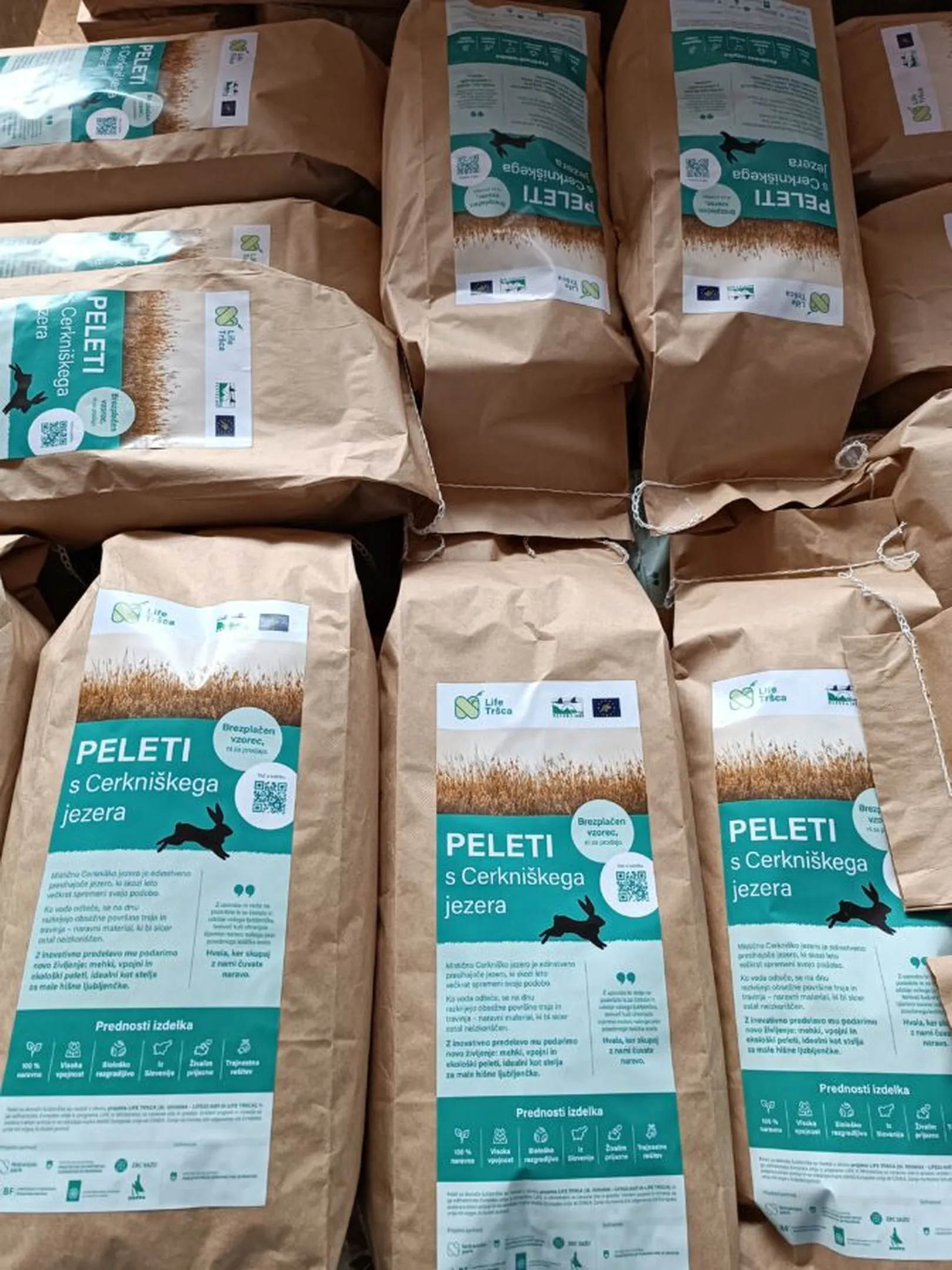
A pile of paper bags, all labeled sticker with 'Peleti s Cerkniškega jezera', featuring logos, a QR code, and icons indicating the product's benefits.
The first bedding pellets made from plant biomass of Lake Cerknica were successfully produced. (Photo: archive NRP)

Production process

The production of pellets takes place in several stages, with the key goal of preserving the natural composition of the material and achieving properties most suitable for bedding:
1. Raw material acquiaition: The materials come from the wet meadows and reedbeds of Lake Cerknica. Suitable raw material contains no soil, mold, or rot, and the moisture content must be below 15%.
2. Grinding and preparation: The bales are mechanically broken down, followed by pre- and final grinding to particle sizes smaller than 6 mm. If necessary, the material is further dried to achieve optimal moisture for pelletizing (around 10–12%).
3. Pelletizing: The ground material is compressed through a matrix at temperatures between 90 and 130 °C. This process not only shapes the pellets but also sterilizes and disinfects the material.
4. Cooling and cleaning: The resulting pellets are cooled and de-dusted to remove any small particles or dust. They are then packaged in various types of containers, ready for distribution.

The pellets were analyzed in accordance with the Composting Regulation by the National Laboratory for Health, Environment, and Food. The results showed that the pellets are microbiologically safe and do not contain any substances that are hazardous to animals or humans.

Analysis Report of Bedding pellets for small animals from the plant materials of Lake Cerknica

Advantages of using bedding pellets

Pellets from lake plant materials offer numerous environmental, economic, and practical advantages compared to traditional bedding made of straw or sawdust:
1. Exceptional absorbency – pellets can absorb up to 400% of their own weight, meaning less frequent bedding changes and better hygiene for animals.
2. 100% natural product – free of chemicals or additives; after use, they can be composted, further reducing environmental impact.
3. Less dust – due to the compressed form and cleaning during production, they contain very little dust, which benefits the respiratory health of animals.
4. Sustainable use of biomass: the use of excess biomass from Lake Cerknica reduces the amount of waste, preserves wet meadows, and contributes to biodiversity.

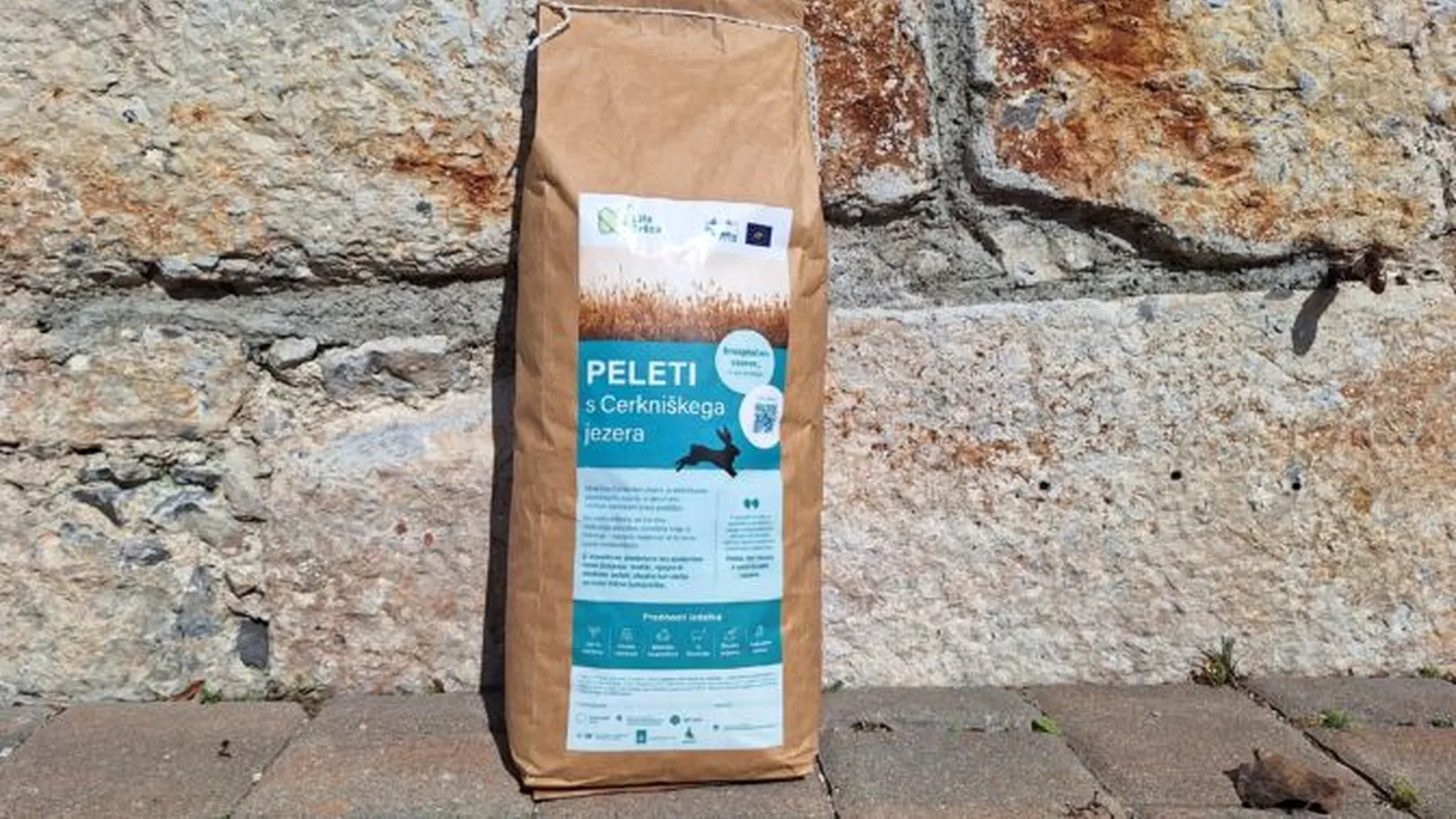
paper bag of pellets labeled 'PELETI s Cerkniškega jezera', placed on a paved surface in front of a stone wall, with a label featuring logos, certifications, and graphics highlighting the product’s natural and eco-friendly composition.
In the area of the Notranjska Park, efforts have been ongoing for several years to sustainably use dead biomass, which is left behind each year by the intermittent Lake Cerknica. (Photo: archive NRP)

Cooperation and testing

We will distribute the pellets free of charge to the local community and anyone who wants to test their potential as bedding for small animals. Feedback will help in the further development and use of grass as a natural material and contribute to the sustainable management of the area.

You can pick up your free bedding pelletsfor small animals at the Visitor center Lake Cerknica, located at Dolenje Jezero 68.
For more info, you can email us at dejvid.tratnik@notranjski-park.si.

LIFE TRŠCA

With LIFE TRŠCA we will improve the conservation status of the intermittent Lake Cerknica.

Post-event Report: Taste Notranjska 2025
Back

Post-event Report: Taste Notranjska 2025

On a beige background is the logo for the culinary festival Taste Notranjska, featuring a red and blue flower with a green branch and a spoon above the text 'Okusi Notranjske'.
LIFE TRŠCA: First year of continuous water level observations of the »lake windows«
Cracked, dry soil illustrates the effects of prolonged drought and water scarcity in the natural environment of Lake Cerknica.
Next

LIFE TRŠCA: First year of continuous water level observations of the »lake windows«

Projects in the Notranjska Park
Logotip notranjskega parka z rastlino in metuljem.

Projects in the Notranjska Park

The implementation of extensive nature conservation projects exceeds the financial capacity of the local community, therefore Notranjska Park regularly applies for projects with the possibility of co-financing by the European Union.

The implementation of large-scale conservation projects exceeds the financial capabilities of the local community, therefore Notranjska Park regularly applies for projects with the possibility of co-financing from the European Union.


Read more
Read more