LIFE TRŠCA: Compost from Lake Cerknica

Published: 05. 03. 2026 Author: NRP Categories: Projects

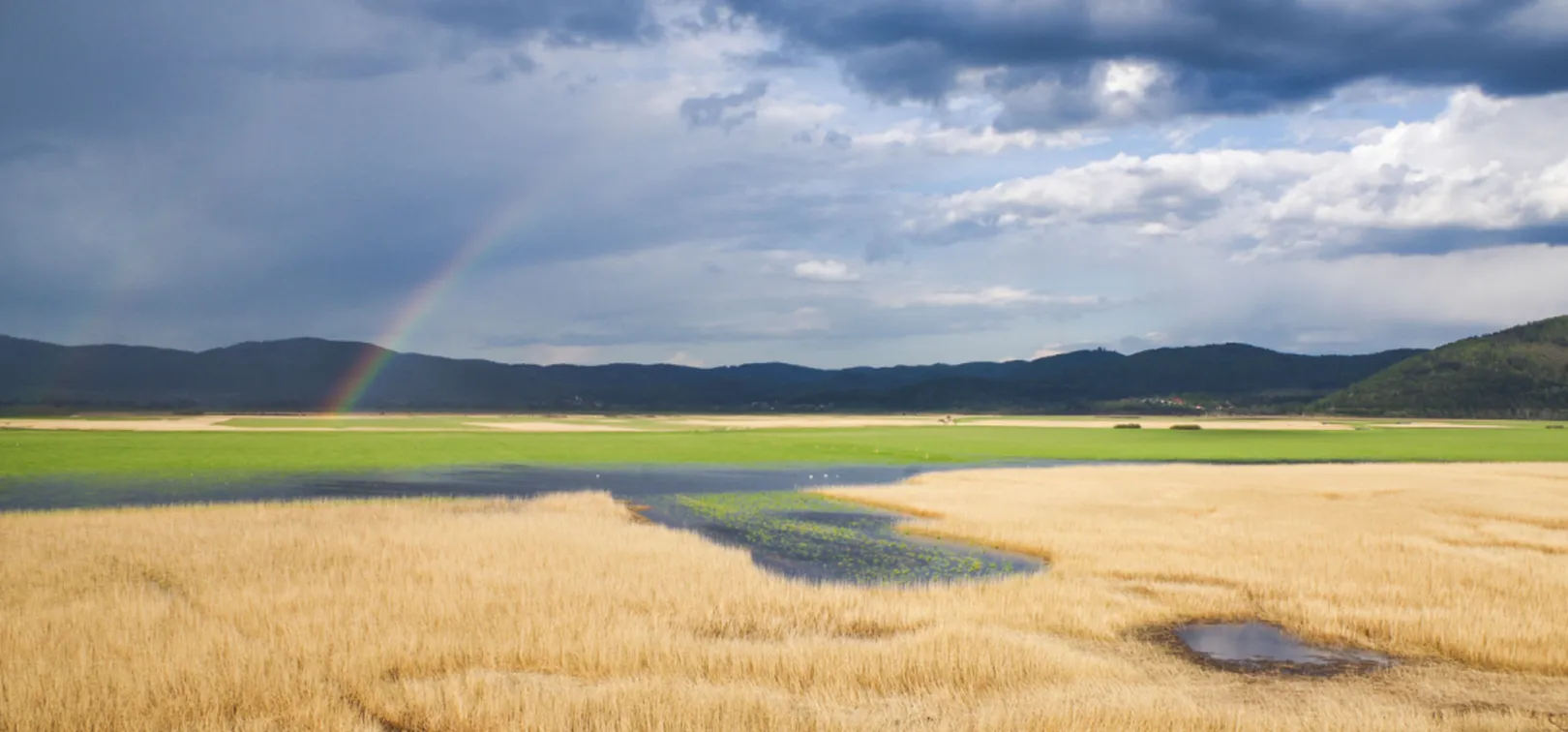
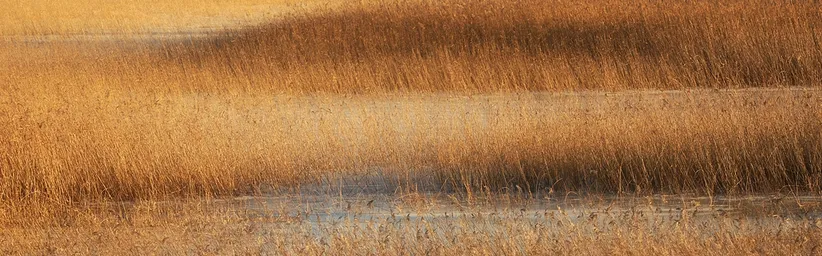
From lake to garden – compost from Lake Cerknica, a photo of a reeds and a photo of a bag of compost.

As part of the LIFE TRŠCA project, compost was successfully produced from Lake Cerknica. Since 2017, Notranjska Park has been exploring ways to use the grass and reeds that remain as dead biomass at Lake Cerknica every year.

Compost from Lake Cerknica is a natural fertilizer obtained through the controlled biological decomposition of plant material originating from one of the most dynamic wetland ecosystems in Slovenia. It is made from the remains of waste grass from wetland meadows, reeds, and other tougher plant material.

What makes this compost special is its origin—the biomass comes from an area where floods and droughts alternate, which affects the composition of the vegetation and, consequently, the properties of the final product. Compost from Lake Cerknica is completely natural, without any additional chemicals or artificial additives, and is suitable for use in gardens, agricultural areas, or green spaces.

Composting process

Raw material procurement

The source biomass comes from the intermittent Lake Cerknica, where plant matter that would otherwise remain uncleared is removed every year. Pure plant biomass is used, without the presence of soil, plastic, metals, or other inappropriate contaminants.

Delivery and preparation of material

We delivered approximately 50 tons of biomass from Lake Cerknica to the Kompostarna ROSA in Vrhnika. The plant material was delivered in the form of large bales, which were arranged in long rows under a covered area at the composting plant. This ensured the right conditions for further processing and the start of the decomposition process.

Adding microorganisms and mixing

To accelerate and stabilize the decomposition process, natural microorganisms and bacteria that promote composting were added to the biomass. In the initial phase, the material was regularly mixed by machine, which enables uniform decomposition, sufficient aeration, and prevents the formation of unsuitable conditions in the compost mass.

Controlled composting process

Controlled composting takes place in closed composting pools, where optimal temperature, appropriate humidity, and constant ventilation are crucial. Only with proper control can the process proceed safely and efficiently.

Advantages of using compost from Lake Cerknica

The use of compost obtained from the biomass of Lake Cerknica brings numerous advantages that are beneficial to both nature and humans:

Improved soil quality

Compost enriches the soil with organic matter, improves its structure and aeration, and stimulates the activity of soil microorganisms and other beneficial organisms. This makes the soil more fertile, better able to retain water and nutrients, and more resistant to erosion.

Natural plant fertilization

Compost allows for the gradual release of nutrients such as nitrogen, phosphorus, and potassium, which plants can use effectively. At the same time, it reduces the need for artificial fertilizers, which protects the environment and prevents soil, water, and air pollution.

Preservation of wet meadows and biodiversity

Regular removal of dead biomass helps maintain the characteristic ecosystems of Lake Cerknica. Plant biomass deposits suppress vegetation growth when left uncleared, as they act as a mulch.

Regular removal of dead biomass enables the maintenance of the characteristic ecosystems of Lake Cerknica. (Photo: Rudi Kraševec)

Initial results

Pilot composting of biomass from Lake Cerknica has shown that the compost obtained is of high quality and suitable for various uses. The controlled decomposition process was carried out in accordance with professional standards, ensuring that the final product contains rich organic matter suitable for improving soil and supporting healthy plant growth. In accordance with the Regulation on the processing of biodegradable waste and the use of compost or digestate, our compost belongs to quality class 1. Due to its high nutrient content and basic pH, it is recommended as an additive to garden soil (in a ratio of 1:3 or 1:4).

As part of the LIFE TRŠCA project, the compost will be available to local residents and visitors to Notranjska Park, who will be able to try it out free of charge in their gardens, agricultural areas, or green spaces.

Compost quality report

Report on compost quality control

LIFE TRŠCA

With LIFE TRŠCA we will improve the conservation status of the intermittent Lake Cerknica.

Nalaganje...
Projects in the Notranjska Park
Logotip notranjskega parka z rastlino in metuljem.

Projects in the Notranjska Park

The implementation of extensive nature conservation projects exceeds the financial capacity of the local community, therefore Notranjska Park regularly applies for projects with the possibility of co-financing by the European Union.

The implementation of large-scale conservation projects exceeds the financial capabilities of the local community, therefore Notranjska Park regularly applies for projects with the possibility of co-financing from the European Union.

Read more
Read more