LIFE TRŠCA: First year of continuous water level observations of the »lake windows«

Published: 10. 10. 2025 Author: NRP Categories: Projects

Cracked, dry soil illustrates the effects of prolonged drought and water scarcity in the natural environment of Lake Cerknica.
Photo: Rudi Kraševec

At the end of August 2024, the Karst Research Institute ZRC SAZU, within the framework of the LIFE TRŠCA project, upgraded the measuring network for continuous water level observations, with the main aim of determining local deviations in water levels at different locations of the polje. To the existing measuring points held by the Slovenian Environment Agency (ARSO) at Dolenje and Gorenje Jezero (Stržen watercourse) and in Cerknica (Cerkniščica tributary) and the Institute for Karst Research ZRC SAZU in Rešeto, Zadnji kraj, Narti and in two sumps of the Mala and Velika Karlovica caves, eight additional measuring points were added in the central part of the polje: confluence of Lipsenjščica and Stržen rivers, confluence of Žerovniščica and Stržen rivers, Zadnji kraj – Kotel, Levišča, Ajnce jame, Velika Ponikva, Trščenke and Osredki. Due to their morphology and direct connection to groundwater, most of these points are often called "lake windows".

Two researchers are working on the dry, cracked lakebed, which shows signs of prolonged drought. One is kneeling and observing the process, while the other is digging into the soil with a shovel in search of measuring instruments. Next to them stands a GPS device on a tripod, enabling precise geolocation data recording. In the background, vegetation is visible along the lake’s edge, indicating a transition between the dry area and a greener riparian zone.
Figure 1: Searching for a data logger in Velika Ponikva observation point.

At the end of July and the beginning of September 2025, the first and second visits to all measuring points were made, as they are only accessible at very low water levels. The primary reason for the visit was to transfer data about hydrological observations, whereas the secondary reason was precise geodetic measurements of the instrument locations. Due to the absence of a stable bedrock, some instruments were installed on concrete blocks, which can eventually settle into the muddy base. It turned out that after the first year of measurements, no changes were detected in the position of the blocks, which is indicating that the muddy base is sufficiently solid even during flooding.

A water level gauge installed on the dry, cracked lakebed transmits water level data to a mobile device. The sensor embedded in a concrete block is connected to a handheld device and a smartphone, enabling precise monitoring of water level changes and the impact of drought on the environment.
Figure 2: Data transfer from an instrument.

The first year of measurements showed that the dynamics of flooding and drying out of lake windows is very diverse. It turned out that at almost every location the water level rises at a different time and also at a different speed rate. The same applies to drying out periods, as the water level at each location falls at a different period and at a different rate. Significant differences can be observed even at the closest locations, which is somewhat unexpected. The consistent fluctuation of the water level is thus present only at the highest water levels, when the water level is practically flat throughout the lake.

The graph shows water level fluctuations at eleven measuring sites between summer 2024 and summer 2025. Lines in different colors represent changes in water level in millimeters, while the upper bar section displays precipitation amounts in mm/h
Figure 3: Water level oscillation at all observation points from summer 2024 to summer 2025.

Due to the extremely diverse dynamics in the water level, it very often happens that the water level at one location is higher than elsewhere for a certain period, and lower during another phase. According to a preliminary analysis of the data, there may be several reasons for such a phenomenon:

  • the isolation of individual locations (the locations are not well connected to each other by underground channels)
  • spatial differences in the recharge area that supplies individual locations with water,
  • local deviations in the distribution of precipitation (impacts during the rising water periods)
  • and very likely something else.

For more precise interpretations, further measurements will definitely be needed, in which more high-water events will be monitored, but certainly new measurements within the framework of the LIFE TRŠCA project are already showing interesting results and, in general, the great importance of new measurements for further understanding of the Cerkniško polje hydrological dynamics.


Article was prepared by the Karst Research Institute ZRC SAZU.

LIFE TRŠCA

With LIFE TRŠCA we will improve the conservation status of the intermittent Lake Cerknica.

LIFE TRŠCA: Bedding pellets from the plant biomass of Lake Cerknica
Back

LIFE TRŠCA: Bedding pellets from the plant biomass of Lake Cerknica

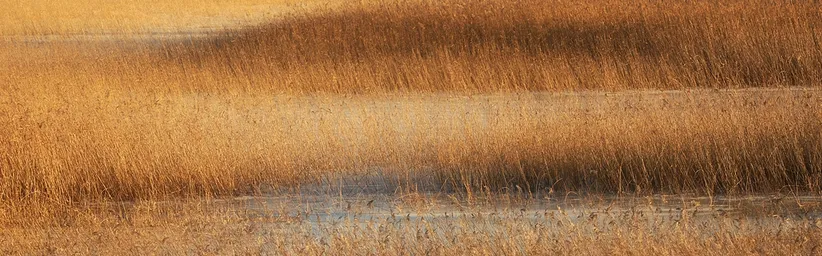
A field of tall reeds illuminated by warm light at sunrise or sunset, with a soft, almost white sky in the background.
LIFE TRŠCA: Working Group for Harmonizing Farming and Nature Conservation
Aerial view of a vast green landscape with multicolored fields, forests, a river, and wetlands, with forest-covered hills in the background and a clear sky with a few clouds on the horizon.
Next

LIFE TRŠCA: Working Group for Harmonizing Farming and Nature Conservation

Projects in the Notranjska Park
Logotip notranjskega parka z rastlino in metuljem.

Projects in the Notranjska Park

The implementation of extensive nature conservation projects exceeds the financial capacity of the local community, therefore Notranjska Park regularly applies for projects with the possibility of co-financing by the European Union.

The implementation of large-scale conservation projects exceeds the financial capabilities of the local community, therefore Notranjska Park regularly applies for projects with the possibility of co-financing from the European Union.

Read more
Read more