
LIFE TRŠCA: January waterbird census 2026 (IWC)

Published: 23. 01. 2026 Author: NRP Categories: Projects

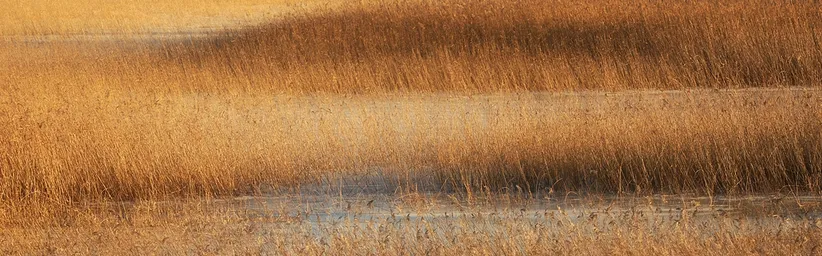
The photograph shows a tranquil wetland with vegetation emerging from the water, surrounded by misty mountains in the background; a flock of birds flies above the landscape.
Photo: Rudi Kraševec

As part of the LIFE TRŠCA project, we regularly conduct censuses of water birds and reed birds, as these are key to monitoring population status and the effectiveness of measures to restore and improve habitats at Lake Cerknica. The reed beds that the project is restoring and maintaining are important habitats for many endangered bird species, such as the red-necked grebe (Podiceps grisegena) and the ferruginous duck (Aythya nyroca), and also enable other animals to nest and survive successfully.

In addition to the activities within the LIFE TRŠCA project, an annual waterbird census is conducted in January, organized by DOPPS as part of the International Waterbird Census (IWC). This regular census enables the monitoring of long-term population trends, the assessment of the impact of climate change and human activities, and provides important data for bird management and conservation at the European level.

By combining these censuses, the LIFE TRŠCA project contributes to the conservation of wetland biodiversity and the sustainable protection of birds, whose survival increasingly depends on our responsibility and expertise.

As every year, the January waterbird census was conducted on the second weekend of January (January 16 and 17, 2026). The January waterbird census (IWC) is the most comprehensive systematic and organized census of waterbirds in Slovenia. As part of the census, which has been conducted since 1997, every year we count waterbirds on all major rivers, the entire Slovenian coast, and most of the important standing water bodies in the country.

The year 2026 is particularly important, as it marks the 30th anniversary of this internationally and nationally significant event, coinciding with the 60th anniversary of the IWC at the global level. One of the longest series of biodiversity monitoring in the world. The main goal of the count is to monitor winter populations of waterbirds and collect data that contributes to the conservation of their populations and wetlands.

A large group of birds swim at the edge of shallow water, partially hidden behind dry reeds in the wetland.
Photo: Rudi Kraševec
The ducks swim on the calm water surface, while the swans dive underwater. We can only see their tails sticking out of the water in the snow-covered wetland landscape.
Photo: Rudi Kraševec

The census also took place at Lake Cerknica during the aforementioned weekend. Volunteers counted the following at the intermittent lake: 


Little grebe (Tachybaptus ruficollis)22
Black-necked grebe (Podiceps nigricollis)6
Great cormorant (Phalacrocorax carbo)25
Great egret (Ardea alba)31
Grey heron (Ardea cinerea)6
Mute swan (Cygnus olor)46
Greater white-fronted goose (Anser albifrons)156
Greylag goose (Anser anser)2
Common shelduck (Tadorna tadorna)26
Eurasian wigeon (Mareca penelope)83
Gadwall (Mareca strepera)94
Eurasian teal (Anas crecca)310
Mallard (Anas platyrhynchos)634
Northern pintail (Anas acuta)103
Northern shoveler (Spatula clypeata)2
Red-crested pochard (Netta rufina)19
Common pochard (Aythya ferina)24
Tufted duck (Aythya fuligula)73
Common goldeneye (Bucephala clangula)14
Smew  (Mergellus albellus)1
White-tailed eagle (Haliaeetus albicilla)1
Eurasian coot (Fulica atra)135
Northern lapwing (Vanellus vanellus)1
Black-headed gull (Chroicocephalus ridibundus)10
Common gull (Larus canus)8
Lesser black-backed gull (Larus fuscus)2
Yellow-legged gull (Larus michahellis)4

The importance of regular monitoring of waterbirds

Regular recording of waterbird populations enables monitoring of their population trends both in individual areas and throughout Slovenia. The data obtained are also crucial for calculating regional trends and estimating the size of biogeographical populations. Based on the results of the IWC, DOPPS has designated Internationally Important Bird Areas (IBAs) and prepared expert proposals for Special Protection Areas (SPAs) for wintering waterbird species in Slovenia.

Source: https://www.ptice.si/naravovarstvo-in-raziskave/monitoringi/iwc/
More: https://www.birdlife.org/news/2026/01/16/celebrating-60-years-of-waterbird-monitoring-for-conservation/ 

LIFE TRŠCA

With LIFE TRŠCA we will improve the conservation status of the intermittent Lake Cerknica.

Nalaganje...
Projects in the Notranjska Park
Logotip notranjskega parka z rastlino in metuljem.

Projects in the Notranjska Park

The implementation of extensive nature conservation projects exceeds the financial capacity of the local community, therefore Notranjska Park regularly applies for projects with the possibility of co-financing by the European Union.

The implementation of large-scale conservation projects exceeds the financial capabilities of the local community, therefore Notranjska Park regularly applies for projects with the possibility of co-financing from the European Union.


Read more
Read more