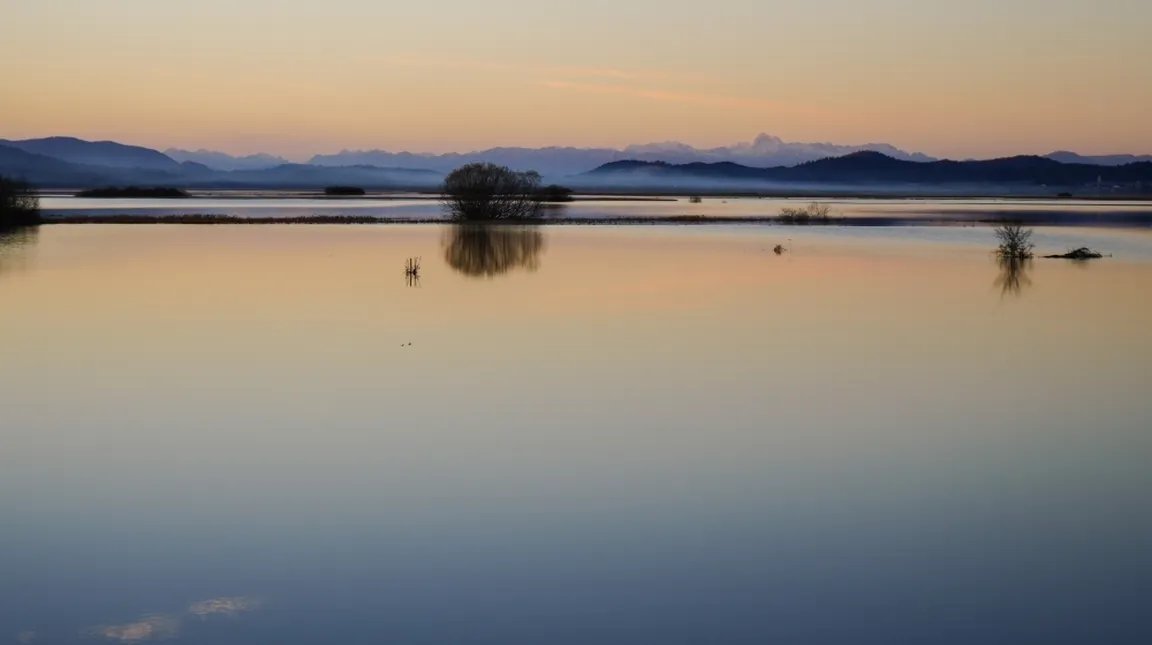
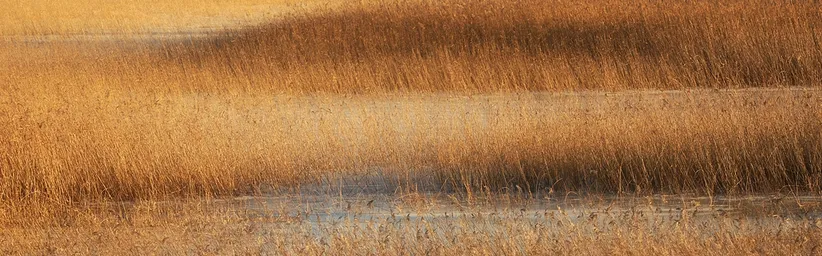
It is widespread in a large part of central, eastern, and northern Europe, and in Slovenia it is regarded as a very rare breeder. Its nesting was confirmed only at Lake Cerknica in the period from 2002 to 2017. Most recently we observed it on our very special piece of the world during the breeding season in May 2022.
Identifying features of the red-necked grebe
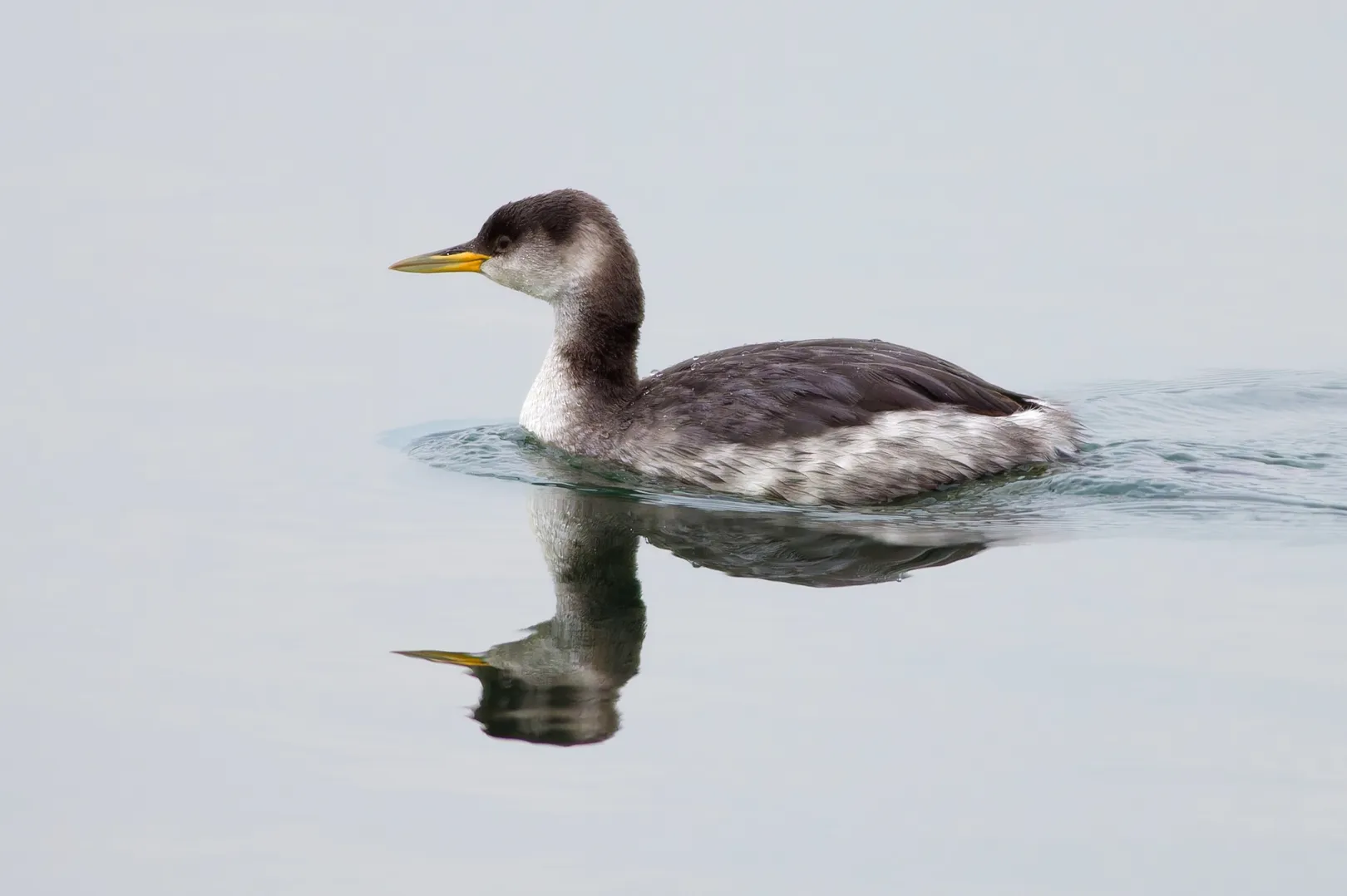
The red-necked grebe measures 40 to 46 cm in length and is somewhat smaller and more compact than the tufted grebe (Podiceps cristatus), which is more common here. Its name derives from the distinctive brown color of the neck, which is most noticeable in the summer plumage. It has a shorter and sturdier neck, which is brownish brown; the throat and cheeks are white, the crown and forehead are black. The base of its pointed bill is yellow with a dark tip. In winter, the red-necked grebe and the tufted grebe are quite similar, but the red-necked grebe has darker cheeks and neck, with less white, and it can be distinguished from the tufted grebe by the coloration of the bill.
Brown-necked grebe (Photo: Gregor Bernard)
Lifestyle and diet
As an excellent diver, the red-necked grebe spends most of its time in the water, where it hunts small fish, amphibian tadpoles, aquatic insects, crayfish and molluscs. It is less of a fish-eater than the tufted grebe, but seasonally or locally fish can even form the dominant part of its diet. Its body is adapted to life in water with short legs set far back on the body, allowing efficient swimming and diving. It is somewhat clumsy on land, where it occurs only rarely.
Nesting and raising the youngsters
The red-necked grebe is a migratory bird that prefers smaller for nesting , shallow water bodies surrounded by dense reed vegetation. Before nesting, the pair performs a nuptial dance, in which the birds rise from the water and approach each other with their bills. During the breeding season, it can be observed by its distinctive croaking sound.
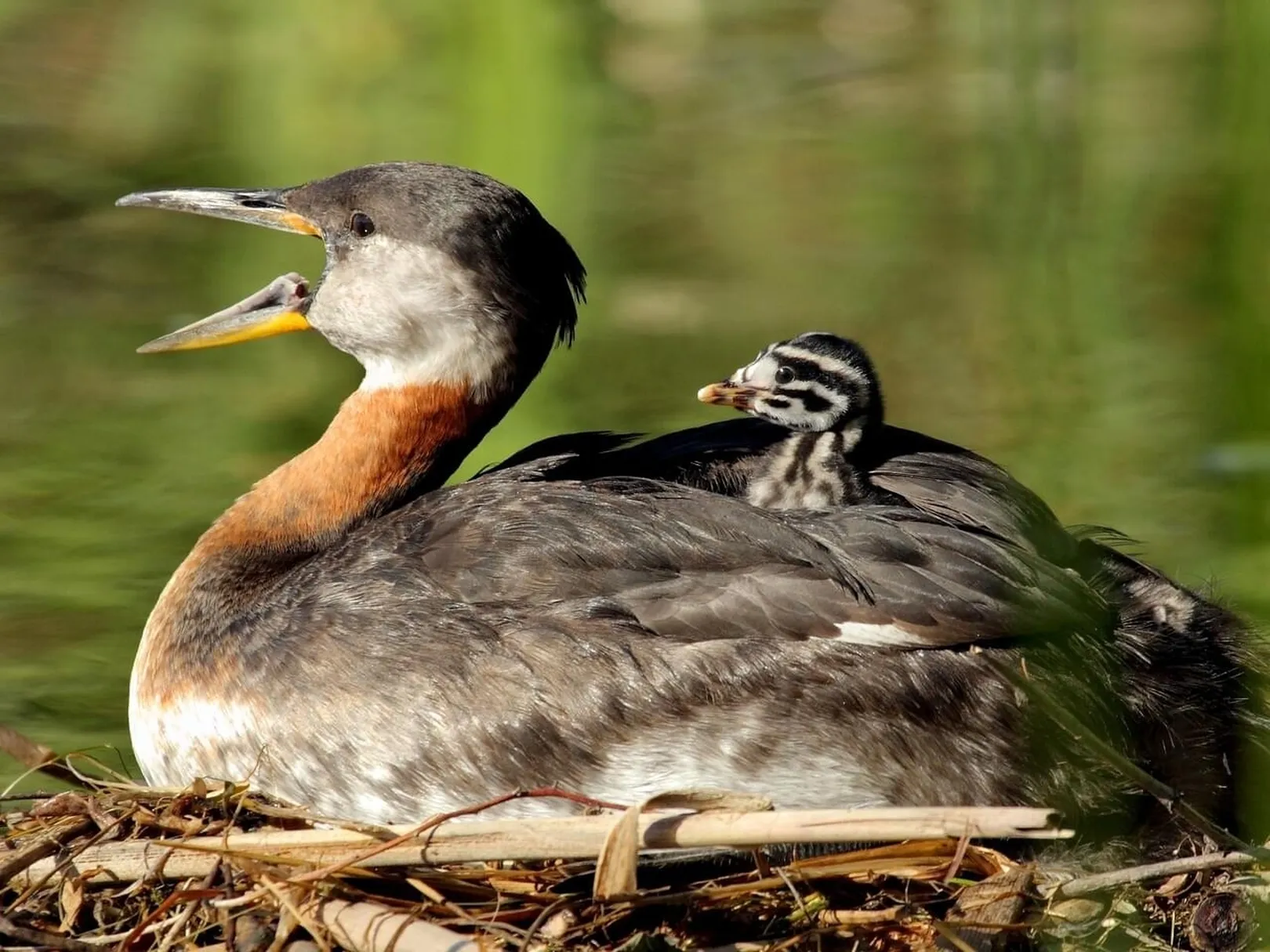
The nest is low and made of aquatic and marginal vegetation, which it attaches to submerged or floating vegetation. The female lays 4 to 5 eggs, with the male and female taking turns incubating. The chicks are able to swim quickly after hatching, and they often hide on the parents' backs.
Brown-necked grebe with a chick. (Photo: Laure Wilson Neish, allaboutbirds.org)
Conservation and the importance of preservation
The survival of the red-necked grebe is threatened mainly by the alteration and degradation of water bodies, which causes loss of its habitat. Disturbances during nesting, such as increased human presence, noise and mowing of the reed vegetation, also strongly negatively affect nesting success.
At Lake Cerknica, unfavorable water-level conditions affect it, as thewatere levels falls sharply or the lake dries up during the breeding season. Mowing down to the shore, or to the edge of lake basins where it may nest, is very problematic. Such mowing exposes its nesting sites to predation and other disturbances, therefore its nesting is less successful or left to abandonment, and at the same time the likelihood increases that nesting ceases entirely in the area.
The LIFE TRŠCA project plays a key role in preserving its natural environment. Through the project we aim to restore and protect wetlands, improve aquatic habitats, and sustainably manage water resources. Preserving these areas is important not only for the red-necked grebe, but also for many other endangered bird species, dragoflys, amphibians and other organisms.
Have you spotted it yet?
When visiting Lake Cerknica, pay attention to quiet coves and riparian vegetation. You may be lucky to observe the red-necked grebe during its elegant dive or to hear its distinctive calls, which are low and rasping.
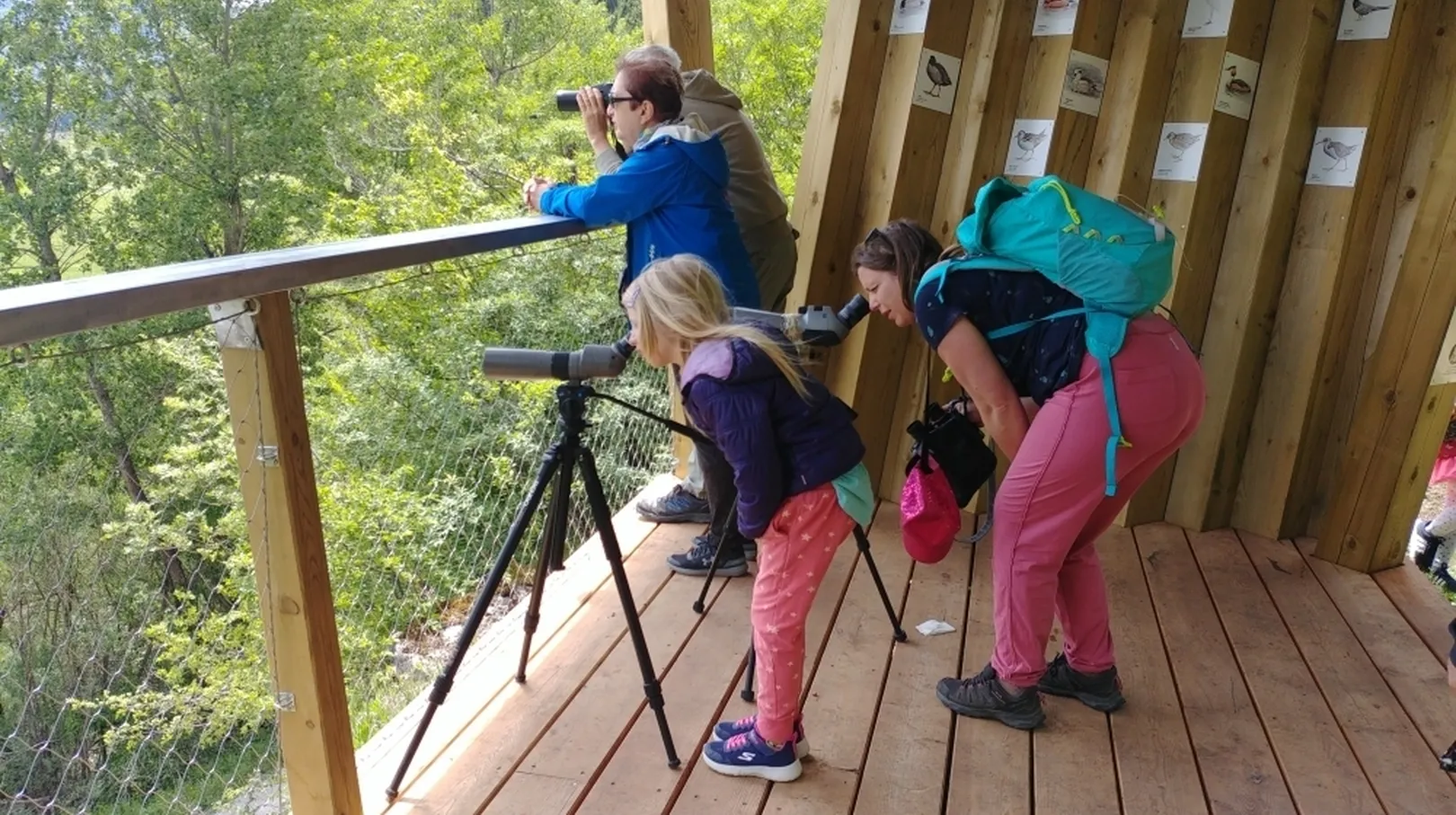
You can also join us for the experience The Secret World of the Birds of Lake Cerknica, where you will, together with an experienced ornithologist, explore the rich world of the birds of this very special piece of the world. The first experience will be next Sunday, April 6, 2025. Perhaps you will spot this mysterious bird then.
The implementation of extensive nature conservation projects exceeds the financial capacity of the local community, therefore Notranjska Park regularly applies for projects with the possibility of co-financing by the European Union.
The implementation of large-scale conservation projects exceeds the financial capabilities of the local community, therefore Notranjska Park regularly applies for projects with the possibility of co-financing from the European Union.