LIFE TRŠCA: Reed birds in 2025

Published: 09. 01. 2026 Author: NRP Categories: Projects

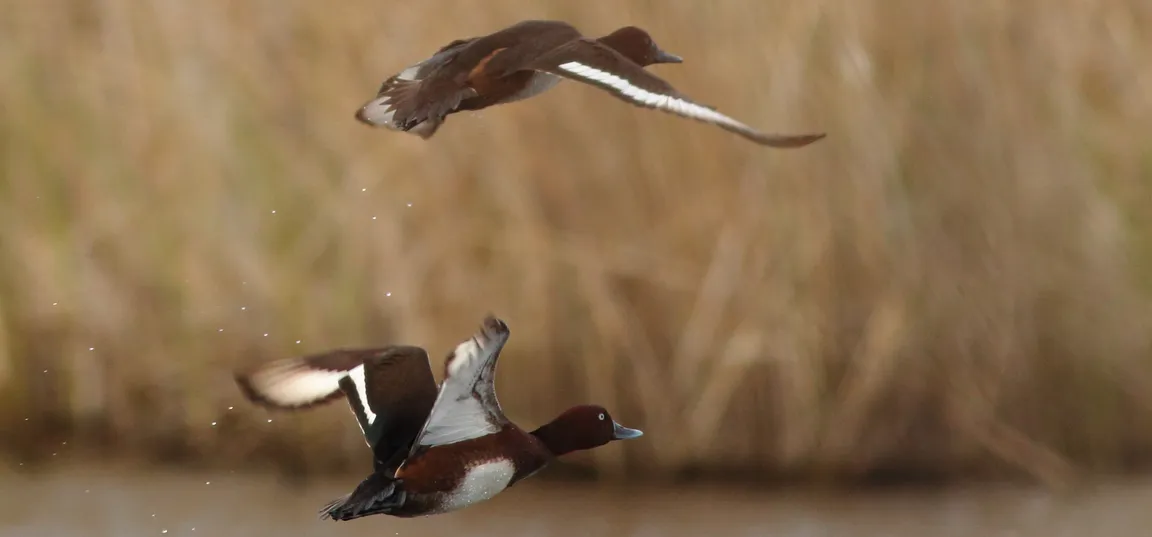
Two brown ducks, ferruginous duck, flying just above the water surface; one flies higher, the other lower, with foggy reeds in the background.
We encountered ferruginous duck more often than in 2024. (Photo: Dejan Bordjan)

In 2025, we at DOPPS returned to the reed beds of Lake Cerknica to check on the status of birds in the LIFE TRŠCA project area. Compared to the previous year, water levels were more favorable, which allowed us to conduct the census three times on all planned routes.

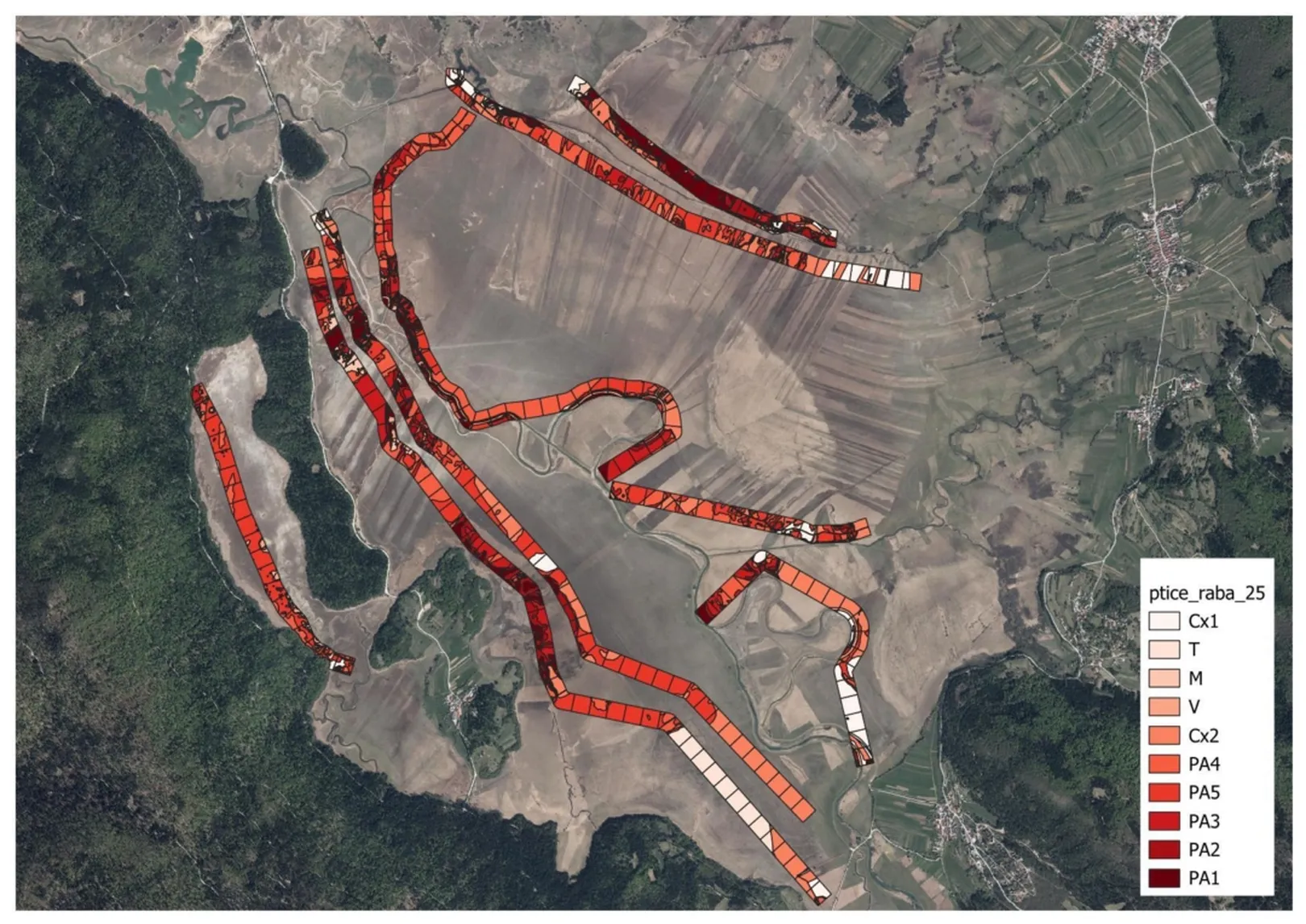
We recorded a total of 53 species, which is significantly more than the previous year. Nevertheless, during the census we missed the Eurasian skylark (Alauda arvensis), which is otherwise a permanent part of the soundscape in the area. Using advanced analytical approaches, we classified the recorded species into three groups, and in further analysis we focused on two, which together cover most of the species.

Satellite image of Lake Cerknica with marked areas shown in red and orange shades. On the right is a color legend with the categories Cx1, T, M, V, Cx2, and PA1–PA5.
The darker the color, the more important it is for the type of reeds. (DOPPS) 

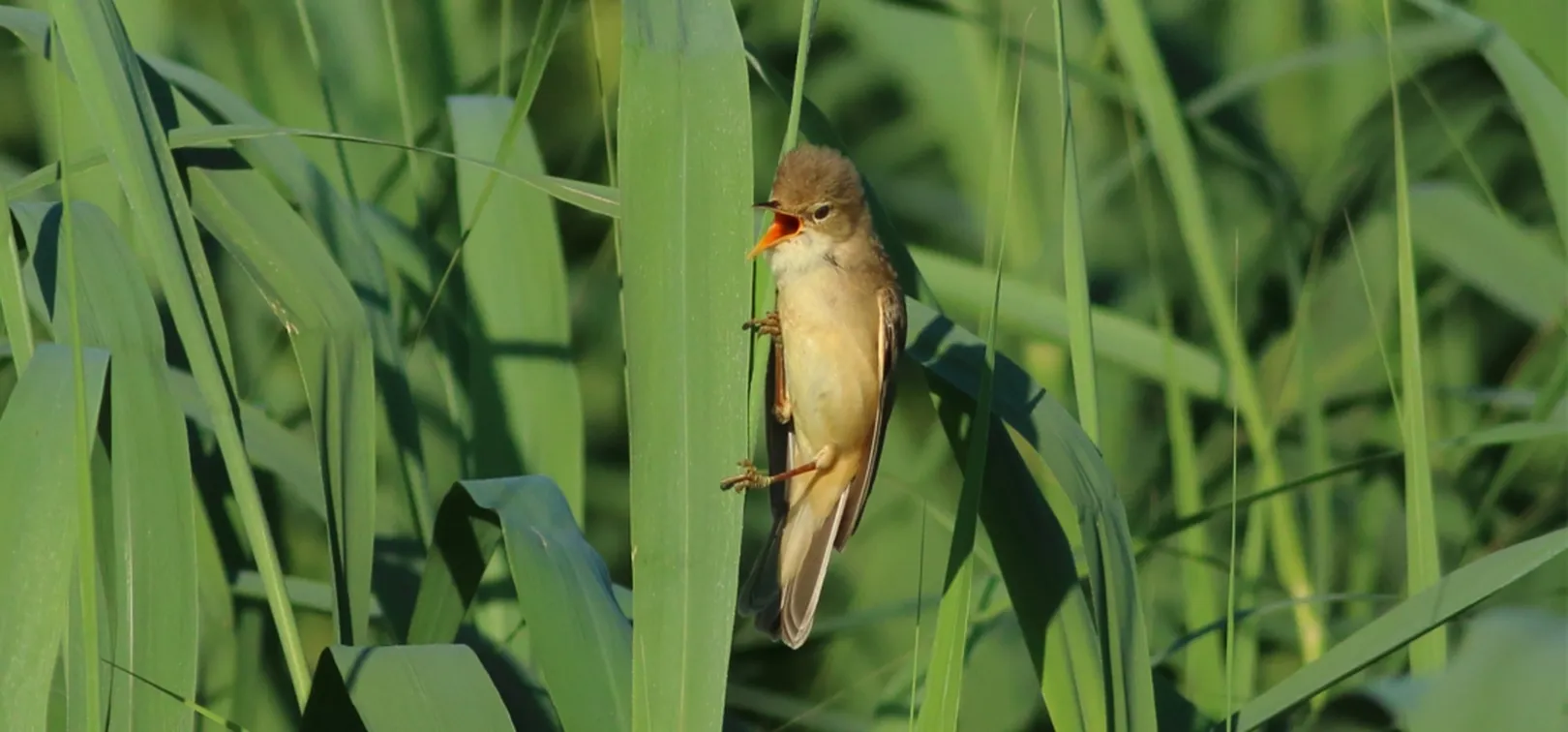
In the group of species associated with reed beds included 13 species with almost 500 pairs. The Eurasian coot (Fulica atra) and the Water rail (Rallus aquaticus) were the only species in this group with more than 100 pairs. The Great reed warbler (Acrocephalus arundinaceus) also contributed significantly. For all species, with the exception of the Mute swan (Cygnus olor) and the Greylag goose (Anser anser), we recorded a higher number of pairs than in 2024, which is probably related to the more favorable water level in 2025. The most significant increase was observed in the Common moorhen (Gallinula chloropus), where we recorded 18 times more pairs. There was also a noticeable increase in the number of Eurasian reed warbler (Acrocephalus scirpaceus). As expected, most species in this group were recorded in the most vital reed beds.

A small light brown bird, eurasian reed wabler, sits on a tall green reed stalk with its beak slightly open.
There were significantly more Eurasian reed warbler than in 2024. (Photo: Dejan Bordjan)

In the group of species associated with sedge vegetation, we recorded 284 pairs of six species. Among them, the Sedge warbler (Acrocephalus schoenobaenus) stands out, as expected, representing more than half of all pairs in this group. The Western yellow wagtail (Motacilla flava) and the Common reed bunting (Emberiza schoeniclus) contributed a total of more than 100 pairs. The slightly lower number of pairs compared to last year may also be related to the water level, as higher water levels mean less favorable conditions for sedge vegetation species, which most often choose species-rich sedge.

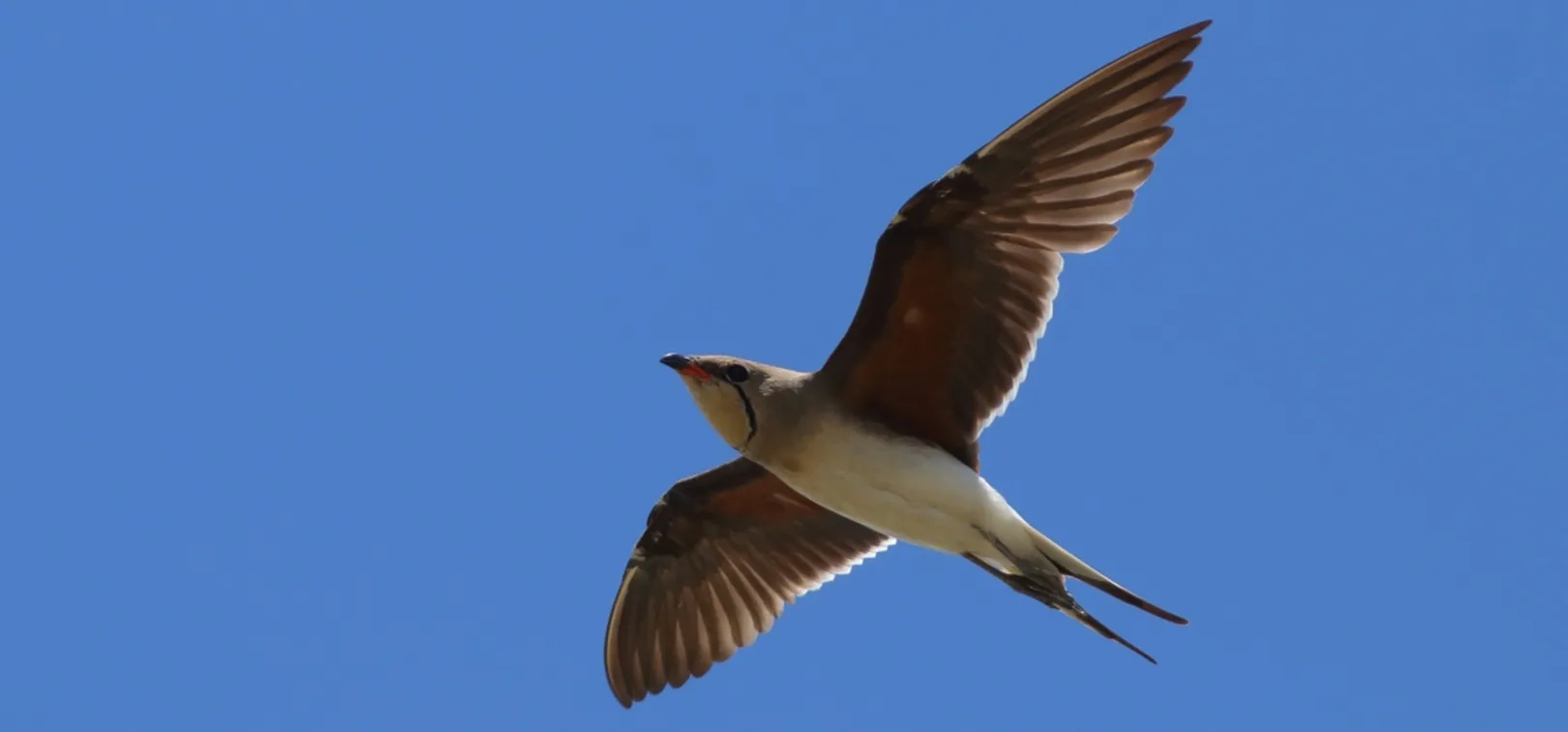
Among the other species, it is particularly encouraging to note the large number of Ferruginous duck (Aythya nyroca), one of the target species of the project. The 2025 census was made even more interesting by the sightings of the Eurasian spoonbills (Platalea leucorodia), the Collared pratincole (Glareola pratincola), and Baillon's crake (Zapornia pusilla), which nest exclusively at Lake Cerknica in Slovenia.

A bird, collared pratincole, in flight, captured from below against the blue sky, with its wings spread wide and its long, forked tail.
The Collared pratincole is considered a rare species in Slovenia. (Photo: Dejan Bordjan)

The contribution was prepared by the Slovenian Society for the Observation and Study of Birds (DOPPS).

LIFE TRŠCA

With LIFE TRŠCA we will improve the conservation status of the intermittent Lake Cerknica.

Nalaganje...
Projects in the Notranjska Park
Logotip notranjskega parka z rastlino in metuljem.

Projects in the Notranjska Park

The implementation of extensive nature conservation projects exceeds the financial capacity of the local community, therefore Notranjska Park regularly applies for projects with the possibility of co-financing by the European Union.

The implementation of large-scale conservation projects exceeds the financial capabilities of the local community, therefore Notranjska Park regularly applies for projects with the possibility of co-financing from the European Union.


Read more
Read more