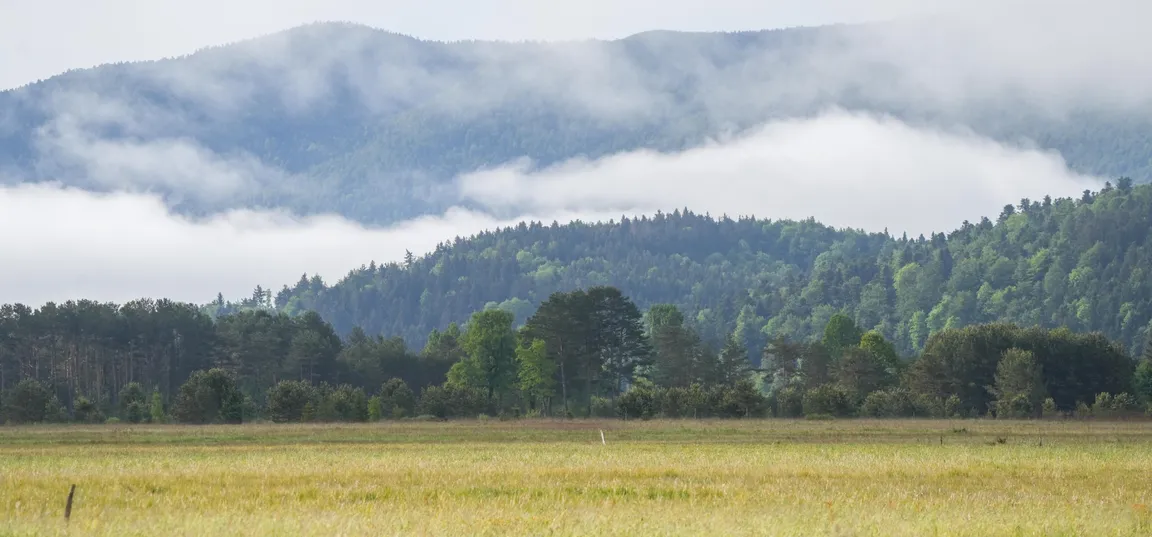
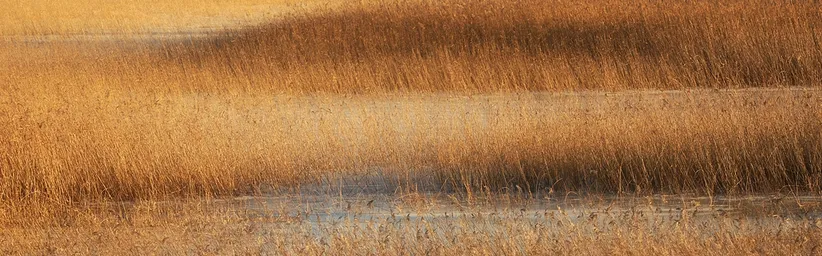
In mid-September, we successfully completed the field work in 2026. After studying the vitality of reeds, researchers from the Chair of Ecology and Environment Conservation of the Department of Biology of the Biotechnical Faculty completed an extensive collection of soil samples on Lake Cerknica. We focused on the soil in different stands of common reed (Phragmites australis). The soil samples will be subsequently analyzed and thus obtain data on the chemical and physical composition of the soil. The results will contribute to a better understanding of how soil type and land use influence the diversity and vitality of reeds. The contents of various inorganic nutrients, organic matter, and carbonates, as well as the proportions of clay, silt, and sand in the soil, depend on soil formation, soil moisture, and land cultivation. All of these properties affect soil fertility and determine which plant species will thrive in such soils.
All soil samples were collected using a standardized procedure, whereby individual subsamples are collected to obtain a representative composite sample reflecting the soil conditions in a given sample plot. The sample plots are the same as those selected for the vegetation survey, measuring 3 x 3 meters. In many cases, the sample plot could only be located with a GNSS antenna and an RTK receiver.
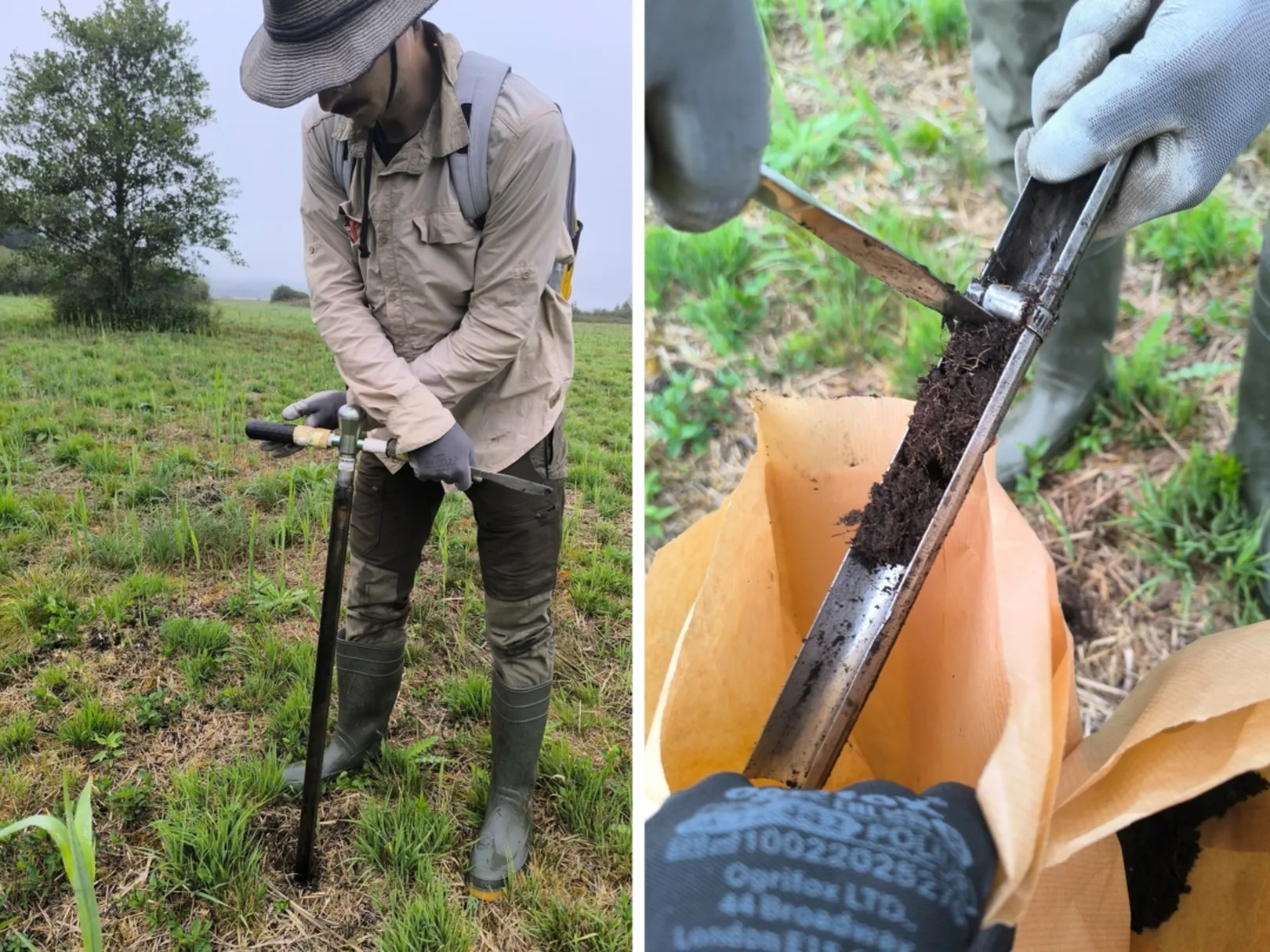
Figure 1: Soil sampling with a steel probe allows soil to be collected from a selected depth (left); The sample was divided according to soil depth and stored in different bags (right) (Photo: Aleksandra Golob).
The sampling probe was pushed perpendicularly into the soil to a marked depth of 20 cm. The probe was then rotated to separate the sample from the rest of the soil (Figure 1, left), and the probe was carefully pulled out of the soil. When storing the samples in paper bags, they were divided by depth into two parts: the upper part, which comprised the soil to a depth of 10 cm, and the lower part, which contained the sample from 10 to 20 cm (Figure 1, right). In this way, 9-10 subsamples were collected per plot, depending on soil weight.
Sampling should be done with gloves to avoid hand injuries. The cut leaves and stems of sedges and reeds have sharp edges, and the metal probe also has blade-like edges to cut and isolate a cylindrical soil sample.
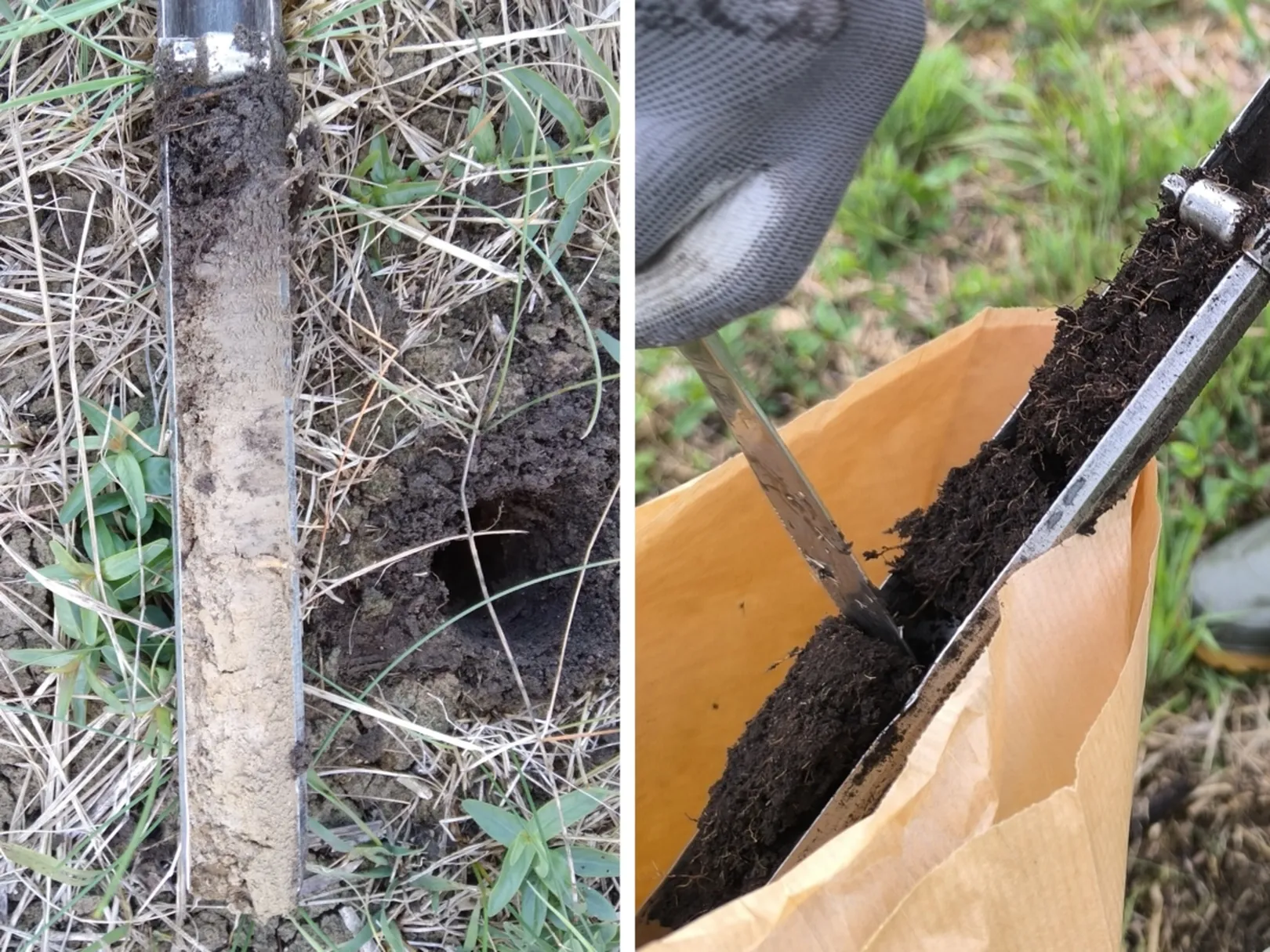
Already in the field, we noticed that in some places, the organic matter content and soil texture of samples from different depths differed greatly (Figure 2 left), whereas the soils in other microhabitats appeared to be the same (Figure 2 right). More precise information about soil factors will be obtained when the samples are analyzed.
Figure 2: Even during field sampling, we observed large differences in soil composition across locations. In some places, the soil is organic throughout the sampling depth; in others, it is mineral or clayey, with only a thin organic layer visible in the top few centimetres (Photo: Igor Zelnik and Aleksandra Golob).
The samples were stored in labelled bags and, after the fieldwork, were taken to the laboratory at the Chair of Ecology and Environment Conservation (Biotechnical Faculty, Department of Biology), where they were dried at 40 degrees Celsius.
The collected data on soil factors and soil structure will be used to explain differences in the vitality of reed beds and species diversity of stands, as the soil, not only the vegetation, is directly affected by large fluctuations in water levels and different mowing regimes.
Article was prepared by the Biotechnical Faculty of the University of Ljubljana.
LIFE TRŠCA
With LIFE TRŠCA we will improve the conservation status of the intermittent Lake Cerknica.
The implementation of extensive nature conservation projects exceeds the financial capacity of the local community, therefore Notranjska Park regularly applies for projects with the possibility of co-financing by the European Union.
The implementation of large-scale conservation projects exceeds the financial capabilities of the local community, therefore Notranjska Park regularly applies for projects with the possibility of co-financing from the European Union.