LIFE TRŠCA: Successful Biology Students' Research Camp Concluded

Published: 20. 08. 2026 Author: NRP Categories: Projects

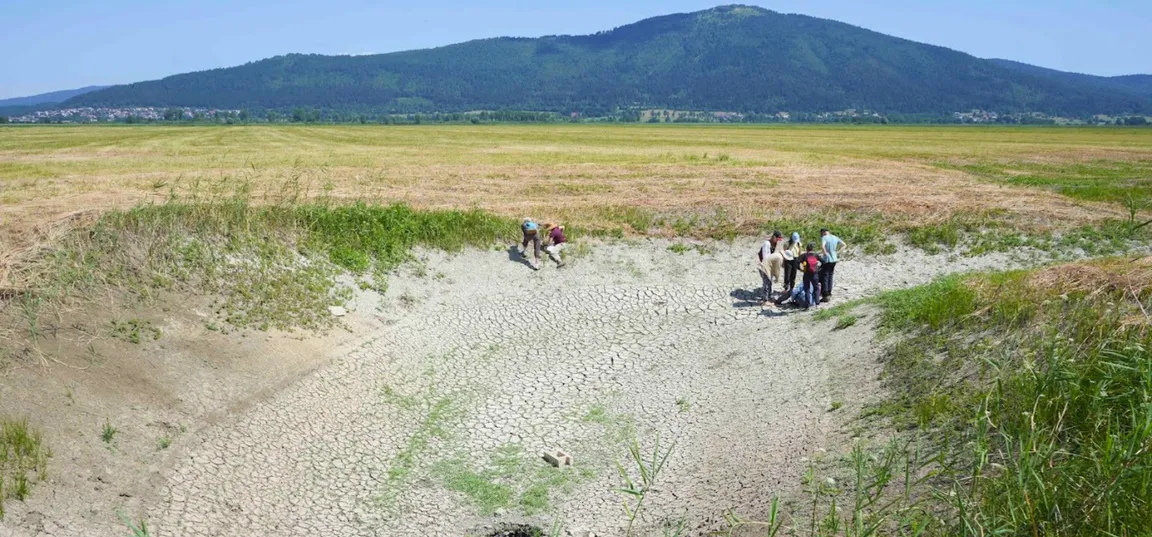
Širok pogled na suho kraško kotanjo z belim, razpokanim dnom, poraslim z redkimi zelenimi rastlinami. Na robovih kotanje raste visoka trava, v notranjosti pa je več manjših skupin obiskovalcev, ki opazujejo teren. V ozadju se razprostira ravnina in gozdnat hrib pod jasnim modrim nebom.

Between July 17 and 26, Notranjska Park became a real field classroom for ten days. As part of the LIFE TRŠCA project, in cooperation with the Biology Students' Association, we organized the Biology Students' Research Camp, where young future biologists, together with mentors from various non-governmental organizations, explored the diverse world of Lake Cerknica and the broader area of Notranjska Park.

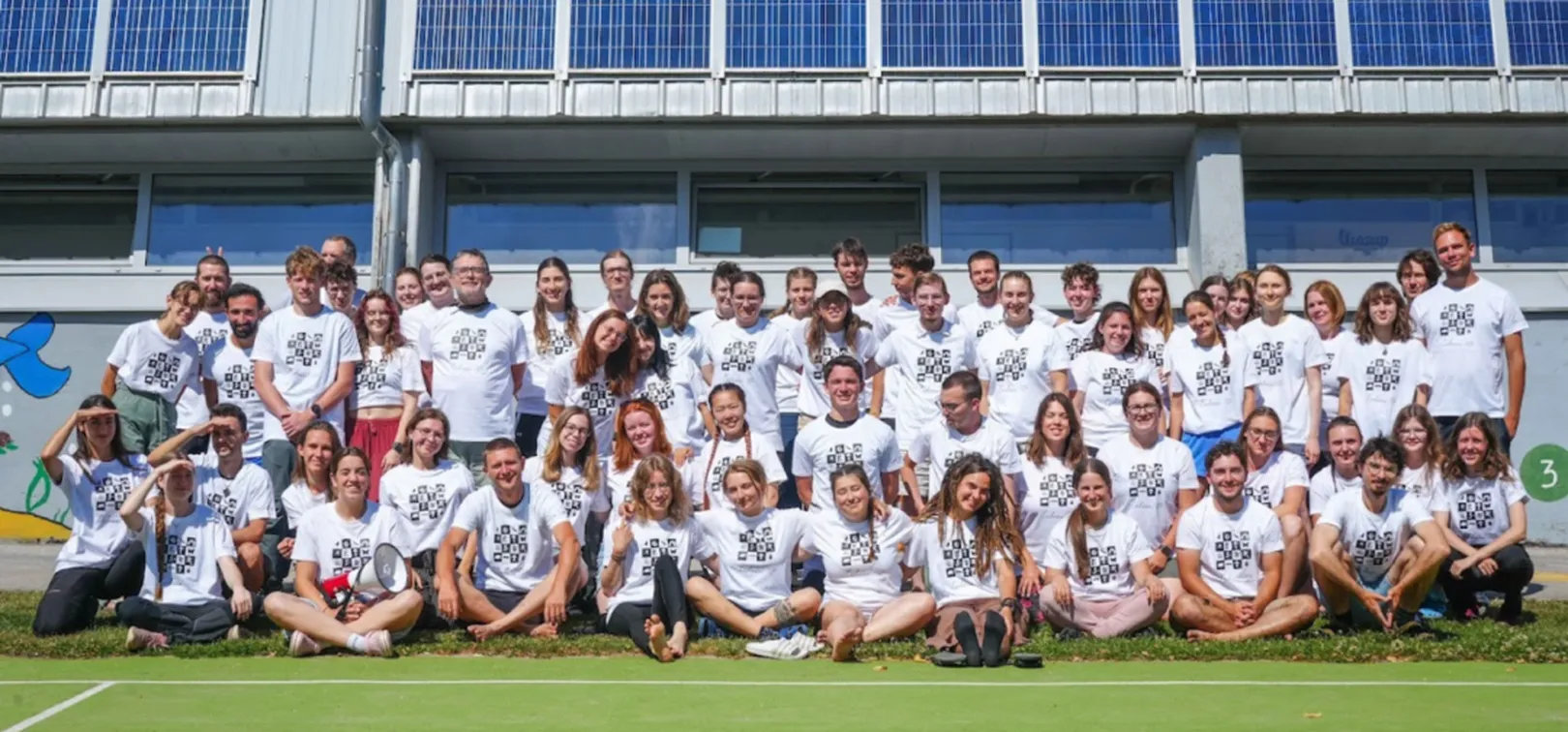
The camp was attended by 51 students, 11 mentors, and 2 organizers. Over the course of ten days, they walked through meadows, forests, wetlands, and caves, listened to animal calls, set traps, surveyed plants, and searched for tracks and signs of the presence of various species. In doing so, they not only gained valuable practical experience in field research work, but also became even better acquainted with an area whose natural diversity is truly exceptional.


From Butterflies to the Underground World

Research took place within 11 groups focusing on bats, dragonflies, large carnivores, beetles, birds, plants, butterflies, subterranean organisms, spiders, amphibians and reptiles, and fungi. Each group uncovered a piece of Notranjska Park's natural treasure trove within its unique ecosystem mosaic.

Among the most colorful results was certainly the recording of 62 species of butterflies identified in Notranjska Park and its surroundings by the team mentored by Lan Zirkelbah. Among them were species of particular conservation importance, such as the large copper (Lycaena dispar), the scarce large blue (Phengaris teleius), the false heath fritillary (Melitaea diamina), and the Alcon blue (Phengaris alcon).

An even more mysterious world unfolded beneath the surface. Subterranean organism researchers identified 64 different groups of organisms in caves and springs, including 14 troglobionts—organisms fully adapted to life in darkness that can survive exclusively in subterranean habitats. The group was mentored by Anja Kos.

At Lake Cerknica, the beetle research team, led by mentor Lara Oražem, encountered Dytiscus circumcinctus, a diving beetle found nowhere else in Slovenia except this region. Alongside it, they recorded the great diving beetle (Cybister lateralimarginalis), the orange-striped diving beetle (Graphoderus cinereus), and the musk beetle (Aromia moschata).

The forests and meadows also yielded interesting findings. The fungi group, led by Miha Klemen, recorded 70 species of fungi, over half of which were wood-decaying species. Among the observed species were the European false blusher (Amanita excelsa var. excelsa) and the mountain polypore (Bondarzewia mesenterica), both listed on the Red List.

Plants That Tell the Story of Environmental Conservation

The botanical findings were also particularly valuable. The group led by Nejc Jogan observed numerous rare and endangered plants in the Lake Cerknica area, including the shining spurge (Euphorbia lucida), for which Lake Cerknica remains the only confirmed locality in Slovenia, as well as the marshmallow gentian (Gentiana pneumonanthe), European scopolia (Scopolia carniolica), northern bedstraw (Galium boreale), marsh lousewort (Pedicularis palustris), and thyrse sorrel (Rumex thyrsiflorus). Their presence is not only significant due to the extraordinary diversity of plant life, but also serves as an indicator of how essential it is to preserve wetlands, proper hydrological regimes, and traditional meadow management. Indeed, wetland drainage, altered water regimes, and premature mowing represent major threats to many of these species.

Spider research revealed an equally fascinating picture. A total of 40 spider species belonging to 30 different genera and 16 families were recorded in the area. Such taxonomic diversity points to good environmental conditions for these often overlooked yet vital inhabitants of our ecosystems. The group was led by Luka Žarković.

Above the Lake, in the Forest, and by the Water

A total of 32 dragonfly species were recorded in the Notranjska Park area, representing all dragonfly families found in Slovenia. Among the most interesting sightings were the small red damselfly (Ceriagrion tenellum), the scarlet dragonfly (Crocothemis erythraea), the Balkan goldenring (Cordulegaster heros), and the sombre goldenring (Cordulegaster bidentata). The research was led by Maja Bahor.

The bat survey was no less impressive. The group mentored by Primož Presetnik recorded 21 species, which accounts for more than two-thirds of all bat species known in Slovenia. These included the greater noctule bat (Nyctalus lasiopterus), the western barbastelle (Barbastella barbastellus), the common bent-wing bat (Miniopterus schreibersii), the Alcathoe bat (Myotis alcathoe), the David's myotis (Myotis davidii), and the lesser horseshoe bat (Rhinolophus hipposideros).

Amphibians and reptiles also demonstrated the rich variety of habitats within the park. Researchers led by Maj Kastelic recorded 11 species of amphibians and 8 species of reptiles.

In the forests and along their edges, students searched for the larger inhabitants of Notranjska Park. The large carnivore group, mentored by Rudi Kraševec, investigated the presence of jackals, wolves, and other species. They received a response to played jackal calls in 42% of cases, while playback of wolf howling yielded two responses in the Menišija and Javorniki areas. In addition, they cataloged carnivore occurrences and observed otters along the Lipsenjščica stream.

Birdlife was active both in the scrub and among the reeds. The team led by Dejan Bordjan ringed Eurasian blackcap (Sylvia atricapilla) and common blackbird (Turdus merula), while in the reeds they encountered common whitethroat (Sylvia communis), red-backed shrike (Lanius collurio), and common reed warbler (Acrocephalus scirpaceus). Among the most frequently observed species during the camp were the common starling (Sturnus vulgaris), barn swallow (Hirundo rustica), western house martin (Delichon urbicum), and common wood pigeon (Columba palumbus). A special highlight among the sightings was the corn crake (Crex crex)—one of the most recognizable and conservationally vital species of wet meadows.

Research Connecting People and Nature

A special feature of this year's camp was the open field days, which received a very positive response from locals and visitors alike. For a few hours, the students opened their work to the public, showing visitors what field research actually looks like in practice—from tracking and identifying species to applying various scientific methodologies.

Moments like these are an essential part of the camp. Knowledge doesn't remain confined to the researchers; it is passed along to visitors, locals, and anyone eager to better understand the environment we live in.

Ten days of exploration yielded a vast amount of new data, exciting discoveries, and, above all, further confirmation that Notranjska Park is an extraordinarily rich natural treasure trove. Research camps like this play a vital role in uncovering, understanding, and documenting its wealth—and a deep knowledge of nature is one of the most critical steps toward its long-term protection.

Thank you to all the students, mentors, and organizers who filled this year's camp with curiosity, knowledge, and an adventurous spirit of discovery.

LIFE TRŠCA

With LIFE TRŠCA we will improve the conservation status of the intermittent Lake Cerknica.

Nalaganje...
Projects in the Notranjska Park
Logotip notranjskega parka z rastlino in metuljem.

Projects in the Notranjska Park

The implementation of extensive nature conservation projects exceeds the financial capacity of the local community, therefore Notranjska Park regularly applies for projects with the possibility of co-financing by the European Union.

The implementation of large-scale conservation projects exceeds the financial capabilities of the local community, therefore Notranjska Park regularly applies for projects with the possibility of co-financing from the European Union.

Read more
Read more