LIFE TRŠCA: Waterbird Nest Surveys Completed

Published: 23. 06. 2026 Author: NRP Categories: Projects

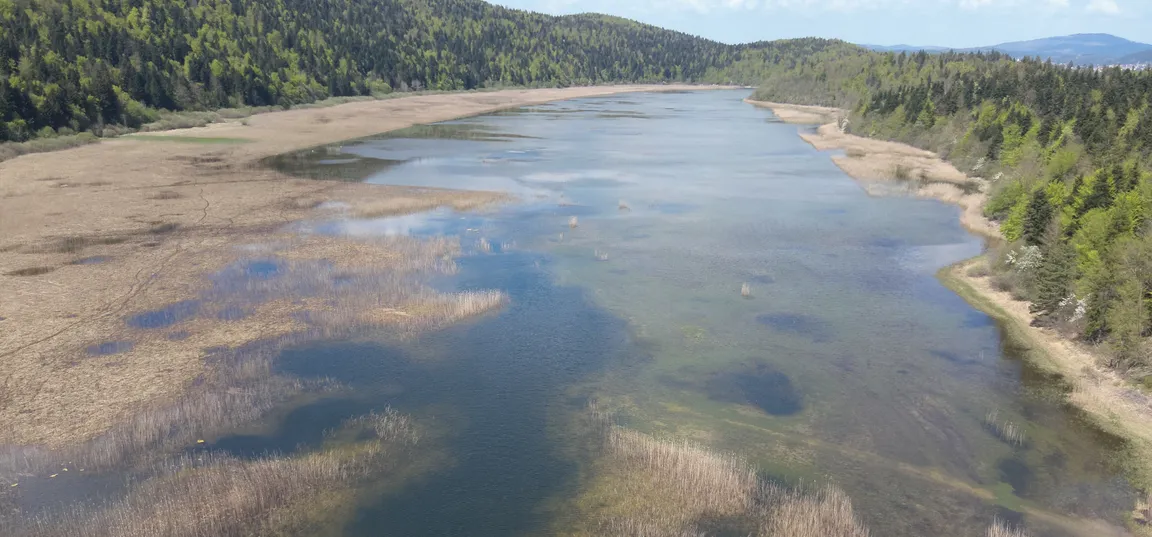
An aerial view of a landscape featuring an elongated lake with shallow, clear water that reflects the sky. On the left side of the lake, dry, brownish reed beds and marshy areas are visible, while the right shore and the hills in the background are covered by a dense green forest.
Zadnji kraj (Photo: NRP archives)

As part of the LIFE TRŠCA project, we once again carried out waterbird nest surveys at Lake Cerknica. The survey period lasted from 3 April to 17 June 2026.

To minimize disturbance to breeding birds, we used a drone equipped with a thermal imaging camera and an optical zoom camera. The thermal camera enabled us to locate nests hidden within remote and dense stands of vital reedbeds that would be difficult to detect from the ground. The drone was flown at a sufficient altitude to avoid disturbing the birds. Direct human presence during the breeding season can cause birds to abandon their nests or even leave their chicks behind.

Over the course of eleven field days, we systematically surveyed six important breeding areas at Lake Cerknica:

  • Beli breg,
  • Ključi,
  • Levišča,
  • Trščenke,
  • Zadnji kraj,
  • Žerovniščica.

A Challenging Breeding Season

This year's breeding season was particularly challenging for waterbirds. Compared to 2025, when exceptionally high breeding densities were recorded by Slovenian standards between 4 April and 19 July, only a small fraction of that number was recorded this year. Furthermore, almost all waterbird species experienced breeding failure, with only a single successful brood of Greylag Geese and a few Mallard broods observed.

The main reason for the poor breeding season was the highly unstable hydrological conditions at Lake Cerknica. Spring drought caused many nests to become stranded on dry ground, leaving eggs unhatched and vulnerable to predation. Although the lake refilled rapidly afterwards, most adult birds—particularly Eurasian Coots and Great Crested Grebes—had already moved to other areas. Fortunately, no large-scale re-nesting attempts occurred, as the lake unfortunately dried out again soon afterwards. Once again, nature demonstrated how closely breeding success of waterbirds depends on the lake's water regime.

As in previous years, the highest numbers of nests were recorded in the Levišča and Trščenke areas, where extensive reedbeds provide shelter from predators and human disturbance.

Which Species Nested Most Frequently This Year?

The most common breeding species recorded this year were:

  • Eurasian Coot (Fulica atra) – One of the most characteristic inhabitants of Lake Cerknica, easily recognized by its black plumage and distinctive white frontal shield. It spends most of its life on the water, building floating nests among reeds.
  • Greylag Goose (Anser anser) – The largest wild goose species in Slovenia and the ancestor of domestic geese. It often nests in concealed parts of the reedbeds, and its goslings are able to follow their parents on the water shortly after hatching. It was one of the few waterbird species to breed successfully this year.
  • Mute Swan (Cygnus olor) – One of Europe's most iconic waterbirds. Pairs often remain together for many years, making the species a symbol of fidelity. Its nests, built from reeds and vegetation, are among the largest constructed by European birds.

Target Species Still Without Confirmed Breeding

During the surveys, we repeatedly observed the two target species of the LIFE TRŠCA project, but unfortunately breeding was not confirmed for either species this year.

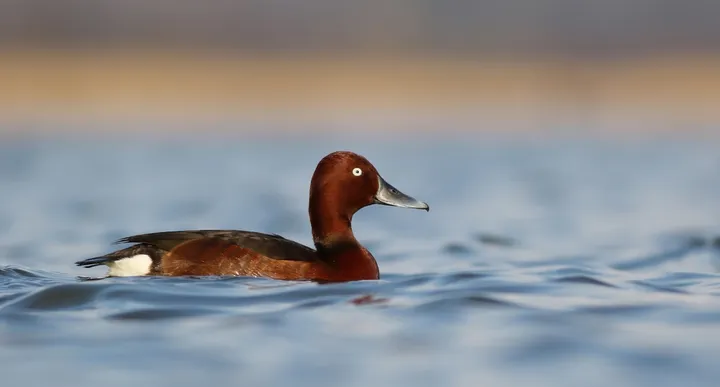
  • Ferruginous Duck (Aythya nyroca) – A rare and threatened duck species whose populations have declined across much of Europe due to wetland loss. It requires quiet breeding sites with dense shoreline vegetation that provides protection from predators. The species was recorded several times during the breeding season.
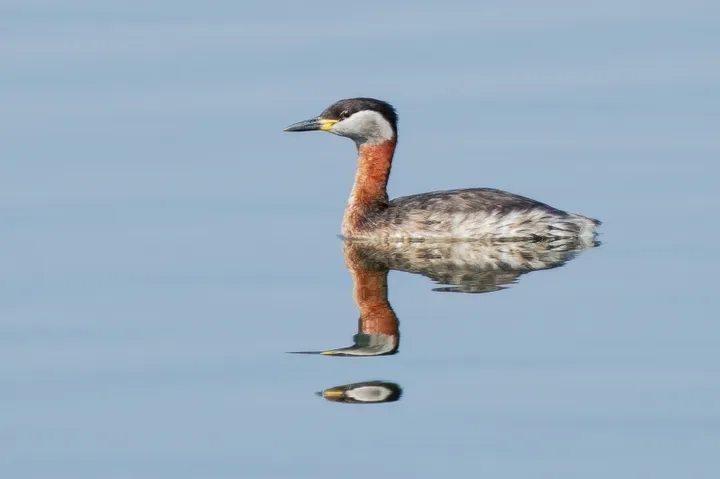
  • Red-necked Grebe (Podiceps grisegena) – One of Slovenia's rarest breeding grebe species. Highly sensitive to environmental changes, it is considered an important indicator of wetland habitat quality. Only a single individual was recorded during the surveys.

Both species depend on well-preserved stands of vital reedbeds near open water and on areas free from human disturbance. Their absence as breeding species is most likely linked to unfavorable water conditions, as well as the limited availability of suitable reedbed habitat. The LIFE TRŠCA project continues to improve conditions for these and many other wetland species through habitat restoration and conservation activities at Lake Cerknica.

Ferruginous duck (Aythya nyroca) on the surface of Lake Cerknica.
Ferruginous duck (Aythya nyroca) (Photo: Jure Novak)
A red-necked grebe (Podiceps grisegena) floats peacefully on the surface of the lake.
Red-necked grebe (Podiceps grisegena) (Photo: Gregor Bernard)

LIFE TRŠCA

With LIFE TRŠCA we will improve the conservation status of the intermittent Lake Cerknica.

Nalaganje...
Projects in the Notranjska Park
Logotip notranjskega parka z rastlino in metuljem.

Projects in the Notranjska Park

The implementation of extensive nature conservation projects exceeds the financial capacity of the local community, therefore Notranjska Park regularly applies for projects with the possibility of co-financing by the European Union.

The implementation of large-scale conservation projects exceeds the financial capabilities of the local community, therefore Notranjska Park regularly applies for projects with the possibility of co-financing from the European Union.

Read more
Read more