LIFE TRŠCA: Creating microhabitats for water birds at Lake Cerknica

Published: 28. 11. 2025 Author: NRP Categories: Projects

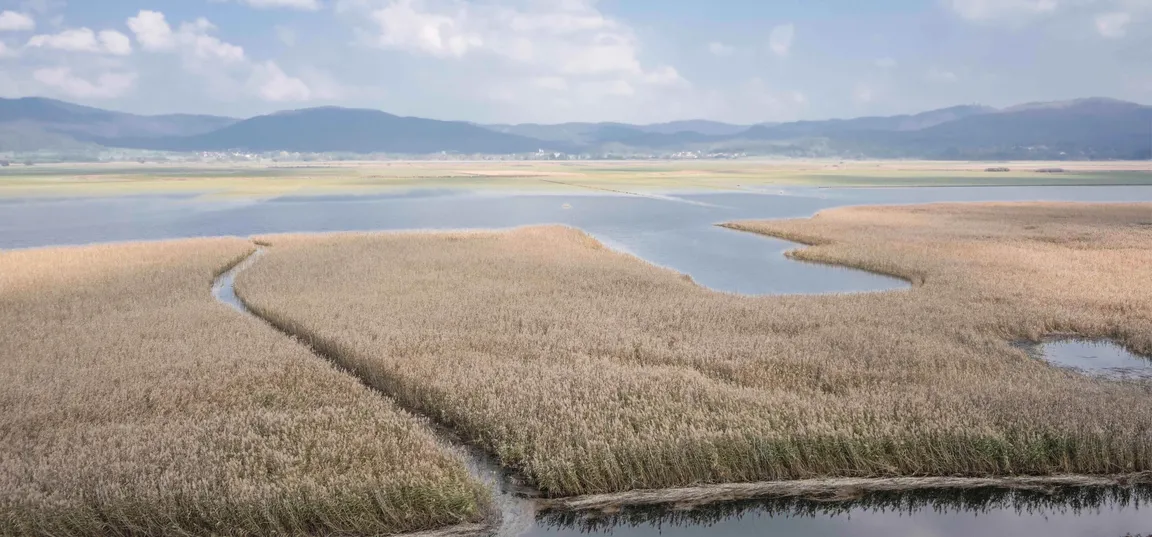
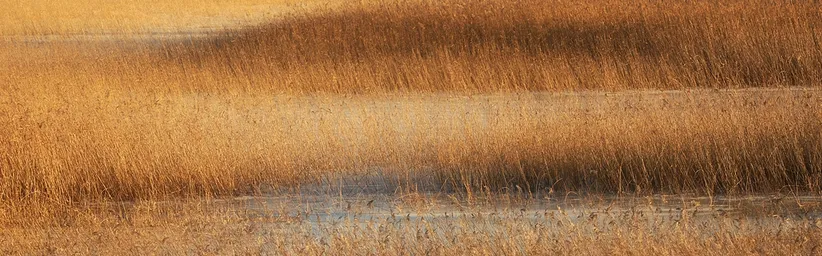
Panoramic view of the extensive wetland - Lake Cerknica, with dense reeds and narrow water channels winding through the vegetation. In the background, you can see the hilly landscape and blue sky with a few white clouds.
Photo: Rudi Kraševec

In 2025, we created three new microhabitats for water birds as part of the LIFE TRŠCA project. Our aim is to improve nesting and feeding conditions for the two target species of the project – the ferruginous duck and the red-necked grebe – as well as for other water birds of Lake Cerknica.

A microhabitat is a smaller part of a larger habitat of an organism that differs from its surroundings in terms of specific microclimatic conditions, such as water distribution, soil composition, vegetation structure, or the presence of certain animals and plants. In natural ecosystems, microhabitats are special areas where life processes take place that are not possible in the wider environment. In intermittent lakes, such as Lake Cerknica, microhabitats are created by natural conditions and human activity. One of the most recognizable forms of such microhabitats are lake windows, which can be found in reed beds.

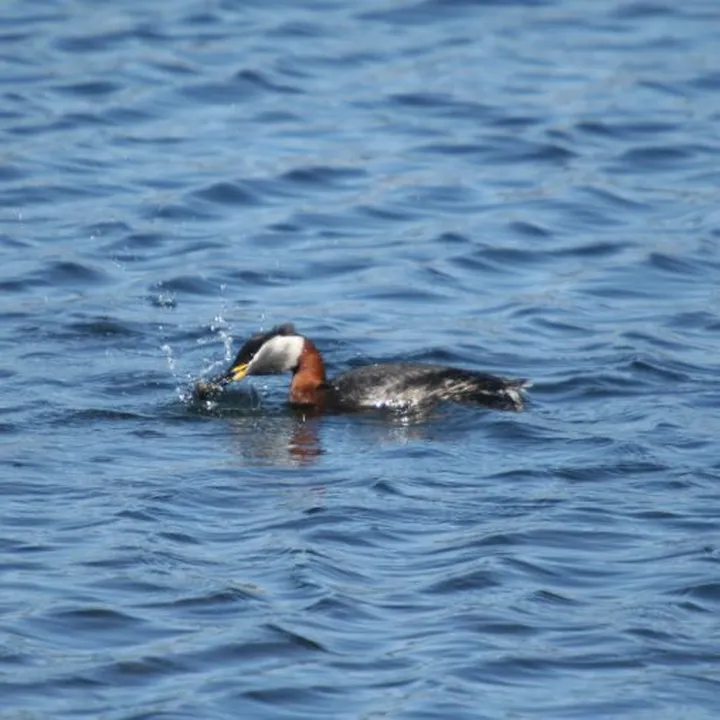
The red-necked grebe (Podiceps grisegena) has just caught its lunch—a fish in the lake.
Red-necked gebe (Photo: archive NRP)
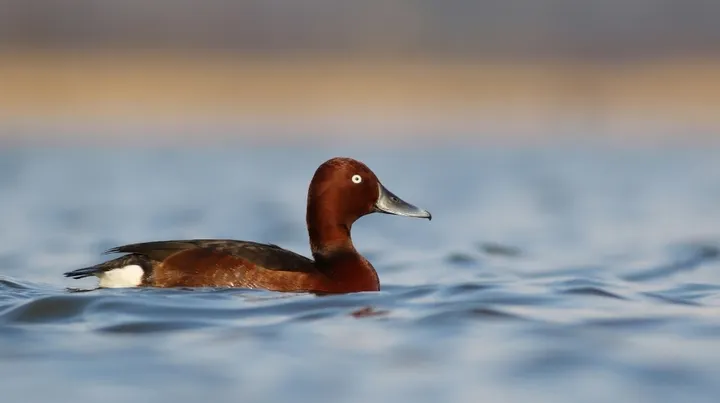
A brown duck with white eyes and a black beak swims in calm blue water. The background is blurred and transitions from beige to blue.
Ferruginous duck (Photo: Jure Novak)

Lake windows are small open water areas within reed beds. They look like tiny water "islands" in the middle of overgrown parts of the lake. They are usually deeper than the surrounding area, more light penetrates them, the water is warmer, and therefore there is more food for animals. Lake windows are home to many different organisms: water birds use them to rest, feed, and hide from predators; amphibians use the warmer and deeper corners to lay their eggs; and aquatic invertebrates develop faster there due to the more favorable conditions.

Lake windows can form naturally when smaller water surfaces open up due to fluctuations in water level, sedimentation, and the growth and death of vegetation. In natural conditions, stems often break under the weight of snow or ice. As part of the LIFE TRŠCA project, we have recreated such windows based on natural processes. In selected areas, we removed excessively overgrown vegetation and opened up space for the creation of open water areas. This process enables the rapid establishment of microhabitats that are suitable for birds to nest and feed in, while also supporting the development of invertebrates and amphibian spawning grounds. The windows are varied and irregular in shape, making it easier for birds to hide from predators. By monitoring bird nesting, we will determine which shapes are most suitable for them.

In the area of Lake Cerknica, the reed vegetation along the shore is crucial for the nesting of numerous birds, including the red-necked grebe (Podiceps grisegena), great crested grebe (Podiceps cristatus), little grebe (Tachybaptus ruficollis), ferruginous duck (Aythya nyroca), purple heron (Ardea purpurea), great bittern (Botaurus stellaris), common reed bunting (Emberiza schoeniclus), Savi's warbler (Locustella luscinioides), great reed warbler (Acrocephalus arundinaceus), greylag goose (Anser anser), and other species.

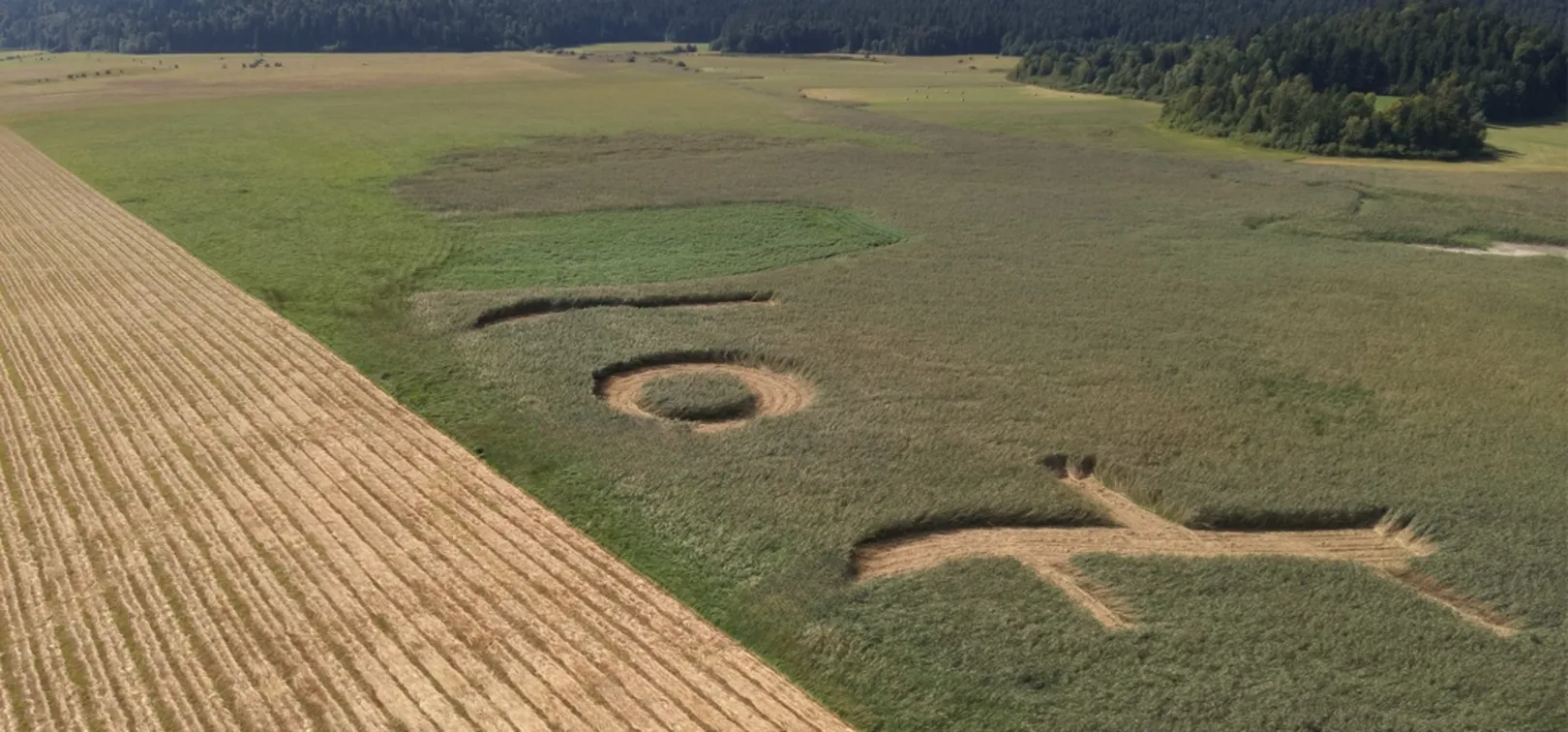
Aerial view of the drained Lake Cerknica on the left and the extensive grassland and marshland area on the right. Large geometric shapes, including circles, lines, and irregular shapes, have been cut into the reeds to create microhabitats. In the background is a forest at the edge of the plain.
We have created three microhabitats in the area of Lake Cerknica (Photo: archive NRP)

In order to provide favorable living conditions for reed birds, it is first necessary to preserve large reed beds, which are disappearing due to increased mowing on the lake. Therefore, it is essential to change the use of key areas or abandon mowing. It then makes sense to accelerate the creation of microhabitats in these larger stands. It is important to emphasize that these are small-scale measures (less than 10 acres) that increase the heterogeneity of the structure within larger stands of vital reeds, rather than classic mowing.

By recreating three new microhabitats in 2025, we have taken an important step towards preserving the biodiversity of Lake Cerknica and improving the living conditions for water birds. As part of the LIFE TRŠCA project, we will continue to create and maintain such habitats in the future, thereby ensuring stable and safe conditions for our target species.

LIFE TRŠCA

With LIFE TRŠCA we will improve the conservation status of the intermittent Lake Cerknica.

LIFE TRŠCA: Notranjska Park Expands Its Team of Nature Conservation Supervision
A person wearing a dark jacket with a nature conservation badge on the sleeve stands at a viewpoint looking towards a river winding through a wooded valley. The trees in the foreground are bare, while in the background an autumn landscape stretches out in shades of green and brown.
Next

LIFE TRŠCA: Notranjska Park Expands Its Team of Nature Conservation Supervision

Projects in the Notranjska Park
Logotip notranjskega parka z rastlino in metuljem.

Projects in the Notranjska Park

The implementation of extensive nature conservation projects exceeds the financial capacity of the local community, therefore Notranjska Park regularly applies for projects with the possibility of co-financing by the European Union.

The implementation of large-scale conservation projects exceeds the financial capabilities of the local community, therefore Notranjska Park regularly applies for projects with the possibility of co-financing from the European Union.

Read more
Read more