Spring is approaching, bringing with it the moment when nature awakens once again. Days grow longer, forests come alive, and waterways fill with countless sounds – from birdsong to the calls of amphibians. For many animal species, this is the season of seeking partners, displaying, competing, and performing complex mating rituals.
Each species has its own unique way of attracting a mate: some perform precisely synchronized dances, others rely on strength and endurance, while some use surprisingly cunning strategies. Below, we present five species in which mate selection is particularly fascinating and reveals the incredible diversity of strategies in nature.
Great crested grebe (Podiceps cristatus)
The great crested grebe, a characteristic species of still and slow-flowing waters, is famous for one of the most beautiful mating dances on our very special piece of the world. Pairs perform perfectly synchronized movements on the water’s surface, raise their feathers, adopt distinctive neck postures, and even exchange pieces of aquatic plants.
These rituals are not merely aesthetic – they help the partners assess compatibility and strengthen their bond, which is crucial since both parents actively participate in nest building and chick rearing.
You can watch how the mating dance unfolds in the video below:
Red deer (Cervus elaphus)
In autumn, forests echo with the powerful rut of stags competing for the attention of females. Antlers are their strongest weapon – both a symbol of beauty and proof of physical condition. Fights can be exhausting, but they determine which male will establish a harem and pass on his genes.
Females often choose a stable and dominant male, which in the long term keeps the population vital and well adapted.
You can listen to the sound of deer rut in the video below:
Common frog (Rana temporaria)
Every spring, amphibians migrate en masse from forest wintering sites to water bodies where reproduction takes place. One of the earliest frogs in spring is the common frog. Often there are more males than females, so males try to secure a female already on the way to the breeding sites. They do this by clasping her in a grip called amplexus. In some cases, several males may cling to one female at the same time, making her journey to the breeding site more difficult.
Males that fail to secure a female on the way wait patiently in the breeding waters and attract females with soft calls: “grrùk… grrùk”. Since several amphibian species may be present in the same breeding site, it is crucial that the female recognizes the correct call. Males already in amplexus actively defend their position by pushing away other males with their hind legs. The male fertilizes the eggs while the female lays them – this is external fertilization. Dozens or even hundreds of frogs may lay eggs in the same water body at the same time. The spherical egg clutches, consisting of several hundred eggs, are laid in characteristic cushion-like masses called spawn.

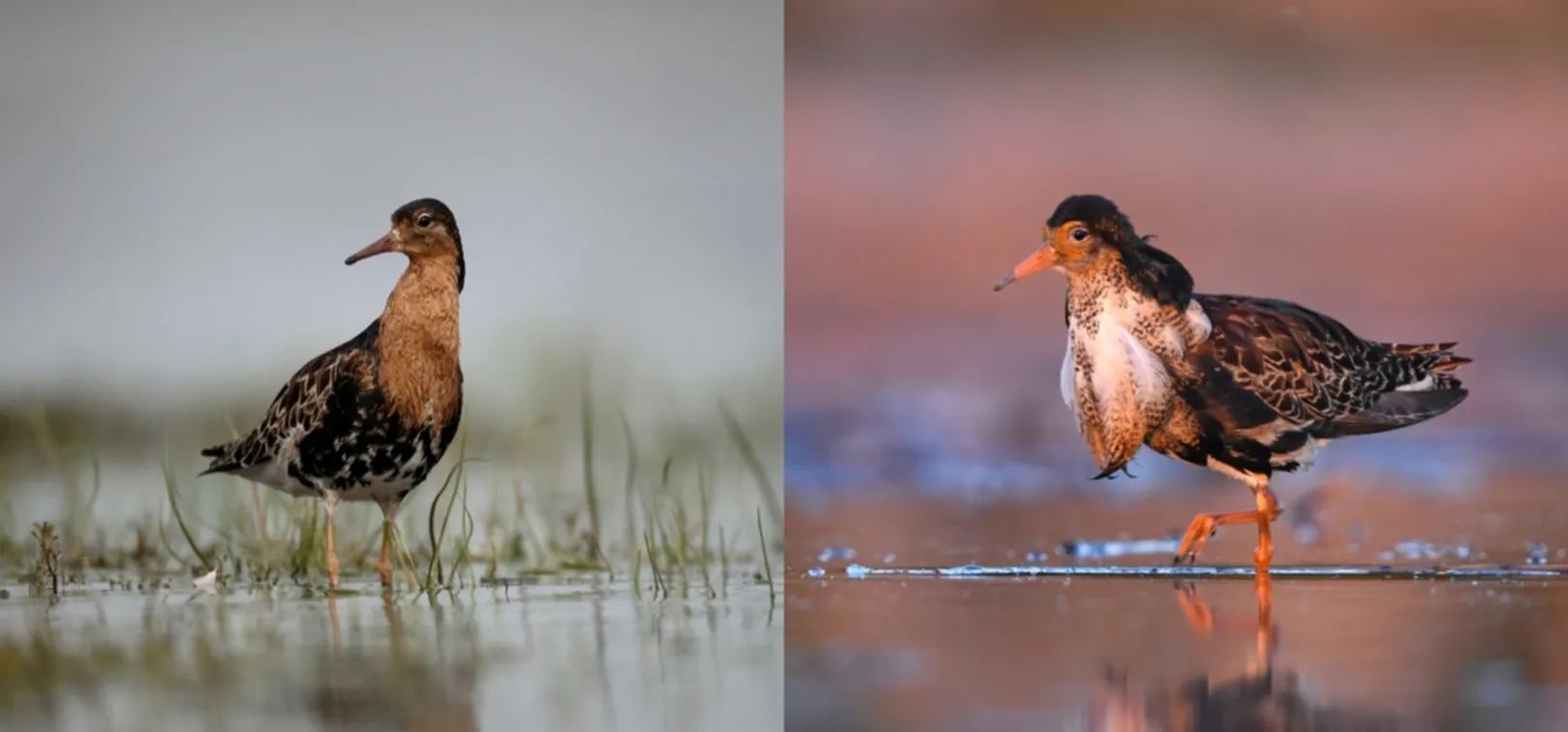
Ruff (Philomachus pugnax)
Ruffs have one of the most interesting mating systems, known as a lek. Most males display their colorful plumage and compete for the attention of females.
However, some males play a completely different game: they disguise themselves as “false females”, remain unnoticed among dominant males, and at the right moment surprise a real female. This genetically determined strategy allows smaller or less aggressive males to reproduce successfully without direct combat.
White-tailed eagle (Haliaeetus albicilla)
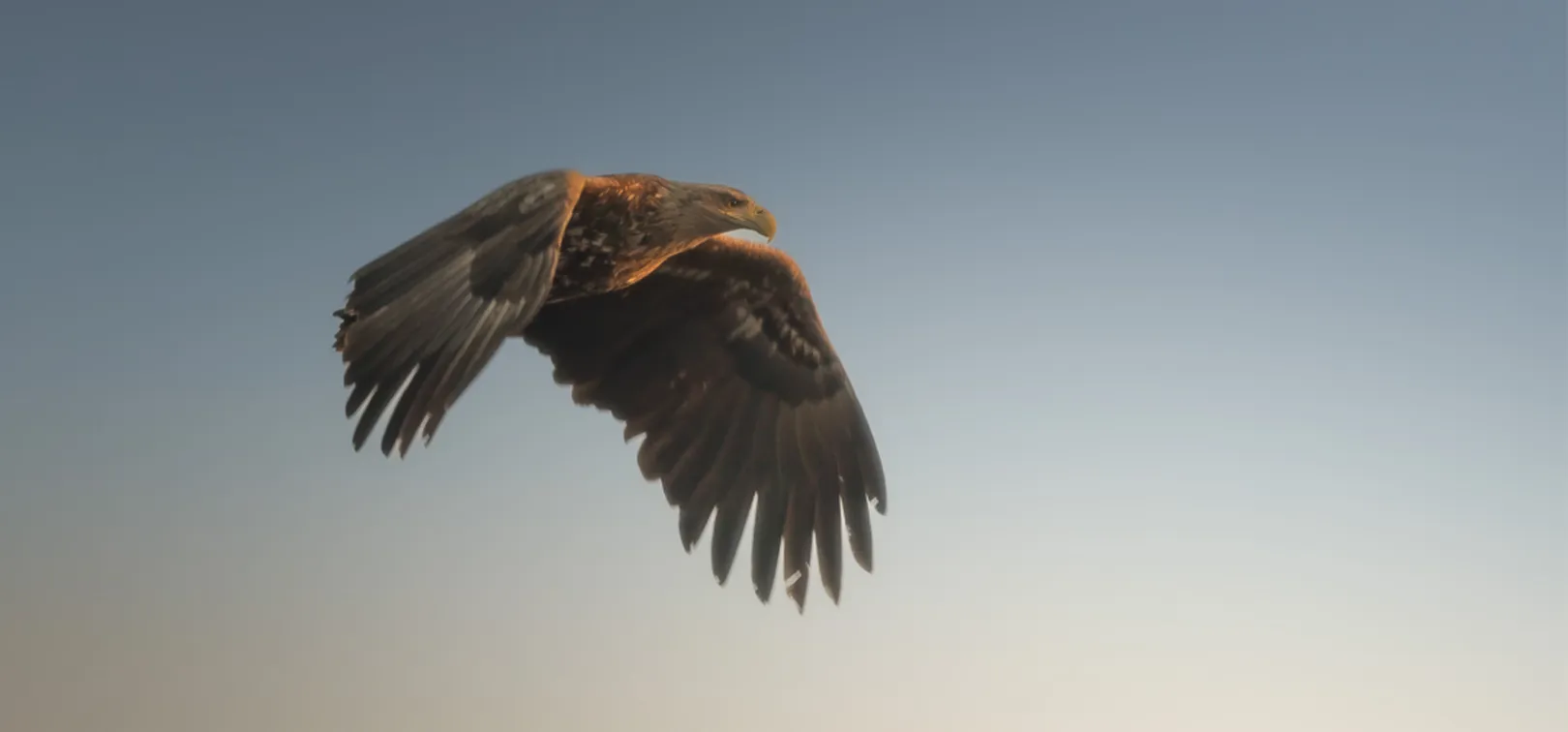
The white-tailed eagle is known for one of the most beautiful aerial courtship displays. Pairs often remain together for life, and their courtship is based on spectacular aerial acrobatics:
- Sky pointing – the male lifts his head back and calls.
- Paired flight – synchronized circling or flying in opposite directions.
- Talon touching – gentle touching with talons.
- Mutual cartwheeling – the climax of the display, when the pair locks talons and spins toward the ground, separating just a few meters above the surface.
These rituals strengthen the pair bond and mark territory, which is essential for successful nesting.
Animal mating rituals are not merely biological mechanisms, but true natural theaters – from gentle dances on the water’s surface to loud battles in forests and daring aerial acrobatics. Each species reveals its unique way of facing the challenges of reproduction, reflecting the creativity of natural selection.
But these scenes can unfold only where animals have enough space, peace, and suitable conditions. Preserving their habitats is therefore more than protecting individual species – it means safeguarding complex behavioral patterns that have evolved over millions of years.
By protecting nature, we allow these extraordinary rituals to repeat year after year and remain part of our shared natural heritage.