


| Project title: | »Natural seed bank as sources of seed material for extensive grasslands for biodiversity conservation on agricultural land« |
| Acronym: | Pilot project M16.2 – Natural seed bank |
| Coordinating beneficiary: | University of Ljubljana, Biotechnical Faculty |
| Project leader: | Dr. Klemen Eler |
| Other beneficiary: |
|
| Project duration: | 12/2023 – 12/2024 |
| Total eligible budget: | €74,998.88 |
Aims and objectives of the project:
Pilot project M16.2 »Natural seed bank« focuses on:
- raising awareness among partnership members and the narrower and/or broader public about the importance of preserving the biodiversity of species-rich (extensive) grasslands,
- acquiring key knowledge and experience in the field of extensive grasslands and ways of preserving them,
- insight into improved practices for obtaining seed material, by establishing the so-called natural seed banks directly on agricultural holdings,
- understanding the processes involved in establishing extensive permanent grasslands, which are crucial for conserving plant species and revitalizing species-poor grassland ecosystems.
Within the framework of the project we will:
- primarily conserve the biodiversity of grasslands on farms using improved practices for obtaining seed material,
- establishing so-called natural seed banks, which enable the restoration of degraded grasslands by introducing seeds from species-rich donor areas and revitalizing grassland ecosystems and increasing their biodiversity,
- develop measures to promote the restoration of extensive grasslands,
- conserve grassland plant species, including rare and endangered ones,
- spread knowledge and good practices among selected target groups (farmers, advisers, nature conservationists, etc.),
- raise public awareness about the importance of preserving biodiversity on agricultural meadows.
Project results achieved:
1. Implementation of a practical trial
The project trial was conducted on two farms (KG) in different regions, including areas with natural constraints (OMD). The aim was to restore extensive pastures and increase their species diversity.
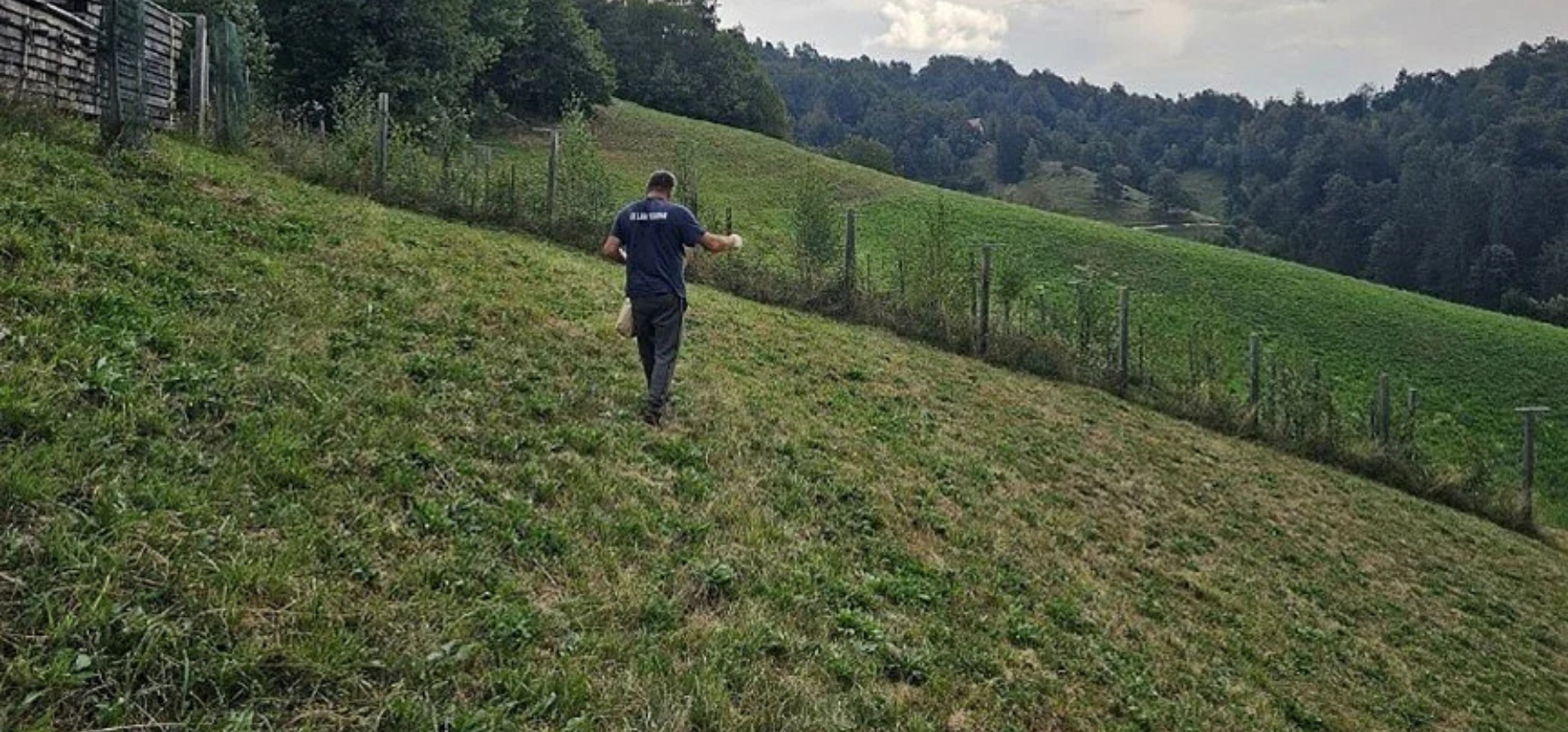
- On the farms of the Notranjska Regional Park a pasture of high nature conservation value (the so-called donor area) was selected. Using a brush machine, they collected seeds of characteristic plant species, which were subsequently dried appropriately.
- These seeds were sown on the prepared surface at KG 2DOM at Zaplani, where mowing had been carried out beforehand, the clippings were removed and the pasture turf opened, which increased germination success.
- Thus established species-rich pasture will in the future serve as a source of seed material (in situ seed bank) and an educational space for farmers, students and other stakeholders.
2. Knowledge transfer into practice
Within the project, the acquired knowledge was transferred among different target groups:
- For other agricultural holdings:
- field demonstrations of methods for obtaining seed material were organized,
- demonstration of the establishment and maintenance of extensive pastures and measures for preserving species diversity.
- For agronomy students:
- a professional field trip was conducted to both included farms, where they learned about the importance of extensive pastures for sustainable agriculture and biodiversity conservation.
- For professionals in agriculture:
- effective approaches to the reintroduction of native plant species were demonstrated.
- For the general and professional public:
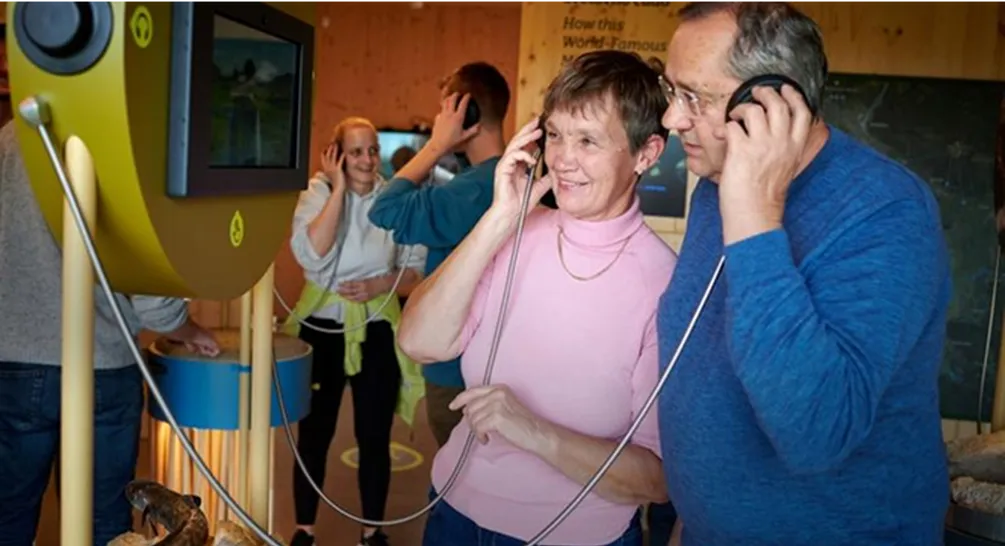
- a professional lecture was organized on establishing natural seed banks and other solutions for preserving extensive pastures.
3. Communication of results and dissemination of effects
- Results of the project were successfully presented through various communication channels and at public events aimed at farmers as well as the wider and professional public.
- Thus, the usefulness and sustainability of the knowledge gained were ensured.
4. Feasibility analysis of transferring improved practices to practice
- Based on the experiences from the project, a feasibility analysis of transferring improved practices to other agricultural holdings was prepared.
- This analysis provides practical guidelines for implementing measures to restore and maintain extensive pastures and biodiversity protection within agricultural land use.
Long-term effects of the project
The project, in one year, piloted how we can preserve or restore extensive grasslands, which are considered a highly valuable but severely threatened ecosystem.
Because it is a long-term process, in collaboration with farmers, advisers, researchers, and educational institutions, practical and tailored guidelines for managing these areas were developed for use after the project ends—with the possibility of transfer to other interested agricultural enterprises.
1. Sustainable management of extensive grasslands
Extensive grasslands are maintained with a traditional, nature-friendly form of farming:
- mowing once to twice a year or mosaic mowing,
- without the use of mineral fertilizers, pesticides and chemicals,
- low production costs for the farm,
- removal of invasive species (e.g., annual sow-thistle),
- monitoring status after reintroduction and, if necessary, additional seed input.
2. Benefits for agriculture, nature and society
Actions to conserve extensive grasslands contribute in the long term to improving ecosystem functions:
- more pollinators → better biological control of pests and higher agricultural productivity,
- maintaining soil fertility → better soil structure, less erosion, healthier soils,
- protection of water resources → less leaching of nutrients and chemicals into groundwater,
- natural fodder for animals,
- preservation of the cultural landscape and support for sustainable tourism,
- diversification of agriculture → the possibility of using plants in herbalism, cuisine, and traditional medicine,
- mitigation of climate change → higher soil organic matter content, carbon sequestration.
3. Contribution to resilience and adaptation
With all the above-described effects, the project contributes to:
- more sustainable farming,
- environmental protection,
- greater resilience of farms to climate change (droughts, floods, extreme events),
- and easier adaptation to changing economic and social conditions.
The project was co-financed by the Republic of Slovenia and the European Union from the Rural Development Fund and is implemented under the 6th call for proposals for Sub-measure 16.2 – Support for pilot projects and for the development of new products, practices, processes and technologies.
More information: European Agricultural Fund for Rural Development and Rural Development Programme of the Republic of Slovenia.



Projects in the Notranjska Park
The implementation of extensive nature conservation projects exceeds the financial capacity of the local community, therefore Notranjska Park regularly applies for projects with the possibility of co-financing by the European Union.
The implementation of large-scale conservation projects exceeds the financial capabilities of the local community, therefore Notranjska Park regularly applies for projects with the possibility of co-financing from the European Union.