In Notranjska Park, as part of the LIFE for SEEDS project, we are focusing our activities aimed at restoring grasslands on grassland and marsh or bog habitats on the moist to wet soils of the intermittent Lake Cerknica. and part of the habitat restoration activities are also carried out in the Brejnice area above Dobec on the Menišija plateau, where well-preserved, species-rich meadows and pastures on relatively dry soil intertwine with forests and grasslands that were once farmed but are now overgrown with woody species to varying degrees.
The area of restoration of moderately dry grasslands in Brejnice, where various species of wild orchids thrive, with marked donor (orange areas) and recipient areas (purple areas). In the central part of the donor areas (opaque orange areas), we mowed the seeds with a brush machine and later scattered them over the recipient areas as part of the restoration of species-rich semi-dry grasslands. The map is on a scale of 1:1500.
At the beginning of the project, we selected areas of well-preserved moderately dry grasslands in the Brejnice area – the so-called donor areas, where we then harvested seed mixtures for sowing on areas that had begun to become overgrown with woody species – the so-called recipient areas, from which we removed the woody vegetation before sowing the seed mixtures. During the project, we will also plant seedlings of companion and accompanying species on the recipient areas. The seedlings were grown by the project partners from seeds collected on the donor areas.
Jošt Stergaršek
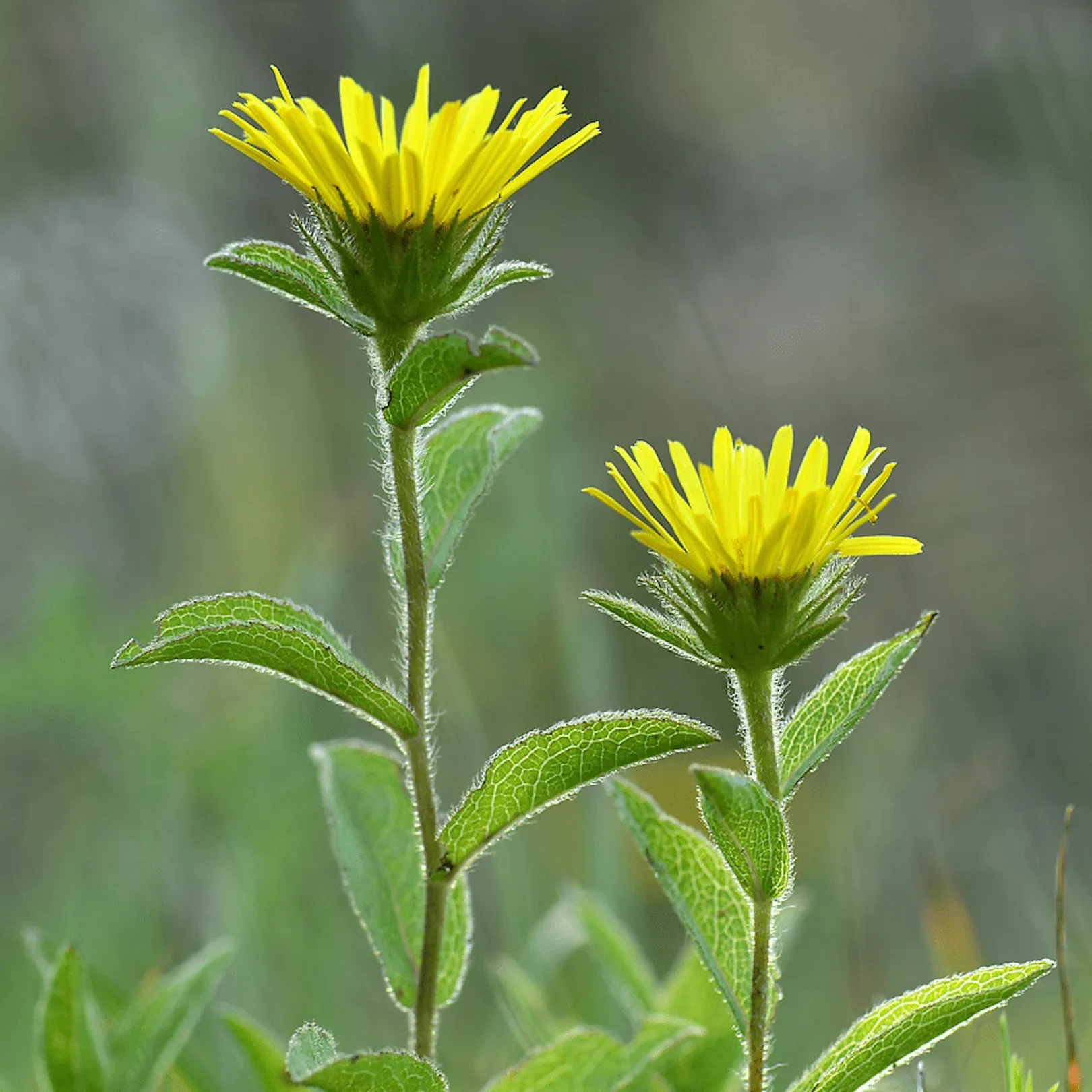
The hairy inula (Inula hirta) is one of thirteen companion species whose seedlings we planted on patches of soil from which we removed woody vegetation in winter and planted seedlings of symbiotic grass species in spring and autumn. We collected its seeds the previous year from donor areas nearby, and then the lead partner in the project grew seedlings from these seeds, which have a much greater chance of surviving to adulthood and completing their life cycle than plants that grow from seeds in seed mixtures.
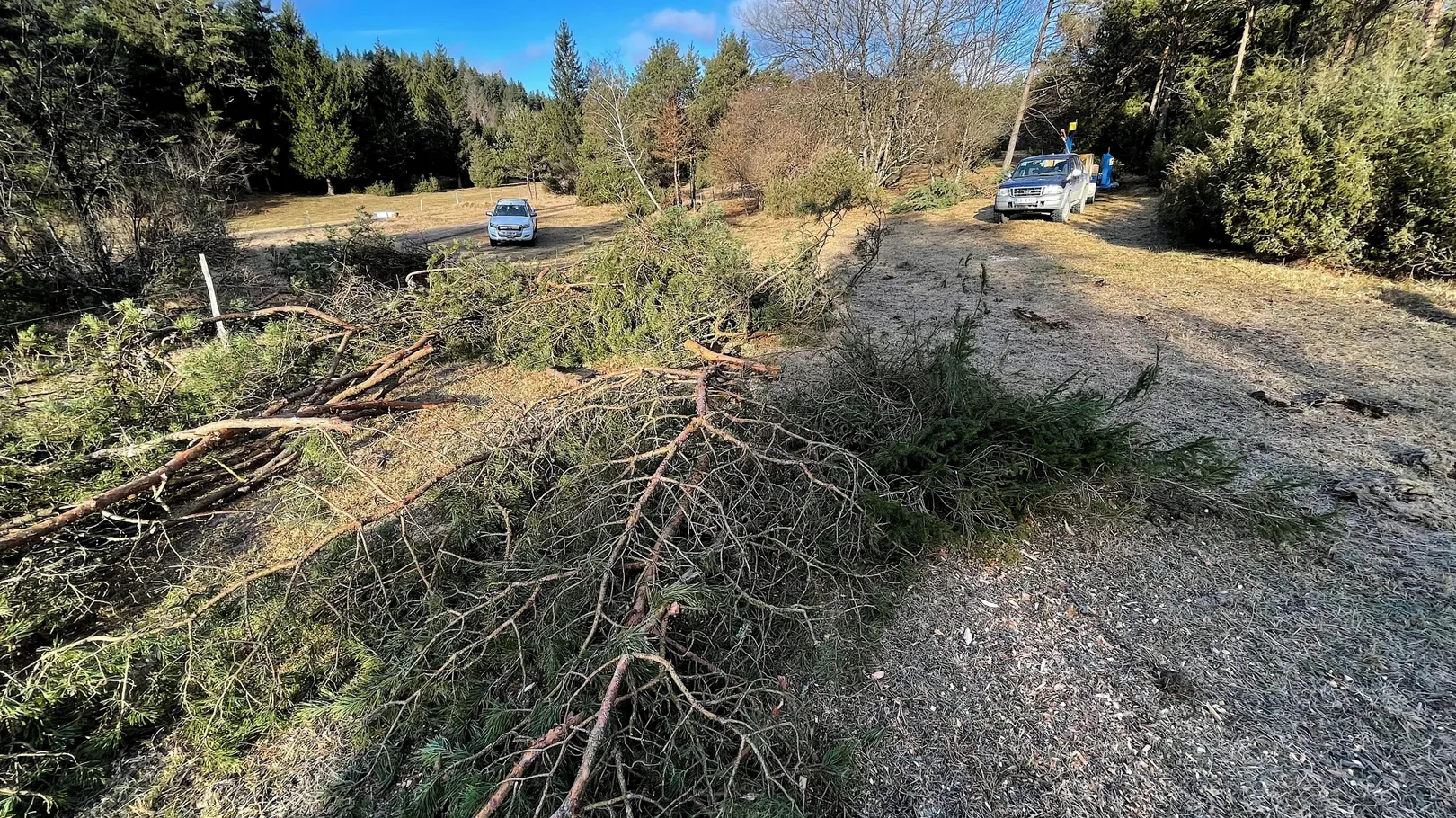
As mentioned, the first step was to remove woody vegetation from the recipient areas. Since the cut shrubs will continue to sprout young shoots for several years, we will continue to remove these species from the recipient areas throughout the duration of the project, or until herbaceous plants prevail, and the grassland will then be maintained by mowing or grazing cattle with low stocking rates and without supplementary feeding.
Jošt Stergaršek
Felled trees from areas undergoing restoration are waiting to be removed. We remove tree species from overgrown meadows because they shade the ground, which is not suitable for light-loving meadow species. In addition, they produce a large amount of biomass (leaves, branches) each year, which fertilises the soil when decomposers convert the dead parts into inorganic substances – nutrients for plants, which is also not suitable for grassland plants that thrive on barren soil.
In the second step, we want to accelerate the colonization of the newly opened space by sowing seed mixtures and planting companion and accompanying species characteristic of the habitat under restoration (parts of the land from which we have removed woody species) with species characteristic of grasslands on moderately dry soils. We selected 1.9 ha of land as donor areas for harvesting seed mixtures and collecting seeds of individual species, and designated a good half hectare of recipient areas for habitat restoration.
Jošt Stergaršek
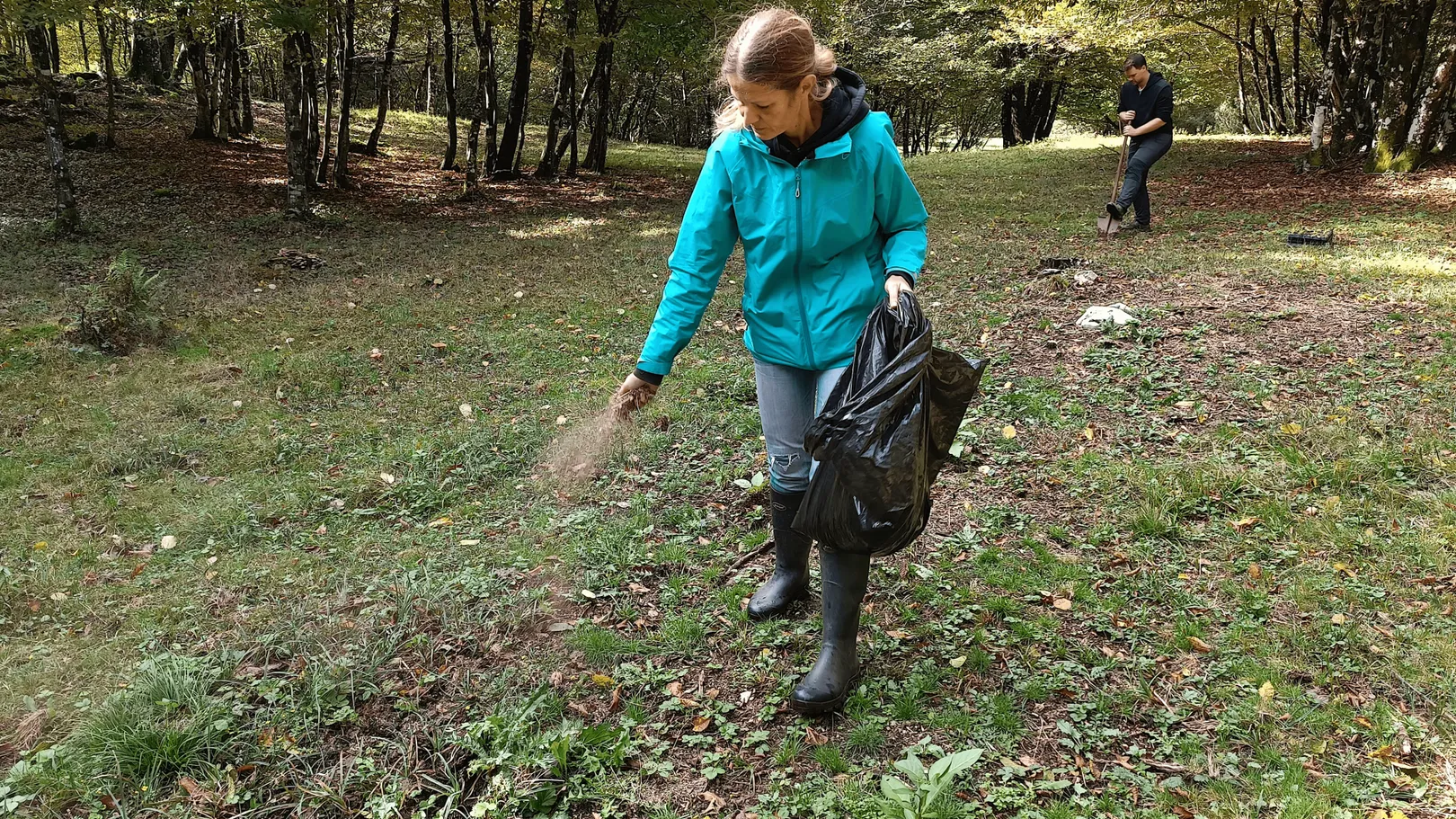
By sowing a seed mixture collected from nearby species-rich meadows, we aim to increase the number of species characteristic of the type of grassland being restored and their abundance in the recipient area. However, successful restoration depends on sustainable management of the restored meadow – mowing or grazing with very low impact.
We have planted and will continue to plant seedlings on smaller parts of the recipient areas, especially on patches of bare soil that were created after the removal of tree species.
Jošt Stergaršek
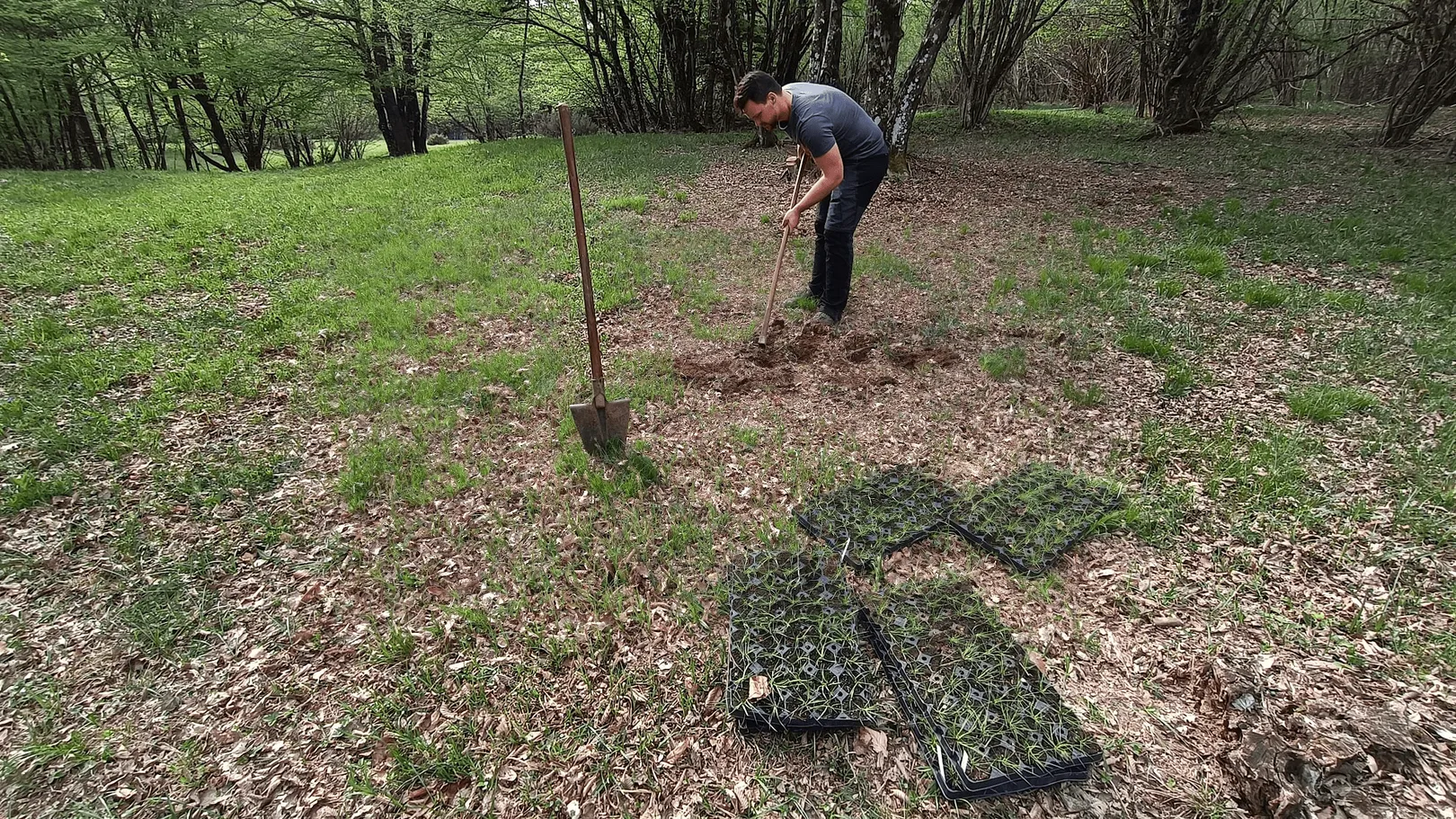
We chose the day before the forecast rain to plant upright brome grass and furrowed grass seedlings on the recipient surface in Brejnice, thus increasing the chances of the seedlings successfully taking root.
In April, we planted the first 495 seedlings of symbiotic grass species characteristic of moderately dry grasslands – upright brome (Bromopsis erecta) and rock fescue (Festuca rupicola). We planted the seedlings on four patches of poorly vegetated soil, from which we had already manually removed woody vegetation as part of the project.
Jošt Stergaršek
The second time we planted seedlings in 2024 was in early October, when we planted another 315 seedlings of thirteen grassland species characteristic of restored grasslands at the points where we had planted grass seedlings in April. In order to increase the chances of the seedlings taking root, we planted after rain, when the soil was well saturated.
In 2024, we planted seedlings of the following species in Brejnice:
(Cirsium pannonicum),
(Filipendula vulgaris),
(Scabiosa centaurea),
(Hypochoeris maculata),
(Inula hirta),
(Helianthemum nummularium),
(Globularia puncatata),
(Festuca rupicola),
(Silene nutans),
(Brachypodium rupestre),
(Campanula glomerata),
(Betonica officinalis),
(Veronica barrelieri),
(Potentilla alba),
(Bromopsis erecta).
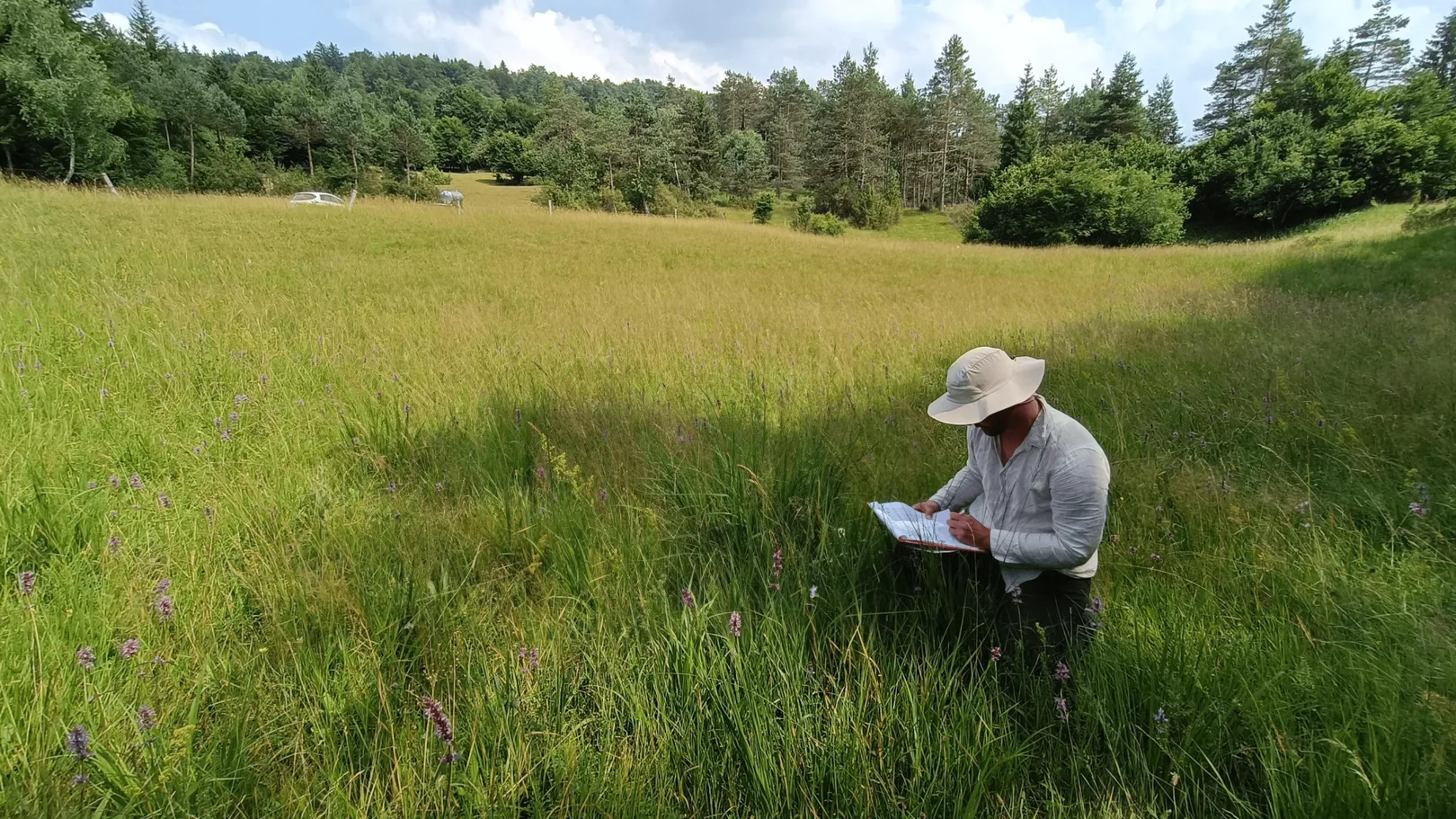
Unlike seedlings, we sowed seed mixtures across the entire surface of the recipient areas with the aim of increasing species diversity and the number of individuals in the restored meadows. Before harvesting the seed mixtures, we surveyed the vegetation on the donor area using the standard Central European method based on the Braun-Blanquet scale.
This vegetation survey provides data on the species composition and coverage of the surveyed area with plants, i.e., the presence of species and the proportion of the area covered by each species in the surveyed area. We also carry out the same surveys on recipient areas, which allows us to monitor changes in vegetation over time and thus assess the effectiveness and suitability of the restoration method.
Jošt Stergaršek
The day before harvesting seeds on the selected donor area, we conducted a vegetation survey using the Braun-Blanquet method. Of the 91 species recorded in the survey area, 84 were characteristic of grasslands and 7 of forest edges. Four of the grassland species are either protected or endangered in Slovenia.
As part of these inventories, we found 91 seed taxa on the area in question, 84 of which were grassland species. Thirteen of the recorded species were clearly more common, each covering 5 to 25% of the survey area. These are dominant species that form the basis of the plant community, with other species joining them to form a species-rich, moderately dry grassland. Four of the grassland species recorded are protected in Slovenia by the Decree on Protected Wild Plant Species and/or endangered according to the Rules on the Classification of Endangered Plant and Animal Species in the Red List.
The following species prevailed:
(Agrostis tenuis),
(Betonica officinalis),
(Bromopsis transsilvanica),
(Carex montana),
(Cirsium pannonicum),
(Danthonia alpina),
(Festuca rubra),
Filipendula vulgaris),
(Galium verum),
(Holcus lanatus),
(Molinia arundinacea),
Potentilla alba),
(Rhinanthus minor).
The following species predominated in the donor area:
(Anacamptis pyramidalis),
(Dianthus hyssopifolius),
(Gymnadenia conopsea),
(Lilium bulbiferum).
Jošt Stergaršek
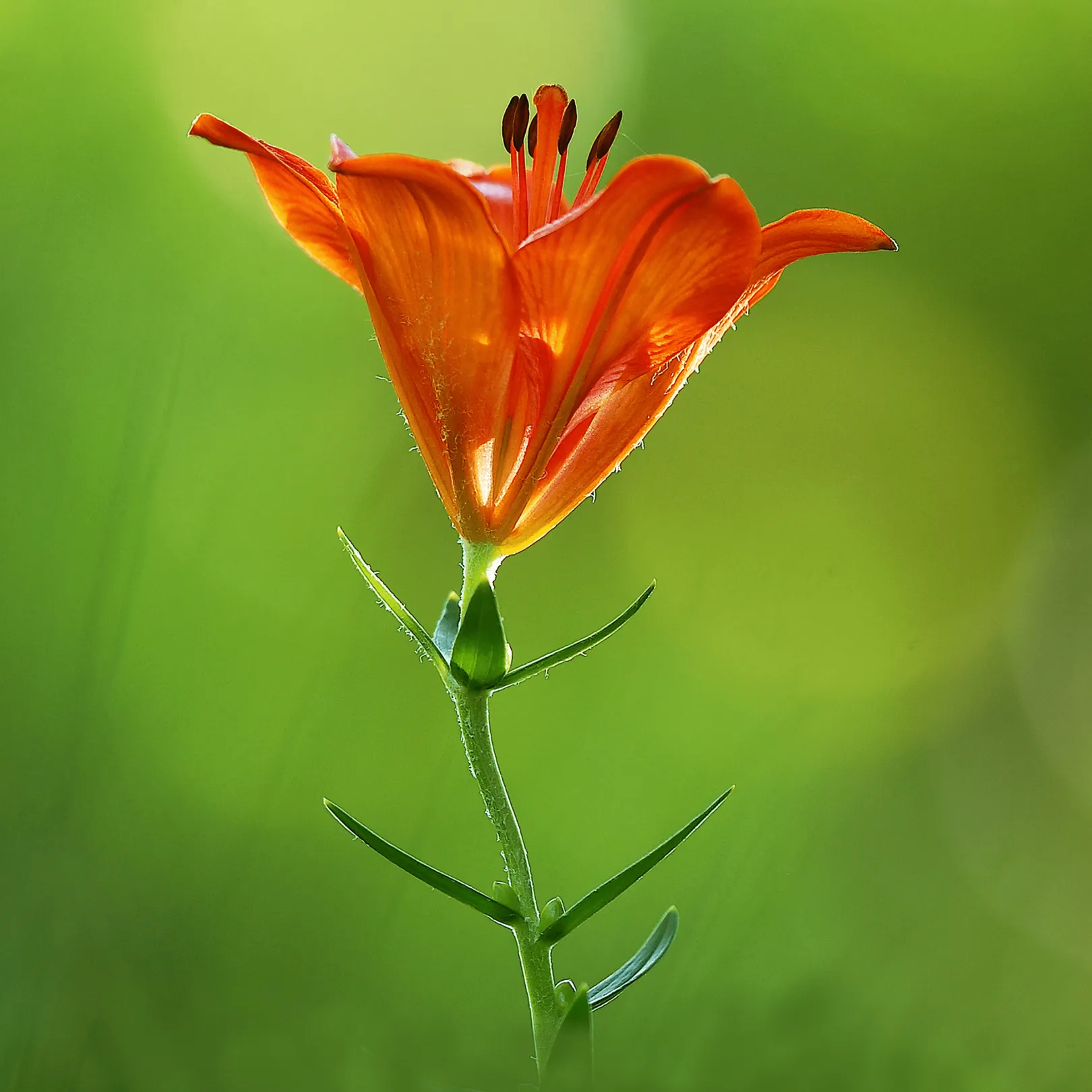
The martagon lily (Lilium bulbiferum) is a lush flowering species that most often adorns abandoned meadows, bushes, and forest edges. It is a protected species in Slovenia, which means that we are not allowed to remove it from nature, pick it for bouquets, or collect its seeds without special permission.
LIFE FOR SEEDS
LIFE FOR SEEDS focuses on establishing a seed bank of 300 representative species of three priority habitat types at the European Union level.
The implementation of extensive nature conservation projects exceeds the financial capacity of the local community, therefore Notranjska Park regularly applies for projects with the possibility of co-financing by the European Union.
The implementation of large-scale conservation projects exceeds the financial capabilities of the local community, therefore Notranjska Park regularly applies for projects with the possibility of co-financing from the European Union.


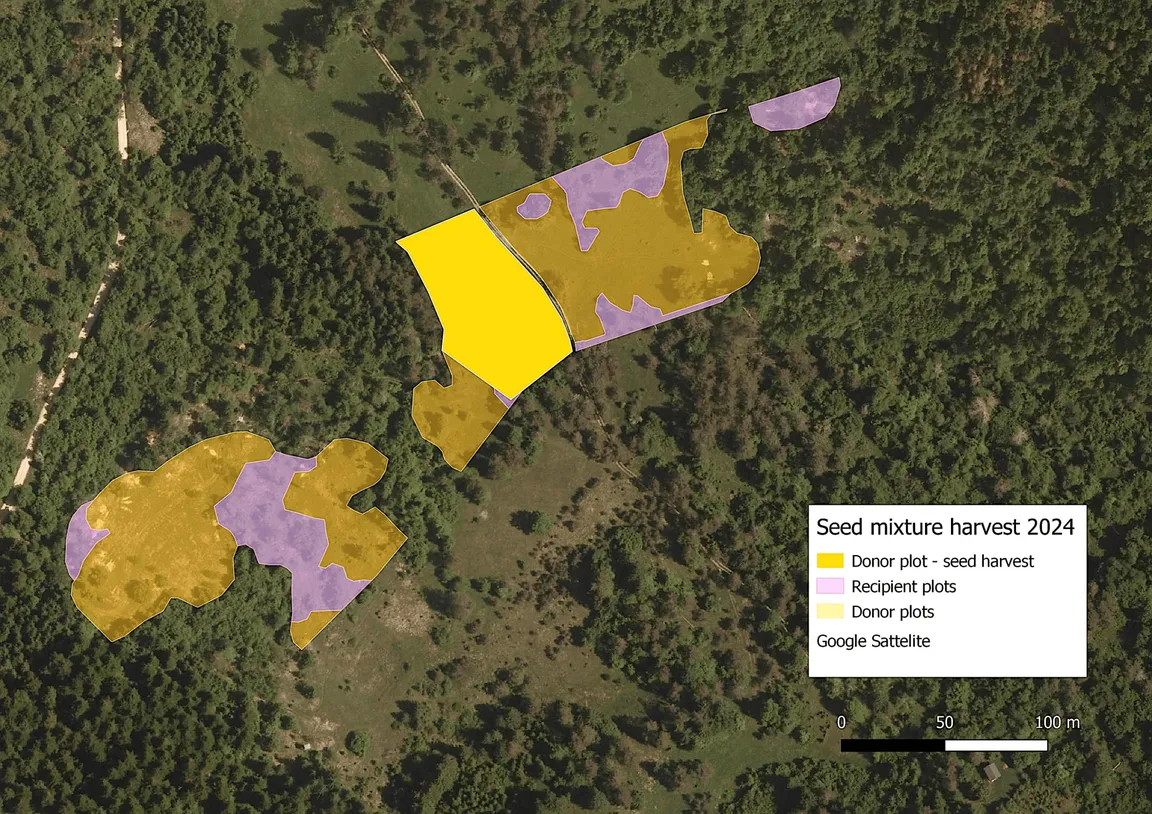
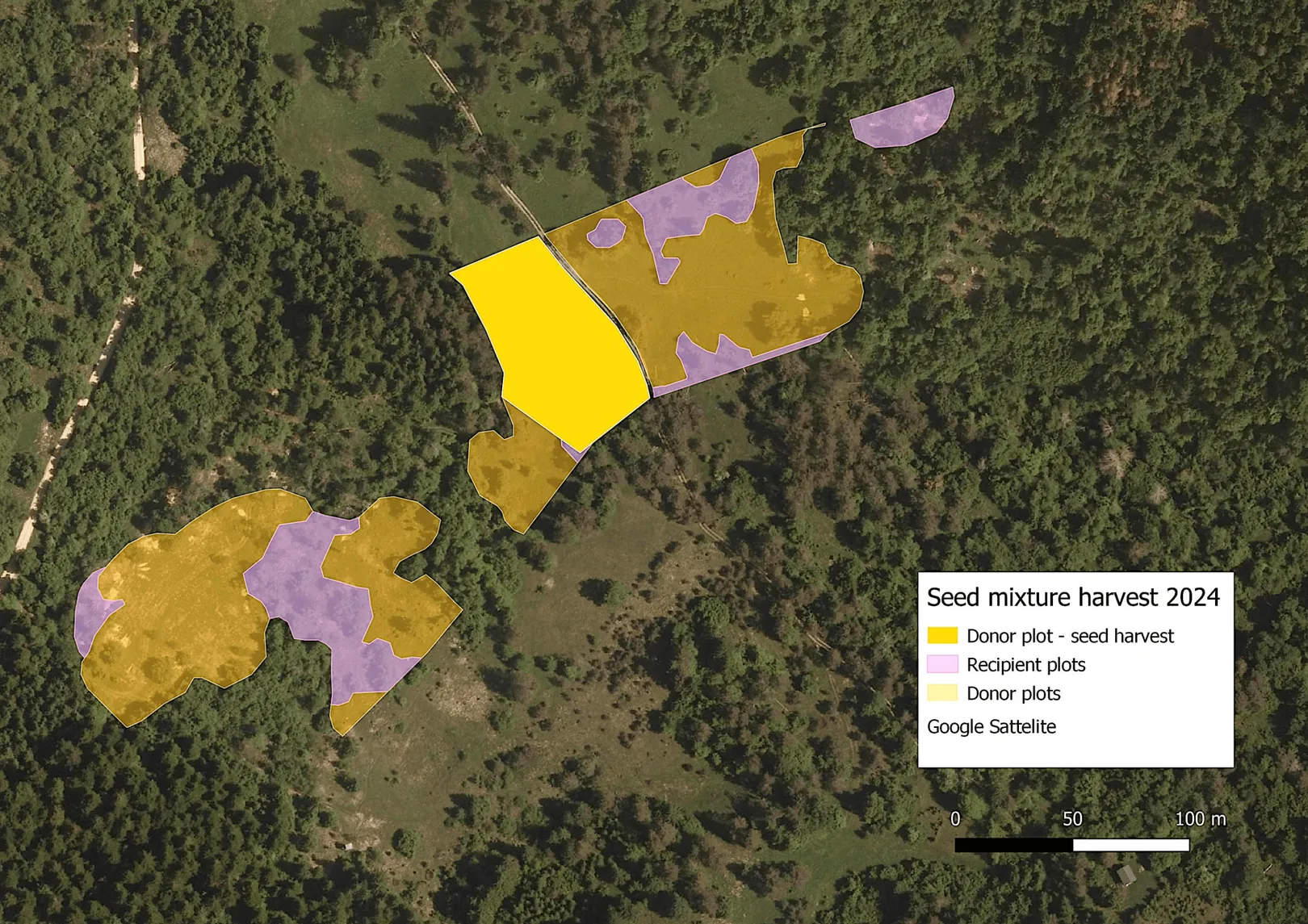 The area of restoration of moderately dry grasslands in Brejnice, where various species of wild orchids thrive, with marked donor (orange areas) and recipient areas (purple areas). In the central part of the donor areas (opaque orange areas), we mowed the seeds with a brush machine and later scattered them over the recipient areas as part of the restoration of species-rich semi-dry grasslands. The map is on a scale of 1:1500.