LIFE TRŠCA: The richness of plants in the karst watercourse Stržen depends on the water level

Published: 19. 09. 2025 Author: NRP Categories: Projects

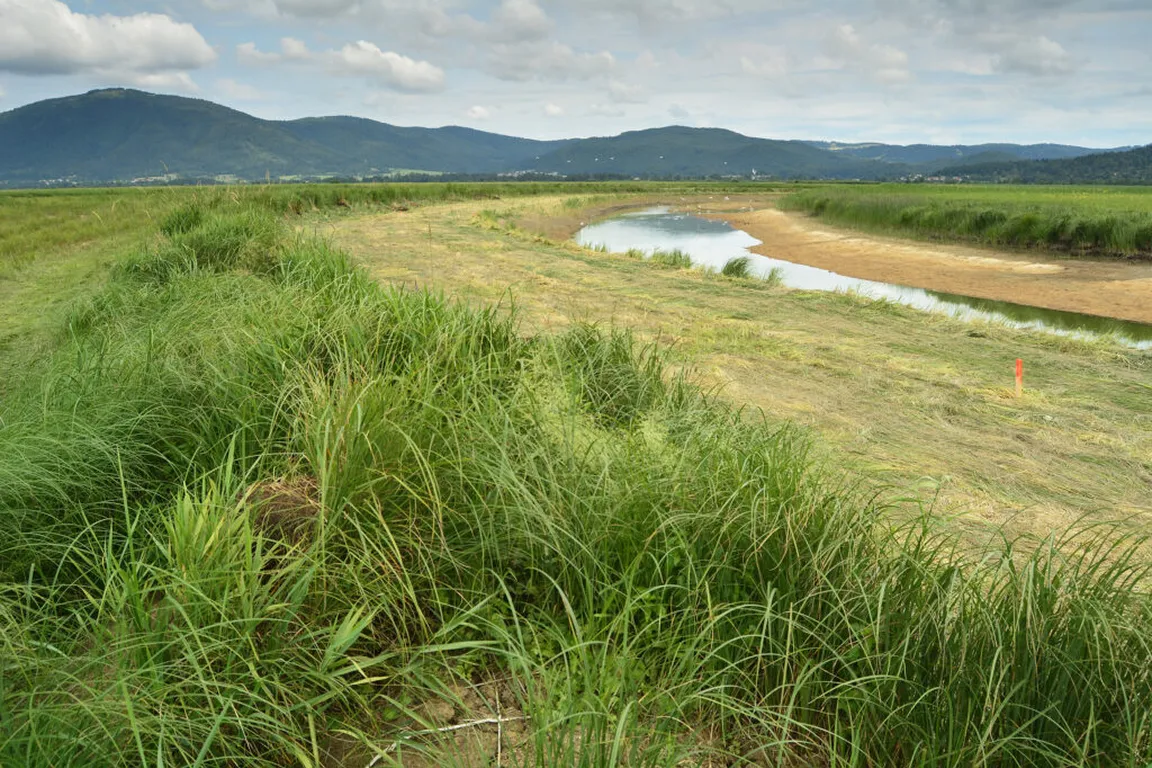
A landscape with a tall green meadow in the foreground, a winding karst watercourse  in the middle, and mountains in the background under a partly cloudy sky.
Photo: Rudi Kraševec

The karst watercourse Stržen , which flows to the Lake Cerknica from the south, is the central watercourse of the Cerknica polje as well as in the LIFE Trsca project area. The watercourse Stržen is approximately 17 km long and is important for the hydrological regime of the lake, due to its role in flood dynamics and water retention in the lake basins.

Many macrophytes grow in the watercourse Stržen . Macrophytes are aquatic plants that can be seen with the naked eye in water. Macrophytes include mosses, ferns, and vascular plants, as well as certain algae (e.g. Stone-worts). Depending on the rooting and position in the water column, we divided them into floating and submerged unrooted macrophytes and floating and submerged rooted macrophytes. Macrophytes also include helophytes (marsh plants) and plants with an amphibious character (amphibious plants).

 The karst watercourse Stržen, densely overgrown with the yellow water-lily (Nuphar luteum) in the middle and lower parts. Favorable conditions, such as the low current velocity, the type of substrate, enough light, and nutrients, allow for lush growth of this natant rooted species.

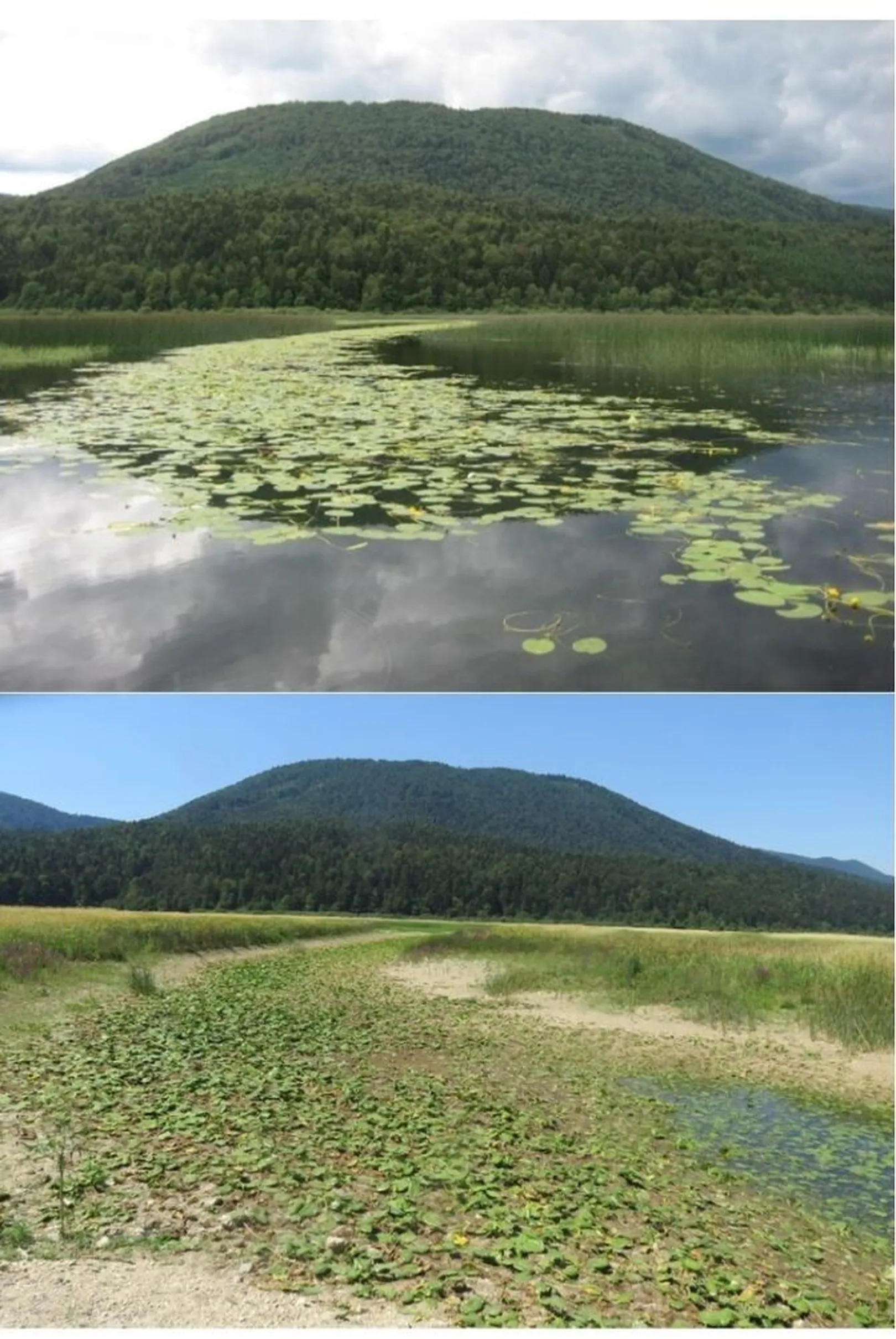
Two photographs of the same location at different times. The upper one shows a lake with water lilies, surrounded by forest and a mountain in the background under a cloudy sky. The lower one shows the same area with significantly less water, the lake bed exposed and vegetation under a clear blue sky.
Figure 1: The karst watercourse Stržen has a karst character, because of that it can show extremely large differences between the lowest and highest water levels.

Because the karst watercourse Stržen has a karst character, it has a very variable water level with extremely large differences between the lowest and highest water levels (Figure 1). At high water levels, the water west of the bridge near Dolenje Jezero is a habitat to a diverse community of macrophytes, including mare’s tail (Hippuris vulgaris), spiked and whorled water-milfoil (Myriophyllum spicatum, M. verticillatum), shining pondweed (Potamogeton lucens), yellow water-lily (N. luteum) and also common club-rush (Schoenoplectus lacustris), fen ragwort (Senecio paludosus), and great water-parsnip (Sium latifolium), which are helophytes.

When the karst watercourse dries up, the yellow water-lily remains the only thriving species among the submerged and floating macrophytes in the muddy bottom, which uses its strong root system to draw water from the deeper layers of the sediment (Figure 1).

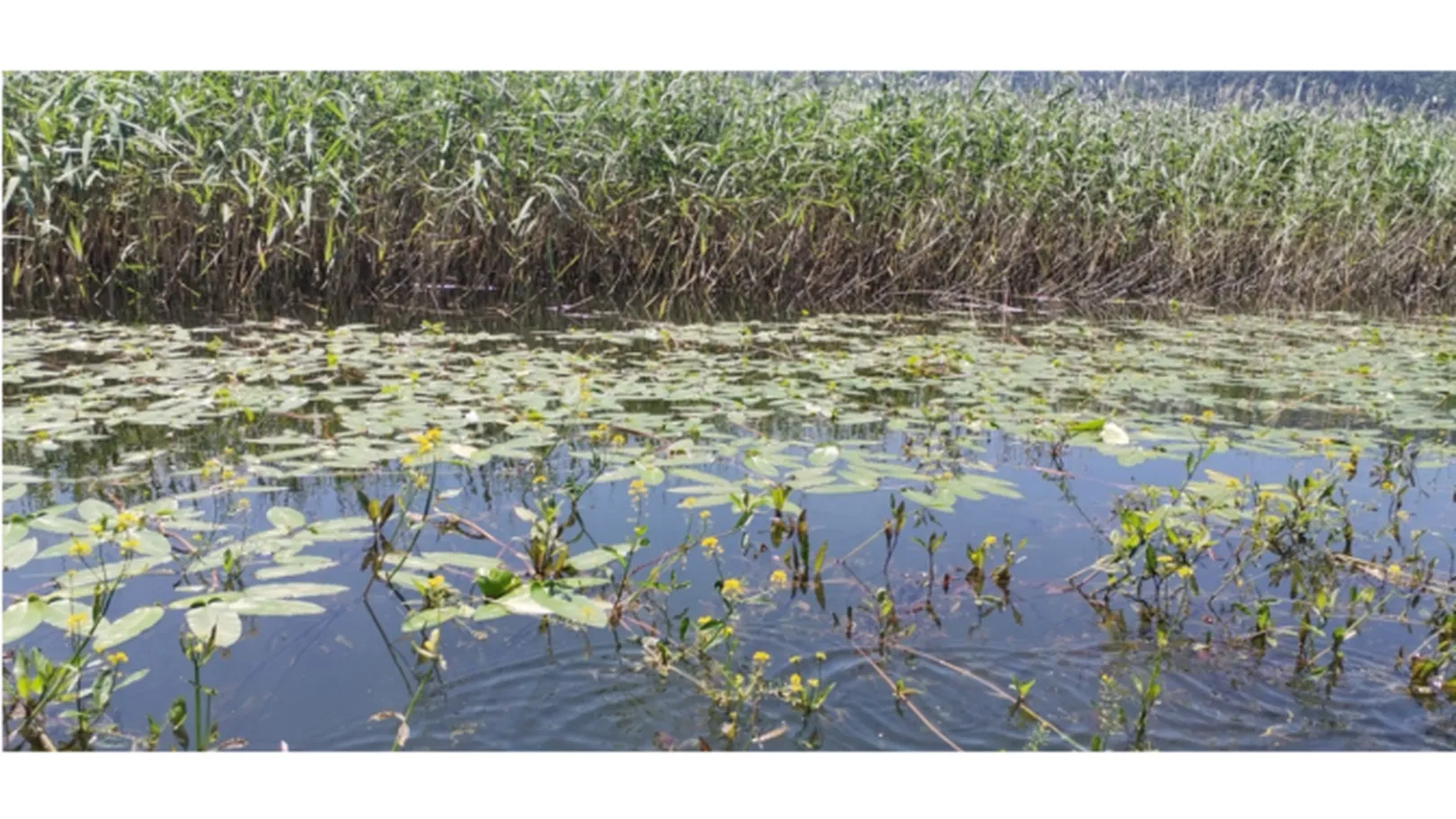
A body of water with green water lilies and yellow flowers, in the background a dense growth of reeds at the water's edge; a natural marsh or wetland scene.
Figure 2: The banks of the karst watercourse are formed by dense stands of common reed.

The banks of the karst watercourse is formed by the dense stands of common reed (Phragmites australis), the most characteristic species of Lake Cerknica (Figure 2). On the water surface, the leaves of water knotweed  (Polygonum amphibium) float between yellow flowers of the great yellow-cress (Rorippa amphibia), both common amphibious plants in the karst watercourse Stržen.

Studying the vitality of the common reed is one of the important goals of the LIFE Tršca project. At the Biotechnical Faculty, we have found that the stands thriving on the banks of the watercourse Stržen are among the most vital reed stands within the project area.

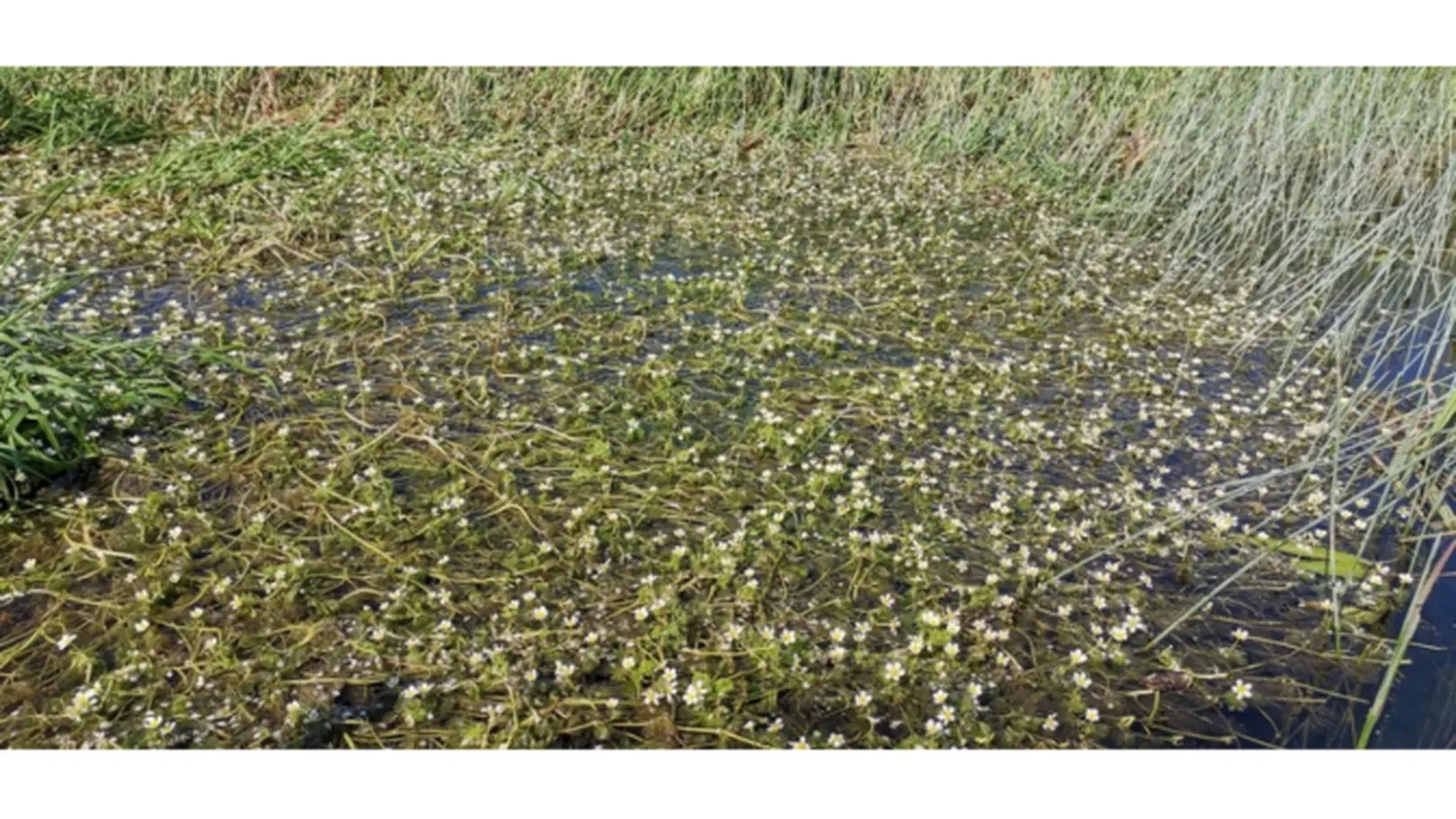
A body of water with small white flowers and green aquatic plants, surrounded by reeds; a natural marsh or wetland scene.
Figure 3: The threadleaf crowfoot, is a common plant in the watercourse Stržen.

The threadleaf crowfoot (Ranunculus trichophyllus), is a common plant in the watercourse Stržen. It attracts attention with its delicate white flowers. When the water level drops, the plant develops terrestrial leaves that resemble terrestrial plants. Its amphibious nature allows the species to adapt to the frequent and unpredictable fluctuations in the water level in the watercourse Stržen.

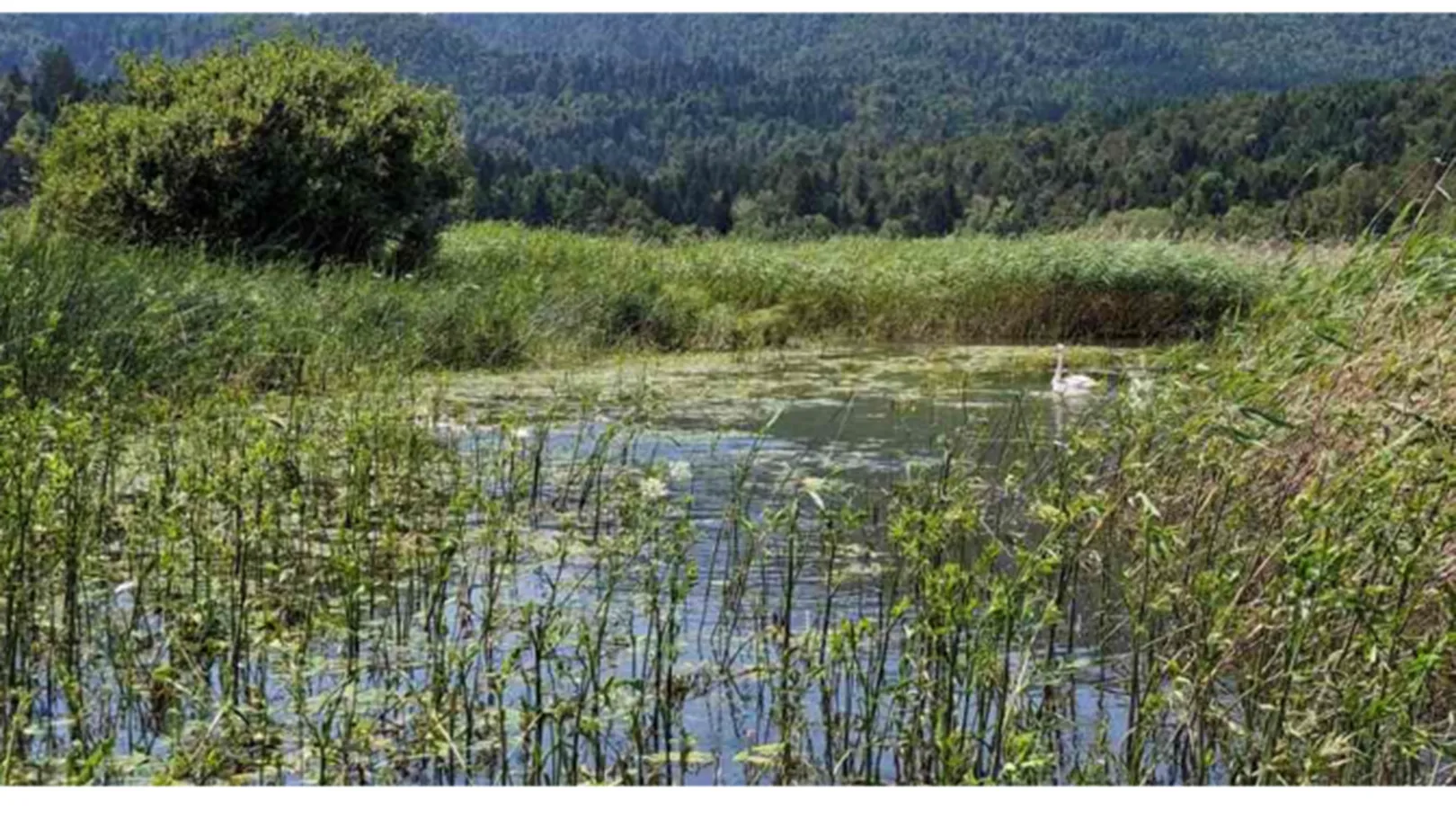
A small, calm body of water, surrounded by tall grasses and reeds, in the background a dense forest reaching up to the hills; aquatic plants are visible on the water surface.
Figure 4: During fieldwork, we disturbed a family of swans swimming among aquatic vegetation.

During fieldwork, we disturbed a family of swans swimming among aquatic vegetation (Figure 4). Aquatic vegetation provides birds with shelter and food, and allows them to nest.

We have found 34 taxa of macrophytes in July 2025 in the karst watercourse Stržen, which is a lot for such a short watercourse. The watercourse Stržen is diverse, providing several ecological niches where many aquatic plants find suitable conditions to thrive. Through the process of photosynthesis, they biogenically aerate the water, solidify the sediment and reduce erosion, and by absorbing nutrients from the water, they increase its self-purification ability. The great diversity of plants reduces the vulnerability of the aquatic environment to disturbances and ensures the good status of the aquatic ecosystem of the karst watercourse Stržen.


Article was prepared by the Biotechnical Faculty of the University of Ljubljana.

LIFE TRŠCA

With LIFE TRŠCA we will improve the conservation status of the intermittent Lake Cerknica.

Report Hiking Festival 2025
Back

Report Hiking Festival 2025

Two hikers enjoying the view at Cvinger Viewpoint, surrounded by nature under a clear sky.
LIFE FOR SEEDS: LIFE FOR SEEDS project monitor visit
A vast green field with tall grass and wildflowers in the foreground. In the background, a large mountain rises, covered with trees and vegetation. The sky is partly cloudy with visible patches of blue.
Next

LIFE FOR SEEDS: LIFE FOR SEEDS project monitor visit

Projects in the Notranjska Park
Logotip notranjskega parka z rastlino in metuljem.

Projects in the Notranjska Park

The implementation of extensive nature conservation projects exceeds the financial capacity of the local community, therefore Notranjska Park regularly applies for projects with the possibility of co-financing by the European Union.

The implementation of large-scale conservation projects exceeds the financial capabilities of the local community, therefore Notranjska Park regularly applies for projects with the possibility of co-financing from the European Union.

Read more
Read more