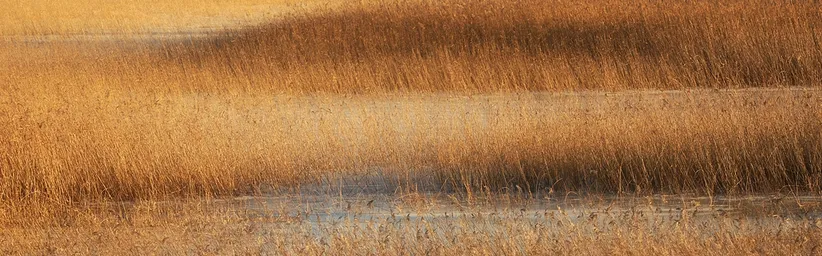
The LIFE Tršca project was presented as an example of an integrated approach to wetland habitat management. One of its main goals is to ensure suitable conditions for the conservation of bird species associated with aquatic ecosystems, such as the ferruginous duck and the great crested grebe. These two species are indicators of the preservation and quality of the habitat, as they thrive only under specific ecological conditions. In addition, the project also involves other animal and plant species that make up the rich and distinctive natural mosaic of the Cerknica Plain.
At the meeting of the working group, the LIFE Tršca representatives highlighted the operation “Conservation of Wet Extensive Grasslands,” which is also being implemented in the Cerknica Plain area. It was launched in 2007 under the Rural Development Programme. Over successive programming periods, the operation has been significantly adapted to better address the needs of the habitats and species it protects – for example, improving the habitat of the corn crake. At the same time, it enables farmers to continue cultivating their land successfully and maintain their economic stability. However, an issue was also presented: mowing on Lake Cerknica has greatly expanded outside the corn crake habitat areas, causing large-scale reduction of reedbeds and sedge stands, and consequently altering habitats for many wetland, aquatic, and reedbed species. This issue is being addressed by the LIFE Tršca project, whose main objective is therefore to improve the conservation status of wetland habitat types and the living environment of the ferruginous duck and great crested grebe, which require specific conditions for survival, by defining an optimal mowing regime.