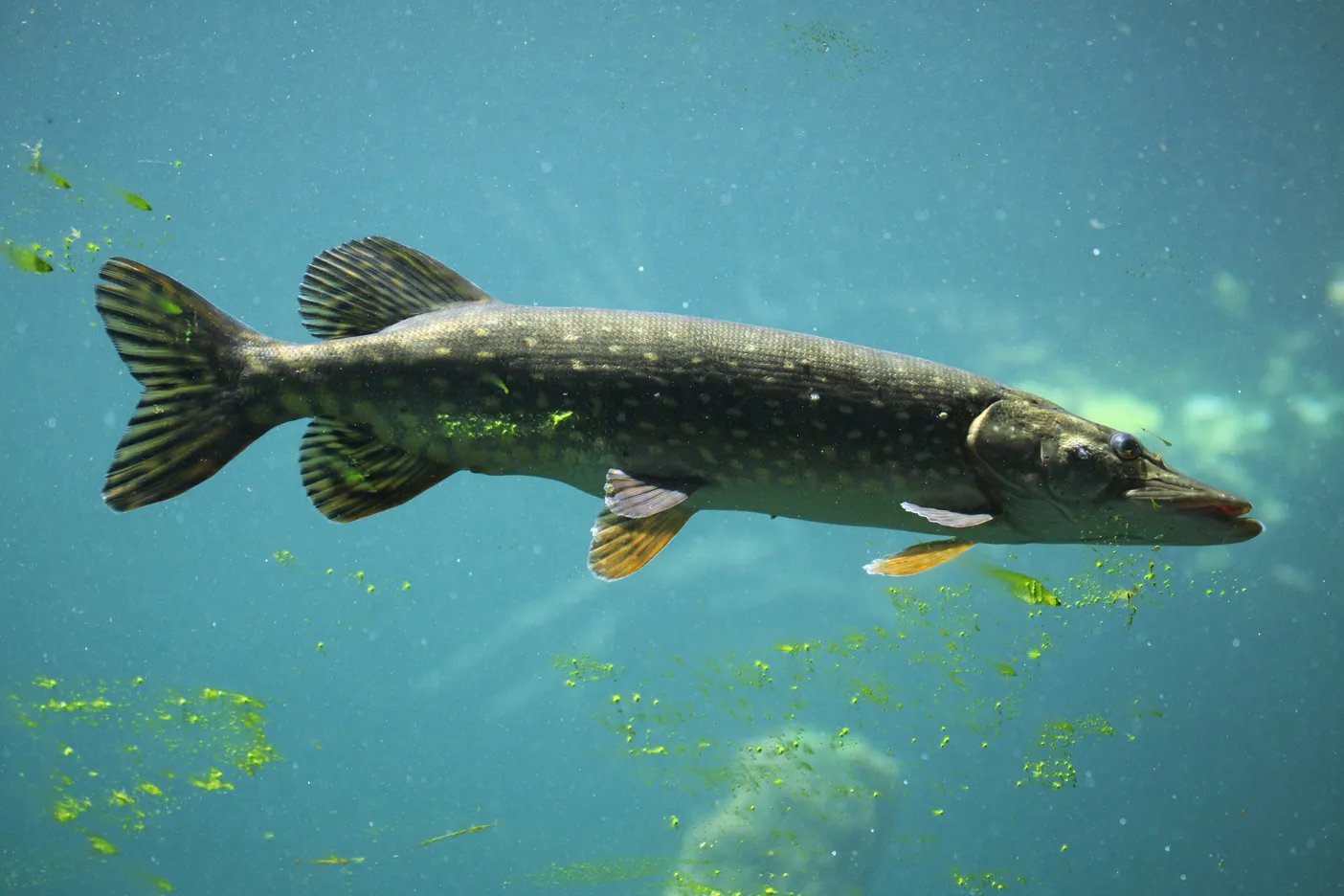
The ruler of the water world is northern pike, which floats motionlessly in the shades of yellow pond lilies by the Stržen stream. Here, it blends with the surroundings in the game of light and shadows, and patiently waits for a shoal of rudds to pass by its hideout...
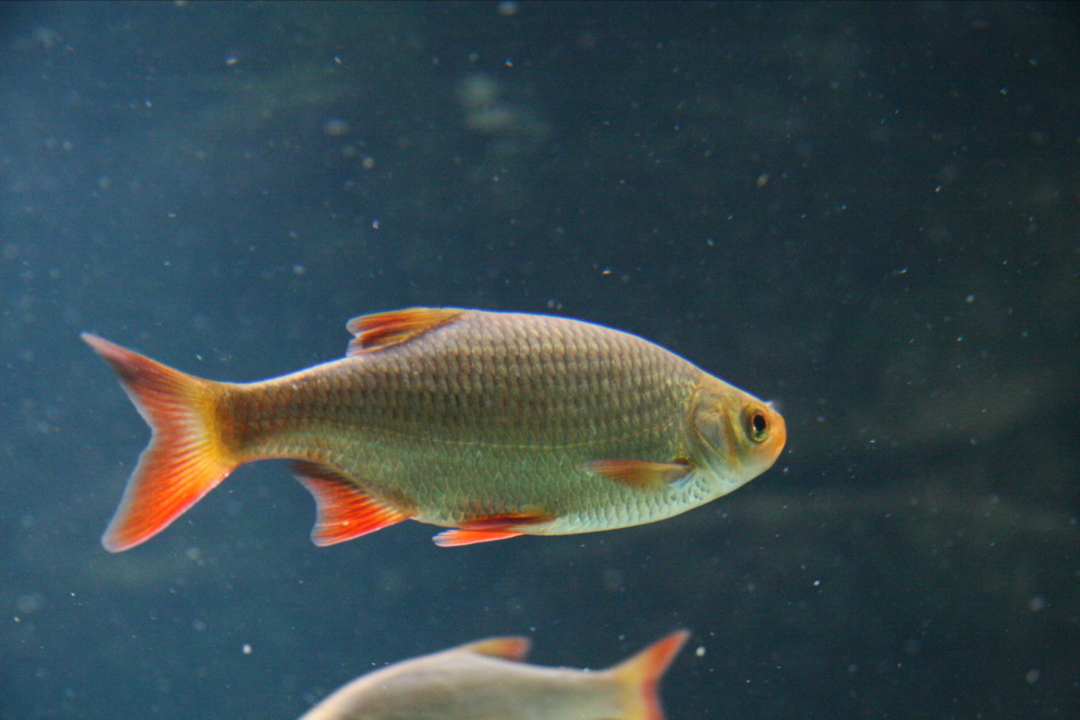
Rudds are sociable fish living in smaller shoals of same-sized individuals. The bigger ones rush from depths to the surface where they make loud splashes and pick up the weakened insects caught in the surface film. All too often they also treat themselves with pike caviar...
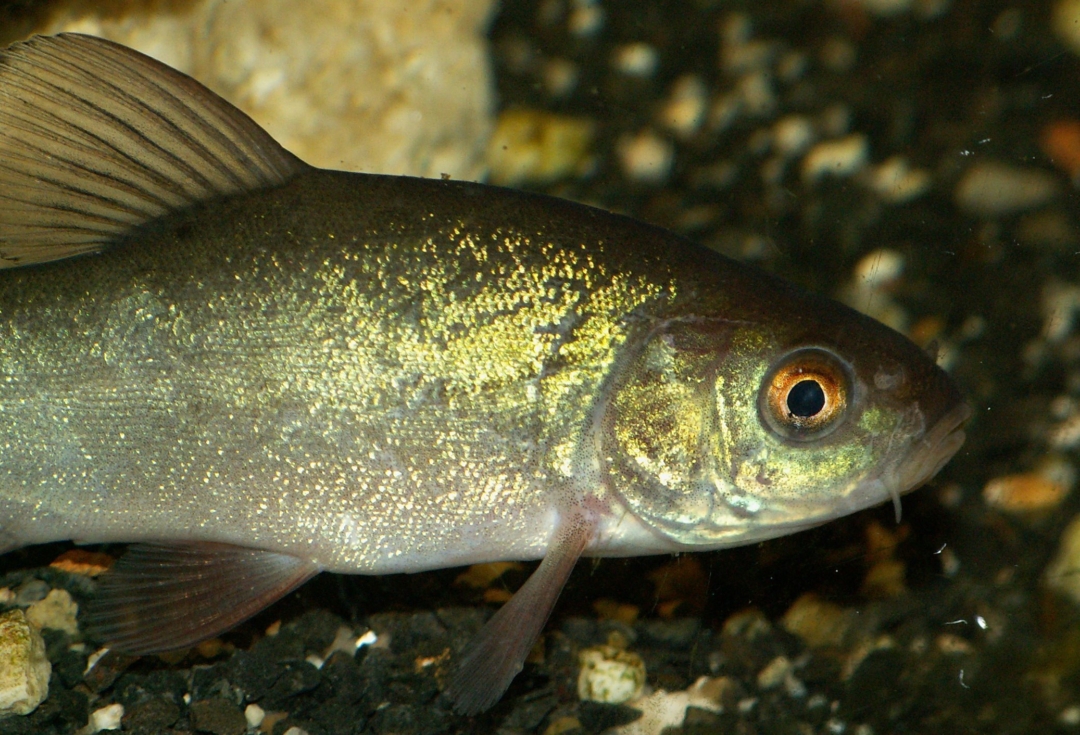
In the meantime, tenches chat at the bottom of the stream bed and expose themselves to sunbeams. This dark green šlajn, as the locals call the fish, glistens in gold shades when it turns the stones here and there, chases out mayfly larva and sups it up lazily for its midday snack.
Carps, which were introduced into the lake artificially, also take delight in foraging for insects' larvae and other invertebrates.
Chubs, as if feeling uneasy, patrol their part of the lake and fearlessly inspect every novelty they detect. Everything that moves is also under the sharp eyes of perches which examine the lake far and wide in their insatiable hunger...
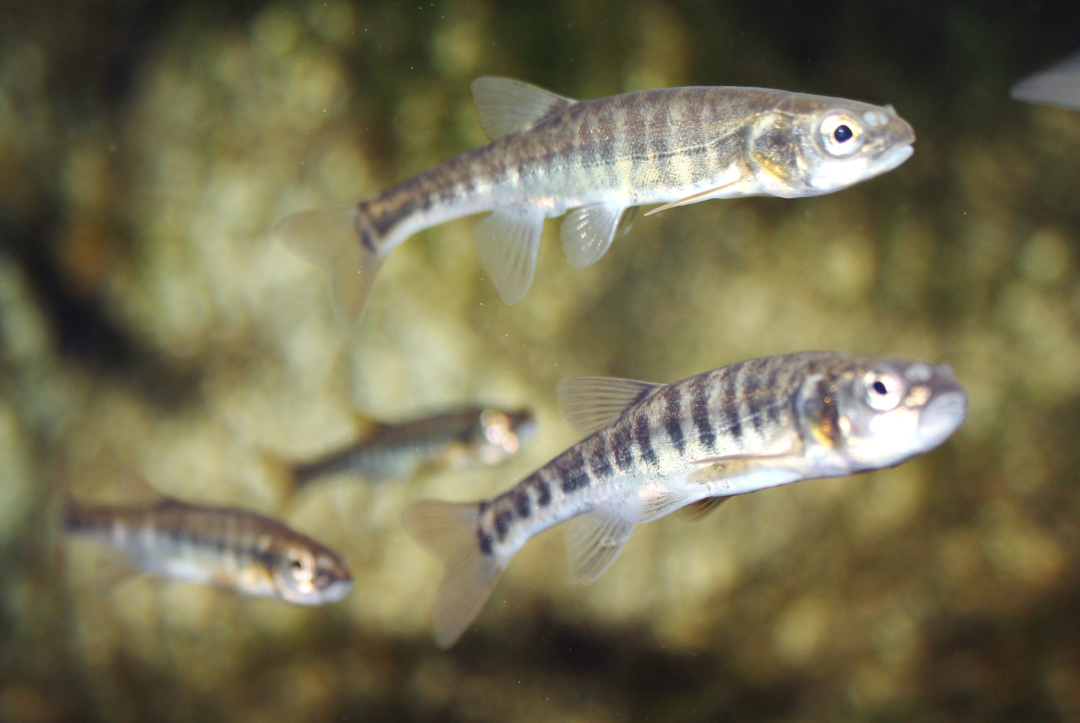
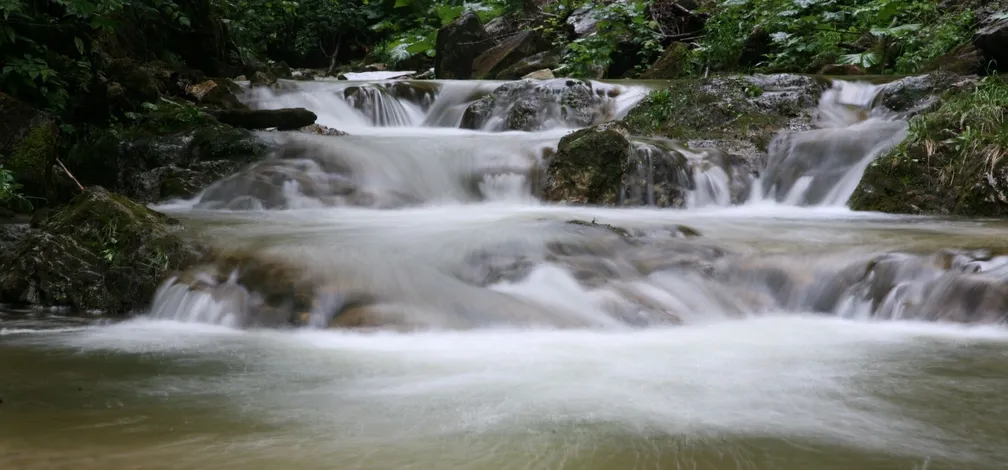
By the springs of streams which feed the lake, bullheads huddle under rocks and enjoy the cold, oxygen-rich water. A bit further down the shore there is a group of small fish. These are common minnows, springing after the larvae of water insects, and by the flickering pondweed, there is also this little beauty: red-spotted brown trout.
Burbots only leave their shade in the reeds and roots by the stream before nightfall, and then, in the shelter of the night, look for food. Their nocturnal way of life also comes in handy when the lake drains out and they wait underground until the next flooding.
Number of fish species in Lake Cerknica:
11
Number of non-native fish species in Lake Cerknica:
5
Largest pike caught in the lake:
110 cm, 10 kg
Largest pike rescued during the draining of the lake:
115 cm, 15 kg
Largest tench caught in the lake:
63 cm, 3.2 kg
Largest tench rescued during the drying of the lake:
65 cm, 4 kg
Largest amount of fish rescued in one rescue operation:
Lake Cerknica hosts the tiniest snail and the strongest bear. And everything in between. The life here, with its diversity, has long attracted naturalists and nature lovers, and each time offers something new, something yet unseen.
Lake Cerknica hosts the tiniest snail and the strongest bear. And everything in between. The life here, with its diversity, has long attracted naturalists and nature lovers, and each time offers something new, something yet unseen.
Are there plants that 'eat' animals? Yes. The intermittent Lake Cerknica is home to three species of 'carnivorous' plants – intermediate bladderwort, bladderwort and oblong-leaved sundew.
Are there plants that 'eat' animals? Yes. The intermittent Lake Cerknica is home to three species of 'carnivorous' plants – intermediate bladderwort, bladderwort and oblong-leaved sundew.
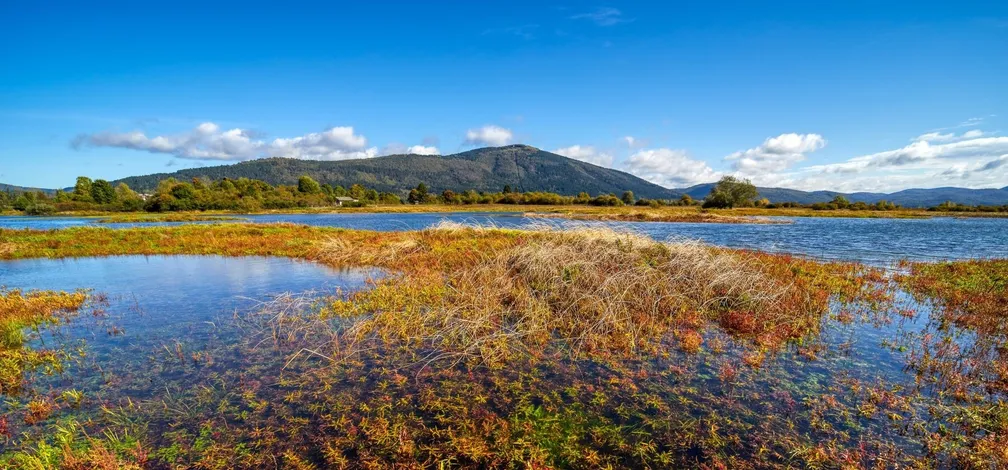
The combination of time, water, and rocks has created the phenomenon of draining, which keeps the life on this marvellous karst plain in motion. Lake Cerknica is intermittent because it fills up after long precipitation periods and drains out during the dry season.
The combination of time, water, and rocks has created the phenomenon of draining, which keeps the life on this marvellous karst plain in motion. Lake Cerknica is intermittent because it fills up after long precipitation periods and drains out during the dry season.
The intermittent Lake Cerknica is a true magnet for birds. So far, more than half of all European bird species have been observed in this area. The ever-changing landscape creates unique opportunities to observe these animals in their everyday activities throughout the year.
The intermittent Lake Cerknica is a true magnet for birds. So far, more than half of all European bird species have been observed in this area. The ever-changing landscape creates unique opportunities to observe these animals in their everyday activities throughout the year.
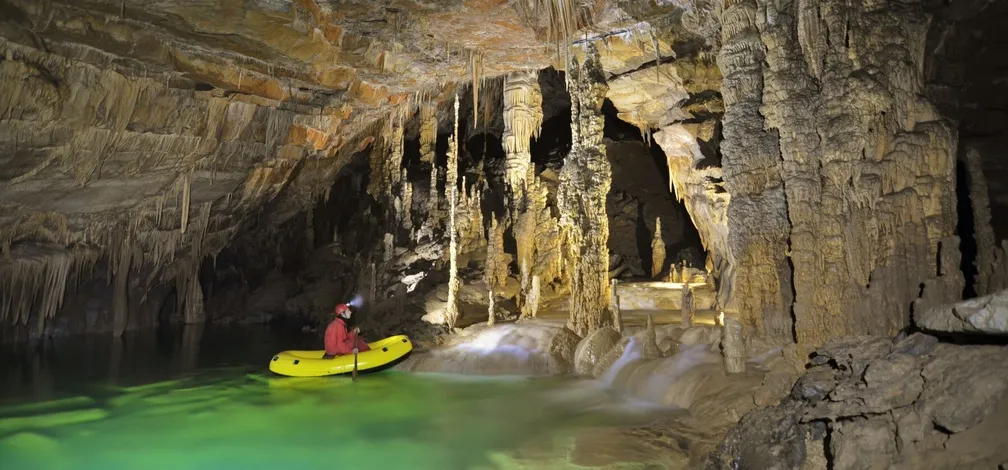
Križna Cave is one of the most beautiful tourist water caves in Slovenia.
Križna Cave is one of the most beautiful tourist water caves in Slovenia. 22 emerald lakes are connected by an underground crystal-clear stream, within side passages ancient bones of cave bears can be seen, and by the number of specialised cave dwellers, the Križna Cave ranks among the richest caves in the world.
Slopes, plains, forests and vineyards of the Notranjska Regional Park provide a home to many species. Here, among the multitude of widely distributed, yet no less beautiful flowers, thrive 'carnivores', rare, endangered, protected and endemic species.