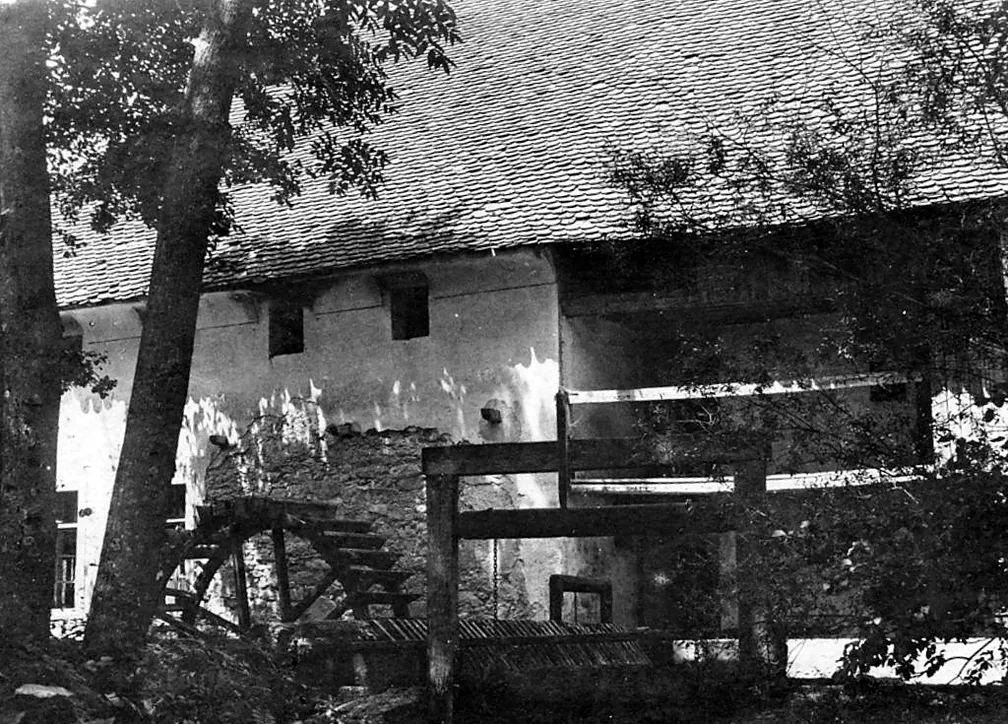
The first houses in the Notranjska usually had three rooms: kitchen, a living area called hiška and a small bedroom called kamra. Through the years, these rooms changed – black kitchens came out of fashion, bakers' ovens were replaced by stoves, and in the course of time, the kitchen became the centre of the house. After 1960, three-part windows were installed in homes, whereas thatch was replaced by clay tiling soon after 1900.
Also preserved are a few granaries, which functioned as farm pantries. In granaries, farmers usually stored flour and grains downstairs, whereas meat and lard were kept upstairs. Cellars were used to store potatoes and similar produce.
In the Notranjska region, several hayracks of different shapes are also preserved. In the past, they were used for drying crops, but today their usage differs, ranging from storages to regular garages.
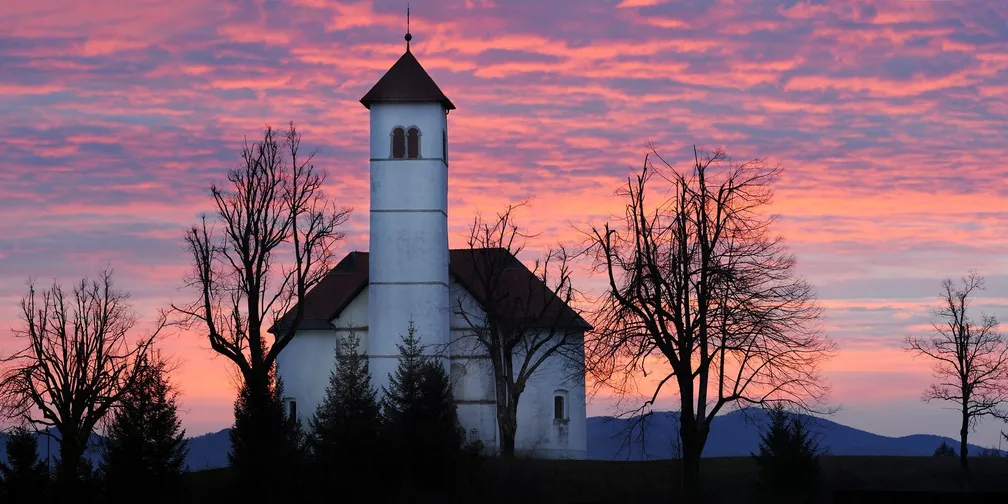
Christianity, as the dominant religion, has left its mark in the form of numerous churches and chapels. In the area of the Notranjska Park, there are more than 30 different churches.
Christianity, as the predominant religion, has left its mark in the form of numerous churches and chapels. In the area of the Notranjska Park, there are more than 30 different churches.
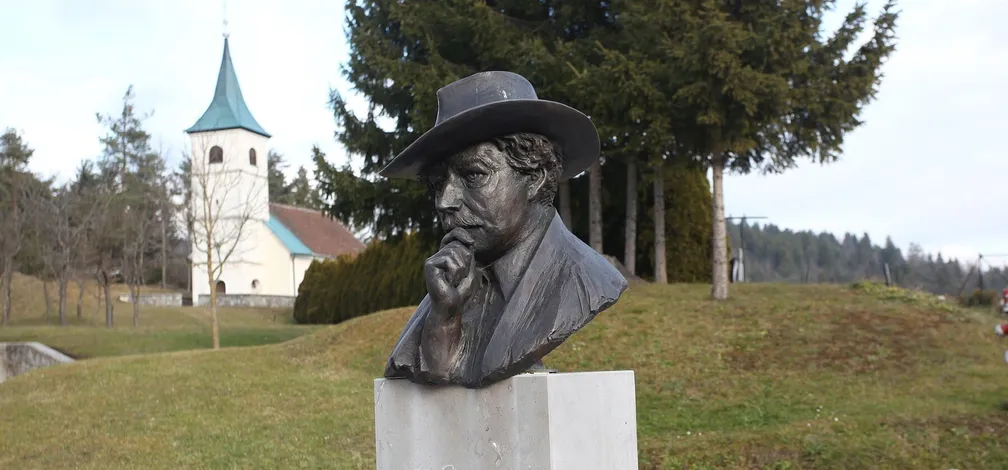
Many renowned professionals worked and lived in the area of the present-day Notranjska Park.
Many renowned professionals worked and lived in the area of the present-day Notranjska Park. Johann Weikhard von Valvasor (The Glory of the Duchy of Carniola) and Franz Anton von Steinberg (A Thorough Report on Lake Cerknica) put Lake Cerknica on the world map, and their works also serve as reference books on life in the past.
Slopes, plains, forests and vineyards of the Notranjska Regional Park provide a home to many species. Here, among the multitude of widely distributed, yet no less beautiful flowers, thrive 'carnivores', rare, endangered, protected and endemic species.